
Messi Biology states that hydrogenation is a core process step in industries such as fine chemicals, petroleum refining, and pharmaceutical intermediate synthesis. The activity, stability, and service life of hydrogenation catalysts directly determine production efficiency and product purity. Magnesium carbonate, used as a mainstream support and promoter for hydrogenation catalysts, has become an essential inorganic powder material in the modern catalytic industry due to its physical and chemical properties. It is widely applied in nickel-based, cobalt-based, and platinum-palladium precious metal hydrogenation catalyst systems.
There is a fundamental difference between ordinary industrial-grade magnesium carbonate and specialized catalyst-grade magnesium carbonate. Hydrogenation catalysis scenarios place strict requirements on raw material purity, microstructure, and impurity control. Catalyst-grade magnesium carbonate is prepared using controlled synthesis processes, achieving a purity of over 99% with extremely low levels of harmful impurities such as iron, heavy metals, chloride ions, and sulfate radicals. Heavy metal impurities can directly poison the active sites of the hydrogenation catalyst, while chloride ions can corrode reaction vessels and pipelines. Therefore, the production process of specialized magnesium carbonate for hydrogenation strictly controls trace elements to minimize the risk of catalyst deactivation at the source.
In terms of catalytic mechanisms, magnesium carbonate primarily performs two core functions:
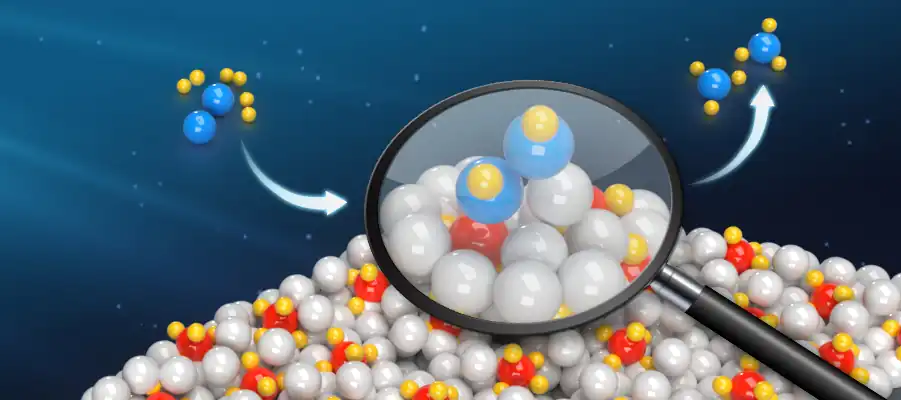
- As a catalyst support: Its rich, controllable pore structure and relatively large specific surface area enable the uniform loading of active metal components such as nickel and cobalt. This prevents the agglomeration of metal particles and improves the dispersion of active sites. In reactions such as nitro hydrogenation, carbonyl hydrogenation, fat/oil hydrogenation, and petrochemical distillate hydrogenation, uniformly dispersed active metals can enhance the hydrogenation conversion rate and reduce the formation of by-products.
- As an acid-base regulating promoter: The weakly alkaline nature of magnesium carbonate allows it to neutralize acidic substances in the reaction system, stabilize the pH value of the reaction environment, inhibit coke formation, delay catalyst aging, and extend the catalyst’s cycle life.
Microscopic morphology is a key advantage of magnesium carbonate used in hydrogenation catalysts. Through process adjustments, the product can be formed into controllable crystal shapes, such as flakes or granules, offering moldability compatible with various catalyst-shaping processes like extrusion, pelletizing, and tableting. The shaped catalyst exhibits high mechanical strength and resistance to pulverization and breakage, which helps prevent reactor clogging in continuous fixed-bed hydrogenation units, thereby reducing equipment operation and maintenance costs. Additionally, the thermal decomposition characteristics of magnesium carbonate are well-suited for the catalyst calcination process, decomposing at high temperatures into magnesium oxide to form a stable, porous framework that further strengthens metal-support interactions.
With the accelerating green transition in the chemical industry, the demand for low-energy, high-selectivity hydrogenation processes has risen, driving a continuous increase in market demand for high-quality, catalyst-grade magnesium carbonate. Due to high impurity levels and uncontrollable pore sizes, traditional ordinary magnesium carbonate struggles to meet the requirements of high-end hydrogenation units, leading to the gradual domestic substitution by specialized catalytic magnesium carbonate. Manufacturers represented by Messi Biology, leveraging their own mineral resources and precision synthesis technologies, can customize magnesium carbonate products with varying specific surface areas, particle sizes, and pore structures to suit diverse scenarios, including pharmaceutical intermediate hydrogenation, vegetable oil hydrogenation, and chemical raw material refining.
Under current industry trends, magnesium carbonate for hydrogenation catalysts is developing toward ultra-high purity and fine customization. In the future, with the expansion of new energy, biochemical, and high-end pharmaceutical industries, the application scenarios for hydrogenation processes will continue to broaden, offering wider prospects for high-performance magnesium carbonate support materials. High-quality catalytic magnesium carbonate not only helps reduce catalyst procurement and replacement costs for enterprises but also supports chemical production in achieving efficient, low-carbon, and clean operations, serving as a critical foundational material driving the upgrade of the hydrogenation catalysis industry.