
Recently, the Xingtai Municipal Bureau of Industry and Information Technology officially announced the municipal-level green factory certification list. Hebei Messi Biology Co., Ltd. was recognized as a “Xingtai Green Factory” by virtue of its whole-process green management, advanced energy-saving technological retrofits, and resource recycling system, becoming a benchmark enterprise for green and low-carbon transition in Xingtai’s magnesium salt new materials sector. This certification was granted following a rigorous process including voluntary application, district/county preliminary review, expert on-site evaluation, and public disclosure. It represents authoritative municipal-level recognition of the company’s achievements in intensive land use, clean production, waste utilization, and low-carbon energy.
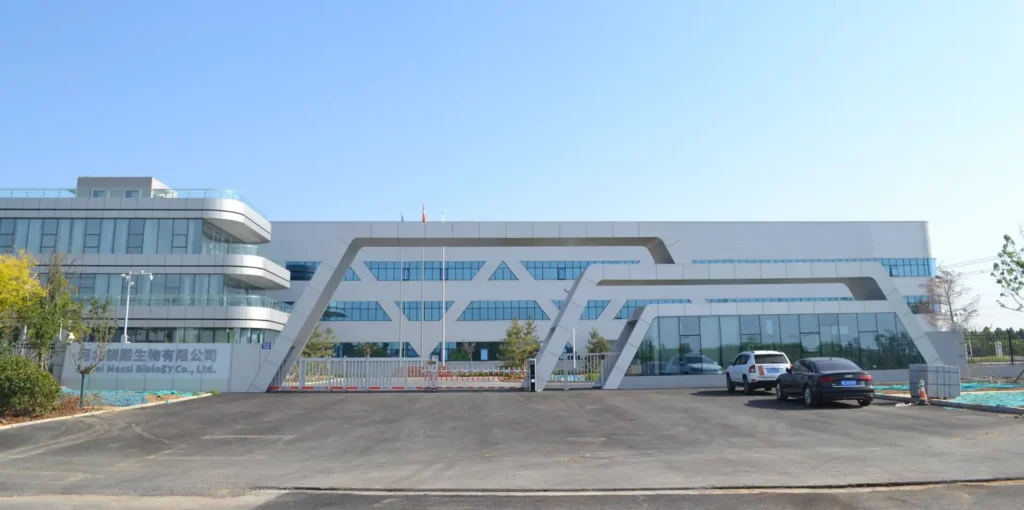
Located in the Xingtai High-tech Zone, Hebei Messi Biology Co., Ltd. has been deeply engaged in the R&D and production of magnesium salt new materials for many years. Its main products include series of magnesium oxide, magnesium carbonate, magnesium sulfate, and magnesium hydroxide, which are widely applied in high-end fields such as pharmaceuticals and food, 5G electronics, aerospace, and rubber-plastic composites. The company is a high-tech and “Specialized, Refined, Differential, and Innovative” (SRDI) enterprise integrating deep mineral processing, independent R&D, and intelligent manufacturing. For a long time, the company has departed from extensive production models, integrating green development into its medium- and long-term strategic plans. It has established a green management system covering the entire chain of raw material extraction, manufacturing, waste treatment, warehousing, and logistics, while simultaneously improving its quality, environmental, energy, and occupational health and safety management systems to lay a solid foundation for the green factory initiative.
In terms of energy-saving production upgrades, the company has continuously invested special funds to implement intelligent and low-carbon upgrades for its production lines. It has phased out high-energy-consuming, legacy reaction equipment, replacing them with highly efficient, sealed synthesis units. These are equipped with waste heat recovery systems to reuse production heat for preheating raw materials, significantly reducing steam and electricity consumption. The facility has fully implemented energy-saving LED lighting, variable frequency water supply, and intelligent temperature control systems, and has built an online energy monitoring platform to track water, electricity, and gas consumption in real time. This allows for precise control over energy consumption indicators, keeping the comprehensive energy and water consumption per unit of product below the average level of the local industry. On the raw material side, relying on its own magnesium mineral resources, the company utilizes a low-loss ore purification process to reduce auxiliary material consumption, facilitating non-hazardous raw material sourcing from the origin.
Resource recycling and pollutant control represent core highlights of the company’s green factory initiative. Process wastewater generated during production is entirely recycled back into the production lines after undergoing multi-stage sedimentation and membrane filtration, achieving zero discharge of industrial wastewater. Production dust is managed using baghouse dust collectors combined with activated carbon adsorption units, resulting in an exhaust gas treatment efficiency exceeding 95%. Waste residue from magnesium salt processing is sorted and recycled, then sold externally as raw materials for construction, bringing the comprehensive utilization rate of industrial solid waste close to 100%, effectively turning waste into resources. At the same time, the facility has optimized its landscaping layout, constructed rainwater collection basins, and advanced water-saving and carbon-sequestration supporting initiatives to create a clean, garden-like manufacturing site.
In terms of safety and environmental compliance, the enterprise has established a routine environmental inspection mechanism. Over the past three years, it has recorded no major safety or environmental pollution incidents, and has no record of dishonesty or administrative penalties, successfully meeting all mandatory assessment criteria for a municipal-level green factory. Feng Wenjie, General Manager of Hebei Messi Biology Co., Ltd., stated that receiving the municipal green factory designation is not the end goal, but rather a new starting point for the company’s green upgrade. Moving forward, Messi Biology will use this certification as an opportunity to continuously increase investment in the R&D of green processes, striving step-by-step toward provincial- and national-level green factory status.
As a typical example of green transition in Xingtai’s new materials industry, the practice of Hebei Messi Biology Co., Ltd. provides a replicable model of green development for local enterprises in the sectors of pharmaceutical and food additives, as well as magnesium salt new materials. Looking ahead, the company will continue to leverage its green manufacturing advantages to further expand into domestic and international high-end supply chains. By empowering the upgrade of pharmaceutical and electronic new material industries with low-carbon capacity, the company aims to support Xingtai in refining its gradient cultivation system for green manufacturing, injecting “Messi momentum” into the high-quality, green development of the city’s industrial sector.