
Messi Biology states that in the fields of petroleum refining, fine chemicals, and green energy, the hydrogenation reaction is a core process for upgrading quality, reducing impurities, and synthesizing high-value-added products, while high-performance hydrogenation catalysts serve as the “heart” of this process. With its unique physical and chemical properties, magnesium oxide (MgO) has become an essential support and promoter in hydrogenation catalysts, supporting the efficient and green transformation of chemical production.
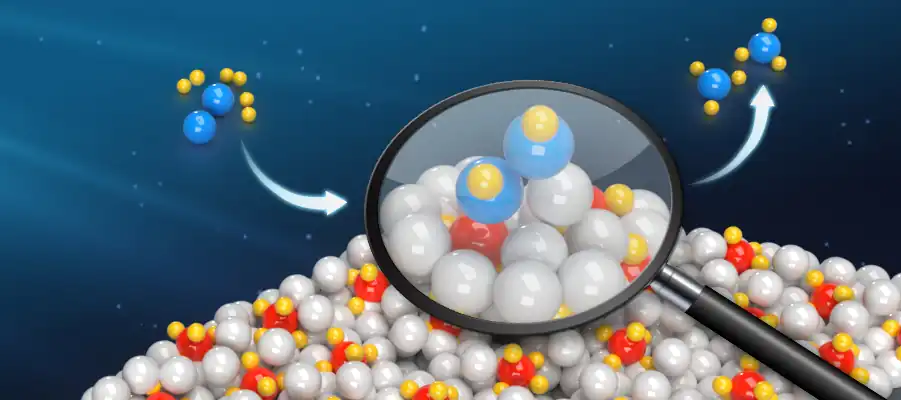
The core of a hydrogenation catalyst lies in its active metal components, such as nickel, platinum, palladium, and molybdenum, which require a stable support to achieve uniform dispersion and avoid sintering and deactivation at high temperatures. Magnesium oxide has a high melting point of 2852°C and excellent chemical stability. Under the high-temperature and high-pressure conditions of hydrogenation reactions, it does not easily sinter or undergo phase transitions, maintaining its structural integrity over the long term and providing a stable “supporting platform” for active metals.
Compared with traditional acidic alumina supports, magnesium oxide is weakly alkaline and features abundant oxygen ion defect sites on its surface, which allows for the precise regulation of the catalyst’s surface acidity and alkalinity. This characteristic not only suppresses coke formation during the hydrogenation process, thereby extending the catalyst’s lifespan, but also adsorbs impurities such as sulfur and nitrogen from raw materials, reducing the poisoning of active sites and significantly improving hydrodesulfurization (HDS) and hydrodenitrogenation (HDN) efficiency. In the hydrotreating of low-quality oil products, the magnesium oxide support enables more uniform dispersion of active metals, simultaneously improving the hydrogenation rate and product selectivity.
The pore structure and specific surface area of magnesium oxide can be precisely regulated through processes such as sol-gel and hydrothermal synthesis, forming well-developed mesoporous channels. This increases the loading of active metals and provides efficient diffusion pathways for hydrogen and reactant molecules. Whether in the hydrogenation of aromatics to naphthenes or the hydrogenation of syngas to methanol, the magnesium oxide support optimizes electron transfer efficiency through strong metal-support interactions (SMSI), making hydrogenation reactions milder and more efficient.
In industrial applications, magnesium oxide is often composited with alumina, silica, or other oxides to balance alkaline advantages with mechanical strength. The composite support retains the coke-resistant and impurity-tolerant advantages of magnesium oxide while enhancing the catalyst’s compressive strength and wear resistance, making it suitable for various reactors like fixed-bed and fluidized-bed reactors. In green catalytic fields such as biomass hydroconversion and CO₂ hydrogenation utilization, magnesium oxide-based catalysts have become key materials for low-carbon chemical engineering due to their high selectivity and stability. Catalyst-grade magnesium oxide has strict requirements for purity, particle size, and porosity, necessitating the removal of harmful impurities like iron and copper to ensure stable catalytic activity. With the development of high-end chemical and hydrogen energy industries, nano-magnesium oxide with high specific surface area and high crystallinity has become a research hotspot, further driving the upgrade of hydrogenation catalysts toward higher efficiency, longer lifespan, and greener performance.
From clean fuel production to fine chemical synthesis, and from traditional refining to new energy conversion, magnesium oxide plays a quiet yet vital role in key stages of hydrogenation catalysis. With its stable structure, adjustable alkalinity, and excellent compatibility, it serves as a suitable partner for hydrogenation catalysts. This demonstrates how a common inorganic material can deliver significant value in high-end manufacturing and green development.