
Messi Biology states that plastic products are ubiquitous in our daily lives. From household appliance casings and kitchen cling film to factory cables and automotive interiors, plastics have conquered the world with their lightweight and durable characteristics. However, plastics have a fatal flaw—they are highly flammable. To address this safety hazard, scientists have developed various flame retardants. Among them, magnesium hydroxide, as an eco-friendly and highly efficient “green guardian,” plays an indispensable role in the field of plastic masterbatches.
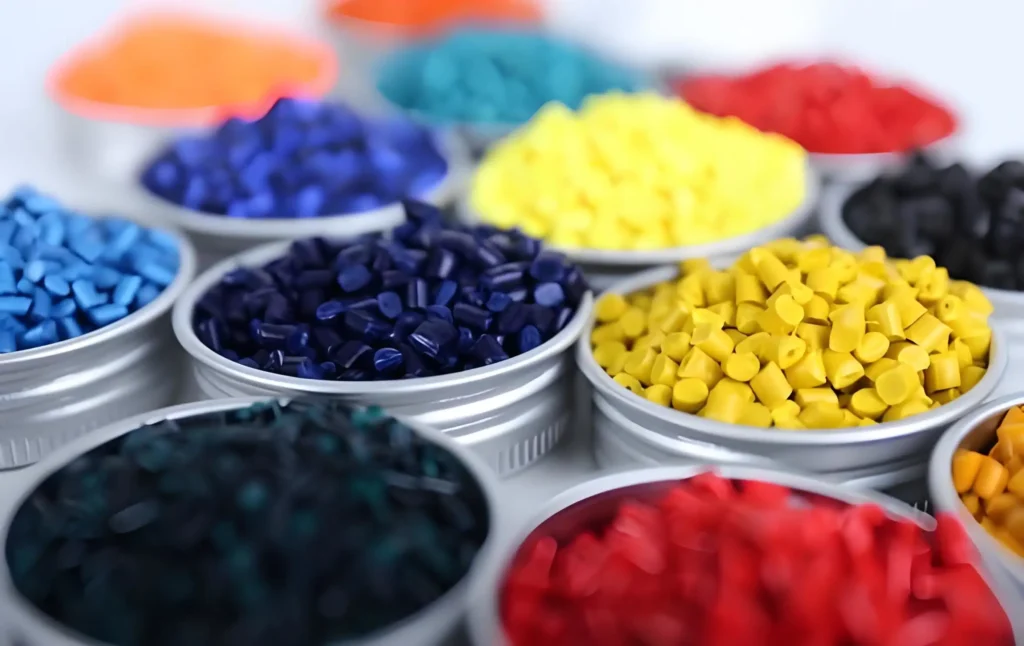
To understand the role of magnesium hydroxide, one must first understand what a “plastic masterbatch” is. Simply put, a masterbatch is an aggregate formed by loading a super-concentration of additives, such as pigments or flame retardants, into a resin. During plastic processing, factories can simply mix these small “masterbatch” pellets into the base plastic raw material—much like adding a seasoning packet—to produce a final product with specific performance characteristics. Magnesium hydroxide masterbatches were created specifically to provide plastics with a “fireproof coat.”
So, how does magnesium hydroxide perform its “magic” within plastics? It all comes down to its unique physicochemical properties. When a plastic product containing magnesium hydroxide encounters a fire and the temperature rises to a certain level (typically around 340°C), the magnesium hydroxide undergoes a thermal decomposition reaction. The key to this reaction is that it releases a large amount of water vapor.
Imagine this: in the middle of a roaring fire, these suddenly released water vapors act like a natural fire extinguishing agent. First, the water vapor absorbs a significant amount of heat, effectively lowering the surface temperature of the material and slowing down the combustion rate of the plastic. Second, the generated water vapor dilutes the concentration of oxygen and combustible gases around the combustion zone, cutting off the “fuel” for the fire. Furthermore, the byproduct left behind after the decomposition of magnesium hydroxide is magnesium oxide, a high-temperature-resistant, ceramic-like substance. This dense magnesium oxide film covers the surface of the plastic, forming a solid thermal insulation barrier that prevents oxygen from entering the interior and blocks the escape of combustible gases from within, thereby achieving a flame-retardant effect through “isolation and asphyxiation.”
In addition to its excellent flame-retardant performance, magnesium hydroxide is highly favored for its “green” attributes. Unlike some traditional halogenated flame retardants, magnesium hydroxide does not produce toxic or corrosive smoke (such as dioxins) during the flame-retardant process. In fire accidents, the cause of death is often not the open flame itself, but rather the thick smoke and toxic gases. The non-toxic and low-smoke properties of magnesium hydroxide make it the preferred material for subways, aircraft, high-rise buildings, and other locations with extremely high fire safety requirements.
Furthermore, magnesium hydroxide can also act as a “reinforcing agent” in plastics. As an inorganic filler, it can improve the weather resistance and antistatic capabilities of plastics, and in some cases, even reduce production costs. Although high loading levels may have a certain impact on the mechanical strength of the plastic, modern technologies—such as nanotechnology modification or surface treatment—have enabled manufacturers to achieve an excellent balance between flame retardancy and physical-mechanical properties.
The application of magnesium hydroxide in plastic masterbatches is a prime example of the integration of materials science and environmental philosophy. It not only endows plastics with superior flame-retardant properties, protecting people’s lives and property, but also aligns with the global trend toward low-smoke, non-toxic, and environmentally friendly development. In the future, with continuous technological progress, this white “flame-retardant guardian” is sure to play an even greater role in more high-end material fields.