
As a plastic widely used in industry and daily life, polypropylene (PP) has always had its flammability as a pain point for safe application. Magnesium hydroxide (MH), as a green halogen-free flame retardant, has become a popular choice for PP flame-retardant modification due to its environmental friendliness and smoke-suppression characteristics. However, how does it actually perform in practical applications? This article will deeply analyze its advantages and limitations, and reveal the industry’s cutting-edge solutions.
I. Advantages of Magnesium Hydroxide Flame Retardant: Balancing Environmental Protection and Performance
- Environmentally friendly with pollution-free decomposition
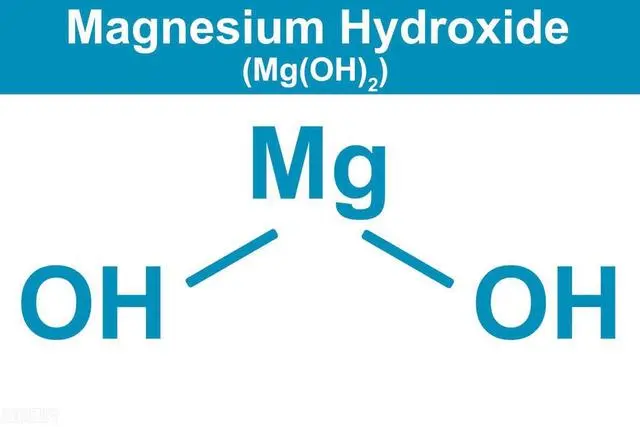
Magnesium hydroxide absorbs heat when decomposing at 340–490°C (endothermic heat of 782.9 J/g), releasing water vapor and generating magnesium oxide. This process produces no toxic gases or corrosive substances, complying with environmental regulations such as RoHS and REACH, and is hailed as a “green flame retardant.” - Dual-action efficiency in flame retardation and smoke suppression
- Elevated oxygen index: After adding modified magnesium hydroxide, the limiting oxygen index (LOI) of PP can leap from 19.6% to 28.9%, significantly delaying the burning speed.
- Reduced smoke toxicity: Compared to halogen-based flame retardants, magnesium hydroxide can reduce the smoke emission of PP by more than 40% and delay the onset time of smoke generation, effectively suppressing secondary injuries in fires.
- Good thermal stability, adapting to high-temperature processing
Its decomposition temperature is higher than the processing temperature of PP (approx. 200°C), avoiding flame-retardant failure caused by premature decomposition, which makes it particularly suitable for high-temperature processes such as extrusion and injection molding.
II. Challenges of Magnesium Hydroxide: The Trade-off Between Dosage and Performance
Despite its remarkable advantages, the limitations of magnesium hydroxide have also restricted its large-scale application:
- High loading sacrifices mechanical properties
- An addition of 50–65% is required to reach the UL94 V-0 flame retardancy grade, leading to a drastic decline in the tensile strength, impact strength, and elongation at break of PP.
- For example, at a filling volume of 65%, the toughness loss of PP can exceed 50%, making products prone to embrittlement.
- Compatibility and dispersion difficulties
- The strong polarity of magnesium hydroxide has poor compatibility with non-polar PP, making it prone to agglomerating into “white spots,” which affects flame retardancy uniformity and surface gloss.
- Processing fluidity decreases, easily leading to sink marks or incomplete mold filling in products.
- Acid resistance defects
- It dissolves easily when exposed to acids (such as sweat or industrial acid mist), leaving potential fingerprint residue or white spots on the product surface.
III. Industry Solutions: Modification Technology and Compounding Innovation
To break through the aforementioned bottlenecks, technological frontiers focus on three major directions:
- Ultrafine sizing and surface modification
- Particle size optimization: Adopting 3.1μm-grade ultrafine powder reduces stress concentration and enhances dispersion.
- Dual-coupling treatment: Coating with modifiers like zinc stearate reduces hydrophilicity, bringing the oil absorption value to
≤33.39%≤33.39%and improving interfacial bonding with PP.
- Compounding for synergistic enhancement
- Combination with aluminum hydroxide: Their decomposition temperatures complement each other (ATH: 200–300°C; MH: 340–490°C), synergistically boosting flame-retardant efficiency while reducing total filling volume.
- Compounding with phosphorus-nitrogen flame retardants: For instance, KF-502C adopts an intumescent flame-retardant system to form a char layer that insulates oxygen, lowering the MH usage to below 40% while balancing V-0 flame retardancy and toughness.
- Process innovation: Compounding and toughening hand in hand
- Employing Buss kneaders or twin-screw extruders with staged feeding, controlling the loading rate at 70–90% to prevent agglomeration.
- Adding POE toughening agents to compensate for mechanical losses, enabling the elongation at break of high-filled PP to still reach 400%.
IV. Messi Biology’s Practices: How Technology Empowers Products
As a deep cultivator in the field of flame-retardant PP, Messi Biology solves the pain points of magnesium hydroxide through technological transformation:
- Taking modified magnesium hydroxide as the core with an addition amount of only 45%, an LOI ≥28% is achieved, while maintaining a tensile strength of >16 MPa through a toughening formula.
- Compounding macromolecular char-forming agents and phosphorus-nitrogen synergists to achieve V-0 flame retardancy at an MH filling volume of 35%, with a smoke density drop of 50%, breaking through the bottleneck of high filling.
Conclusion: The Future Path of Green Flame Retardation
Driven by its environmental essence and smoke-suppression advantages, magnesium hydroxide is destined to be the mainstream direction for PP flame retardation. Although high loading and compatibility remain challenges, ultrafine processing, surface modification, and compounding technologies are continuously narrowing the gap between ideal and reality. As a practitioner of eco-friendly flame retardants, Messi Biology is committed to promoting the evolution of PP flame retardancy toward high efficiency, low toxicity, and high performance, providing safety- and sustainability-balanced solutions for fields such as construction, electronics, and automotive.