
As the core medium for power transmission and signal propagation, cable materials must simultaneously possess excellent insulation, flame retardancy, mechanical strength, and weather resistance to suit various application scenarios such as electric power, communications, construction, and rail transit. As a multifunctional inorganic additive in cable material formulations, magnesium carbonate is widely used in key components such as cable insulation layers and sheath layers due to its outstanding flame retardancy, reinforcement, insulation, and processing adaptability. It not only optimizes the service performance of cable materials but also enhances production efficiency and controls manufacturing costs, making it an indispensable key raw material in cable material manufacturing that perfectly matches the operational service conditions of cables.
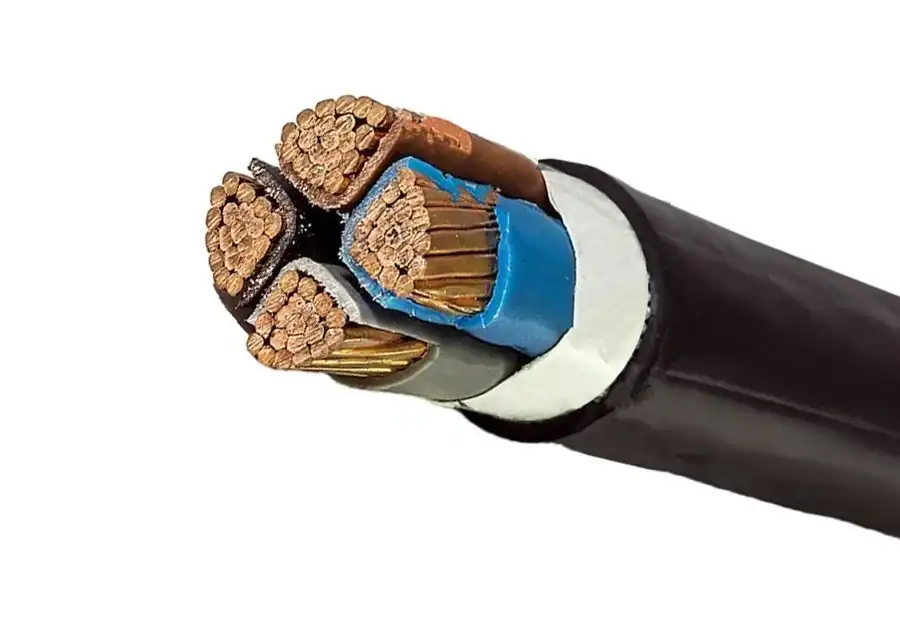
I. Flame Retardancy and Smoke Suppression: Enhancing Cable Safety
Flame retardancy is a core safety requirement for cable materials, and magnesium carbonate effectively meets this demand, making it particularly suitable for high- and low-voltage cables as well as flame-retardant cable applications. It possesses exceptional flame-retardant and smoke-suppressant properties. Upon decomposition at high temperatures during combustion, it releases magnesium oxide and carbon dioxide; the carbon dioxide acts to isolate oxygen and hinder the spread of fire, while the magnesium oxide forms a dense protective flame-retardant layer on the surface of the cable material to prevent flames from penetrating the insulation layer. At the same time, it reduces smoke generation and the release of toxic and hazardous gases during combustion, preventing the expansion of fires and safeguarding cable safety at the material level in compliance with fire safety standards.
II. Reinforcement and Toughening: Strengthening the Mechanical Properties of Cable Materials
Cables are subject to external forces such as tension, bending, and extrusion during laying and operation, requiring sufficient mechanical strength and toughness. Magnesium carbonate provides targeted enhancement in these aspects. With its fine texture and excellent dispersibility, it can be evenly dispersed in the matrix materials of cable insulation and sheath layers (such as PVC, PE, and XLPE), forming a stable bond with polymer materials. This significantly improves the tensile strength, elongation at break, and hardness of the cable material, preventing cracking, damage, or brittle aging during laying or use. It ensures a stable cable structure and prevents insulation failures that could lead to electrical leakage, short circuits, and other hidden hazards.
III. Enhancing Insulation Performance: Ensuring Stable Power Transmission
Insulation is the core function of cable materials, and magnesium carbonate further optimizes insulation effectiveness. As an inorganic insulating material itself, it features high insulation resistance and superior dielectric properties. Incorporating it into cable materials boosts overall insulation performance, effectively blocking current leakage and ensuring stable power transmission. Additionally, it hinders the degradation of insulation performance caused by aging and moisture absorption during long-term use, adapting to complex environments such as dampness and high temperatures. This extends the service life of cables, making them particularly suitable for outdoor and industrial cable applications.
IV. Optimizing Molding and Processing: Improving Cable Production Efficiency
The molding precision and processing efficiency of cable materials directly impact production profits, and magnesium carbonate optimizes the entire production workflow. As a processing aid, it improves the plasticity and fluidity of cable raw materials, making insulation and sheath layers easier to extrude and mold. This accommodates various structural processing needs such as circular or profiled cables, while preventing defects such as air bubbles, knots, and uneven thickness during molding. Furthermore, it accelerates the curing speed of cable materials, shortens production cycles, reduces manufacturing waste, enhances the yield rate of finished cables, and lowers overall production costs.
V. Moisture Resistance and Weatherability: Adapting to Complex Operating Environments
Cables are frequently deployed in complex environments such as outdoors or underground, making them vulnerable to moisture, extreme temperatures, and ultraviolet (UV) radiation. Magnesium carbonate enhances the environmental adaptability of the material. It possesses good moisture-absorption and moisture-proof properties, capable of absorbing residual moisture during the production and application of cable materials to prevent insulation degradation and material aging caused by water. Moreover, it is heat-resistant, cold-resistant, and UV-resistant, allowing it to withstand alternating high and low temperatures as well as solar radiation, thereby minimizing cable aging and cracking to fit diverse climates and application scenarios for long-term stable cable operation.
Summary: The core applications of magnesium carbonate in cable materials lie in its three primary values—“flame retardancy and smoke suppression, reinforcement and toughening, and insulation enhancement”—which together ensure cable safety and transmission stability. By simultaneously optimizing molding processing and improving weather resistance to suit complex operating conditions, magnesium carbonate stands out as an indispensable additive in the cable material system. It directly influences the safety, durability, and cost-effectiveness of cables, serving as a critical raw material for elevating overall cable material quality.