
Messi Biology states that in the production unit of polyoxymethylene (POM), there is a seemingly inconspicuous yet crucial process: magnesium hydroxide is mixed and stirred proportionally with several other agents, sent to the additive storage buffer hopper, and then precisely adjusted according to the feeding rate of crude polyoxymethylene powder in the extruder. Ultimately, this “transforms” the mixture into stable copolymerized polyoxymethylene finished pellets. Why does this white powder possess such remarkable capability?
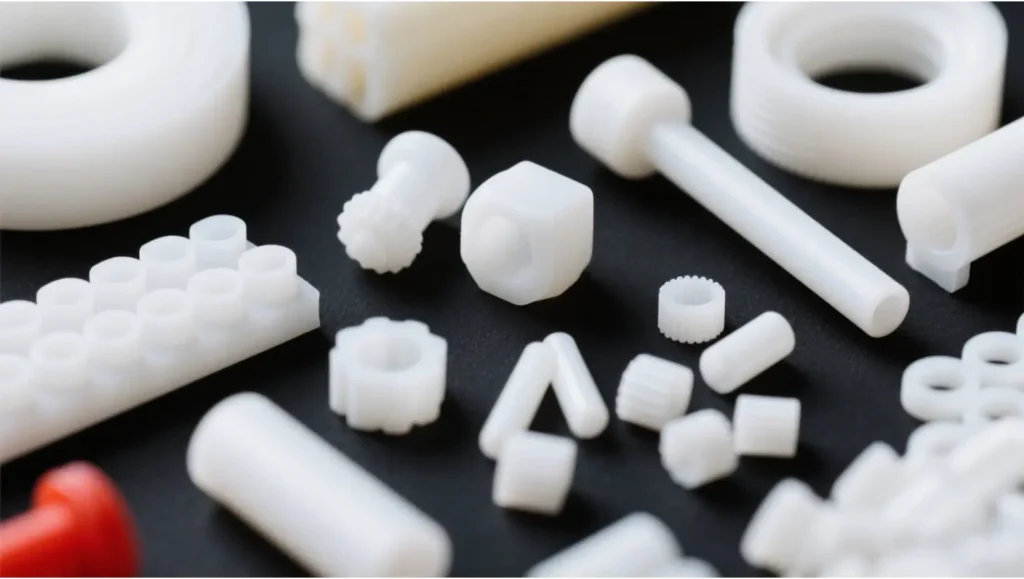
Polyoxymethylene (POM), hailed as “Saigang” (eningineering plastic steel), features high hardness, self-lubricating properties, and exceptional wear resistance, making it widely used in gears, bearings, automotive components, and other fields. However, it has a fatal weakness—it is sensitive to heat. During melt processing, POM molecular chains tend to degrade end-by-end like an unzipping zipper, releasing formaldehyde. The formaldehyde then reacts with oxygen to form formic acid, which in turn accelerates the chain scission of POM, creating a vicious cycle. At best, this causes yellowing and performance degradation of the products; at worst, it ruins entire batches of material. In addition, POM has a slow crystallization rate and coarse spherulites, which can also drag down product quality.
Magnesium hydroxide possesses a “triple stunt.” First: Nucleating Agent—”Setting the Rules” for Crystallization. The hexagonal platelet-shaped magnesium hydroxide has a large specific surface area and is rich in hydroxyl groups on its surface, enabling it to form favorable interfacial interactions with POM molecular chains. Dispersed in the melt, it acts like countless “crystallization templates,” inducing POM to crystallize simultaneously at numerous microscopic sites, resulting in fine, uniform spherulites and enhanced crystallinity. Improved crystallization structure stabilizes the melt index and makes mechanical properties more balanced and reliable. Second: Acid Scavenger—”Hitting the Brakes” on Degradation. As a mild alkaline substance, magnesium hydroxide can precisely capture formic acid within the system and neutralize its acidity. This cuts off the vicious cycle of “formic acid-catalyzed chain scission” at the source, significantly improving the thermal stability of POM and ensuring a smooth granulation process. Third: Flame Retardancy and Toughening—”Buffing” Performance. Upon heating, magnesium hydroxide decomposes to release water vapor while absorbing a large amount of heat, forming a protective layer on the burning surface to enhance the material’s flame retardancy. Its platelet-like structure also provides a reinforcing effect within the matrix, improving toughness and processing flowability.
Precisely because magnesium hydroxide plays multiple roles, its purity, particle size distribution, platelet morphology, and surface properties directly affect the crystallization behavior and final performance of POM. This is why Lunan Chemical’s technical specification emphasizes that “technical indicators must fully meet the polyoxymethylene process requirements”—any deviation in a single index may “come back to haunt” the melt index and mechanical properties of the finished pellets. A gram of magnesium hydroxide is inexpensive yet carries heavy responsibilities. It is precisely these seemingly ordinary auxiliary materials, interlocking seamlessly with precision processes, that truly live up to the reputation of “engineering plastic steel.”