
Messi Biology states that in high-power application scenarios such as 5G base stations, new energy vehicles, and high-brightness LEDs, massive amounts of heat need to be rapidly dissipated. The component undertaking this critical task is often a thin layer of thermally conductive silicone. The ability of this silicone layer to “conduct heat” relies not on the silicone matrix itself, but on the high-thermal-conductivity powders uniformly dispersed within it—specifically, spherical magnesium oxide. With its low cost and excellent comprehensive performance, spherical magnesium oxide is becoming an indispensable choice in the field of thermal interface materials.
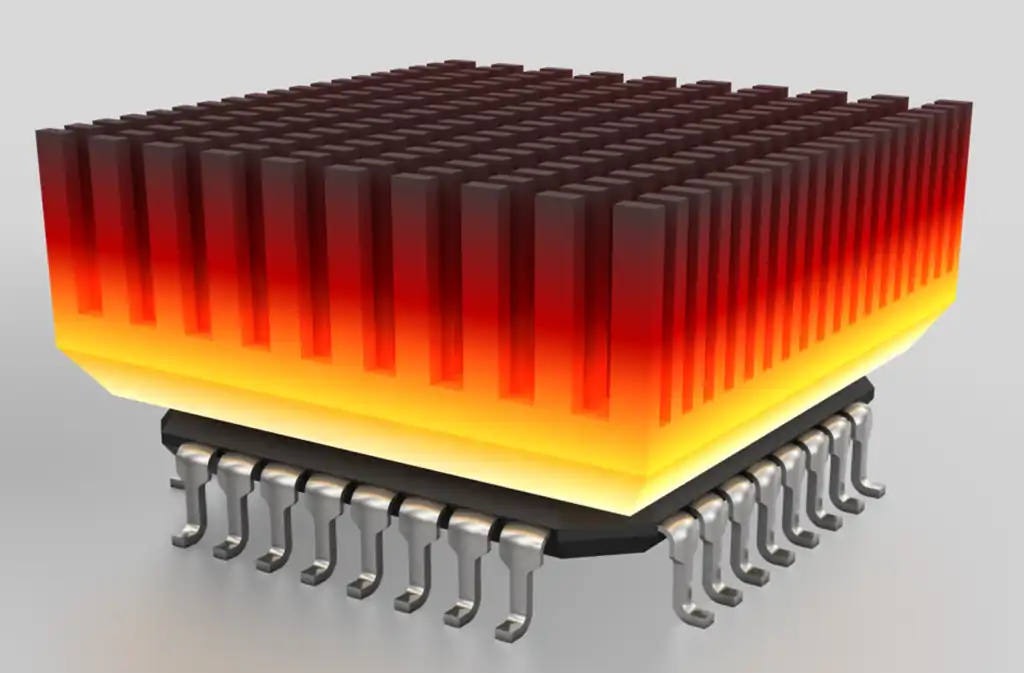
Pure silicone has a thermal conductivity of only about 0.2 W/(m·K), which is on the same order of magnitude as stationary air and offers almost no practical heat dissipation value. To make silicone thermally conductive, a large amount of inorganic powder must be added so that the particles overlap with one another, forming continuous “thermal highways.” The type, morphology, and particle size distribution of the fillers directly determine the upper limit of the final thermal performance. If irregular powders are compared to a pile of angular crushed stones, spherical powders are more like smooth, rounded glass beads. At the same dosage, spherical particles can interlock with a higher packing density, reducing gaps between particles; meanwhile, the smooth spherical surface can lower the system viscosity, making the silicone smoother during coating, dispensing, and potting. More importantly, spherical particles of different particle sizes can achieve a filling volume far higher than that of ordinary powders through “large spheres building the skeleton and small spheres filling the gaps.” In actual measurements, the maximum loading of 5-micron spherical magnesium oxide in silicone oil can exceed 500 parts, which is more than 150 parts higher than that of products with the same specifications.
Common thermal conductive fillers each have their own pros and cons: alumina is moderately priced, but its thermal conductivity is only about 30 W/(m·K), and the system thickens significantly after filling; boron nitride and aluminum nitride offer outstanding performance, but their prices remain prohibitively high. Spherical magnesium oxide precisely fills the gap in cost-effectiveness. Its intrinsic thermal conductivity can reach 25–40 W/(m·K), which is more than 30% higher than that of alumina with the same particle size. Its Mohs hardness is only 5–6, much lower than alumina’s 8.5–9, resulting in less wear and tear on mixing and grinding equipment. With a density of about 3.6 g/cm³, it is lighter than alumina, and thermal conductive gaskets prepared with it can reduce weight by about 9% per square meter. In addition, magnesium oxide is widely available with a purity of over 99%, and naturally possesses excellent insulation properties, perfectly meeting the dual requirements of power devices for “both thermal conductivity and electrical insulation.”
Today, spherical magnesium oxide has penetrated a variety of thermal interface materials: in thermal greases between CPUs and heat sinks, it undertakes the task of building thermal bridges; in the potting adhesives of new energy vehicle electronic control modules, it is responsible for both insulation and heat dissipation; in thermal gels and pads, it helps products achieve a thermal conductivity performance of 3–6 W/(m·K) even at a relatively low filler loading. To address the shortcoming of traditional magnesium oxide being prone to moisture absorption, the industry has also developed processes such as silane coupling modification and silica coating, which significantly improve the dispersibility and long-term reliability of the powder in the silicone matrix. Although a few-micron-sized sphere seems insignificant, it carries the critical mission of “cooling down” electronic devices. The emergence of spherical magnesium oxide allows thermally conductive silicone to find a new balance among performance, cost, and processability, while also providing a pragmatic and viable answer to the thermal management challenges of high-power electronics.