
In the mass production of dietary supplement tablets and food compressed candy, magnesium stearate is a widely used lubricating excipient that can effectively improve powder lubricity, prevent sticking to molds, and enhance the smoothness of tableting. However, using magnesium stearate alone has obvious shortcomings: an excessively high addition amount inhibits tablet disintegration speed, leading to overtime disintegration, unqualified dissolution rates, and slow release of active ingredients, which seriously affects product quality and compliance. To solve this industry pain point, the majority of leading formulation enterprises adopt a compound system of magnesium carbonate and magnesium stearate, which ensures the lubrication effect while retaining the disintegration performance of the tablets. Messi Biology’s food-grade magnesium carbonate is compatible with various tablet compound excipient systems, making it an ideal raw material for optimizing tableting processes.
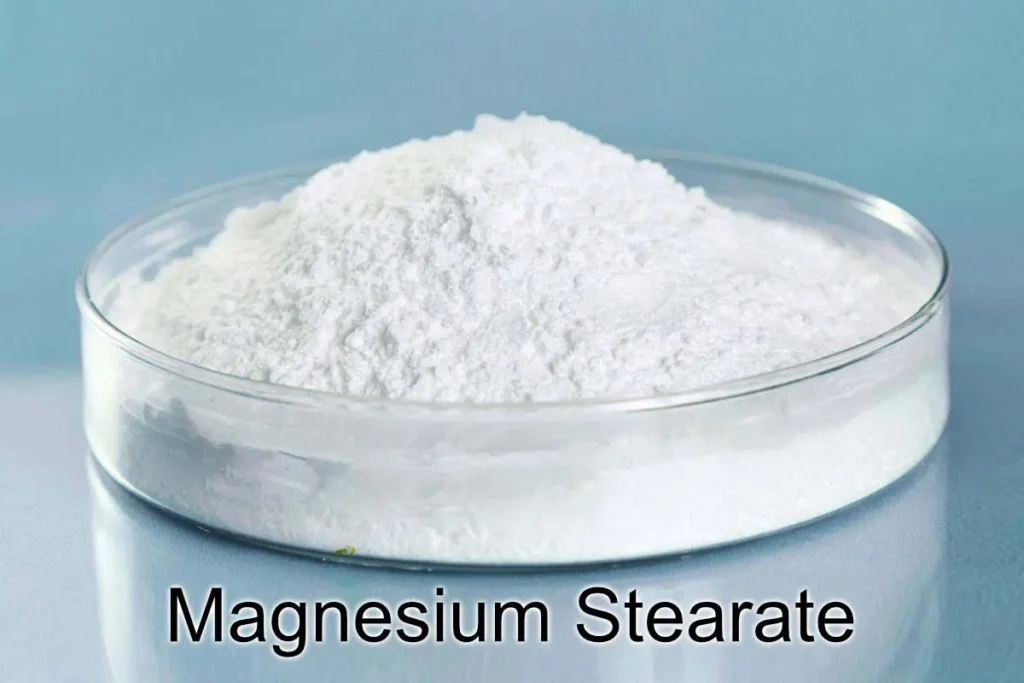
Magnesium carbonate combines a triple function of glidant, anti-caking agent, and loosening agent. When compounded with magnesium stearate, it forms a synergistic effect. While magnesium stearate focuses primarily on lubrication and mold release, magnesium carbonate focuses on powder improvement and loosening/solubilization. Their combination can drastically reduce the single addition amount of magnesium stearate, fundamentally avoiding delayed disintegration issues. At the same time, magnesium carbonate can break up powder agglomerates, enhance the mixing uniformity of multi-dimensional and mineral powders, reduce powder stratification and segregation, make tableting feeding more uniform, stabilize tablet weight variance, and significantly lower product defect rates.
For complex formulation systems such as multi-vitamin tablets, calcium-magnesium tablets, herbal compressed tablets, and compressed candies, the compatibility advantages of magnesium carbonate are particularly prominent. Complex formulations involve many raw materials with large differences in physical properties, making them prone to uneven mixing and local caking. Magnesium carbonate can effectively regulate powder bulk density, balance the physical property differences of different raw materials, enhance the stability of the overall system, and ensure smooth mass production. Meanwhile, since magnesium carbonate itself serves as a magnesium nutritional fortifier, its compound use can optimize the manufacturing process while supplementing mineral nutrition, achieving a dual effect of functioning as both an excipient and a nutrient, thereby improving cost-effectiveness.
Messi Biology’s food-grade magnesium carbonate features high purity, no off-odor, and uniform particle size. It fully complies with national standards for food additives and can be safely used in the production of foods and health supplement tablets without altering the product’s flavor, color, or quality. Enterprises can customize products with different particle sizes according to formulation requirements, adapting to all scenarios from low-speed pilot tests to high-speed mass production. Through scientific formulation compounding, tablet manufacturing enterprises can effectively optimize tableting processes, reduce defect rates, and enhance product stability. Messi Biology provides continuous and stable material supply, offering solid raw material support for the upgrading of tablet excipient formulations and process optimization.