
Messi Biology states that in the fields of precision metal processing and metallographic specimen preparation, magnesium oxide (MgO) is a seemingly unassuming yet irreplaceable polishing abrasive. Featuring moderate hardness, sharp particles, and stable chemical properties, it can deliver a mirror-like finish to metal surfaces while performing gentle grinding. It is particularly well-suited for handling soft non-ferrous metals such as aluminum and magnesium, as well as steel specimens where non-metallic inclusion information must be strictly preserved.
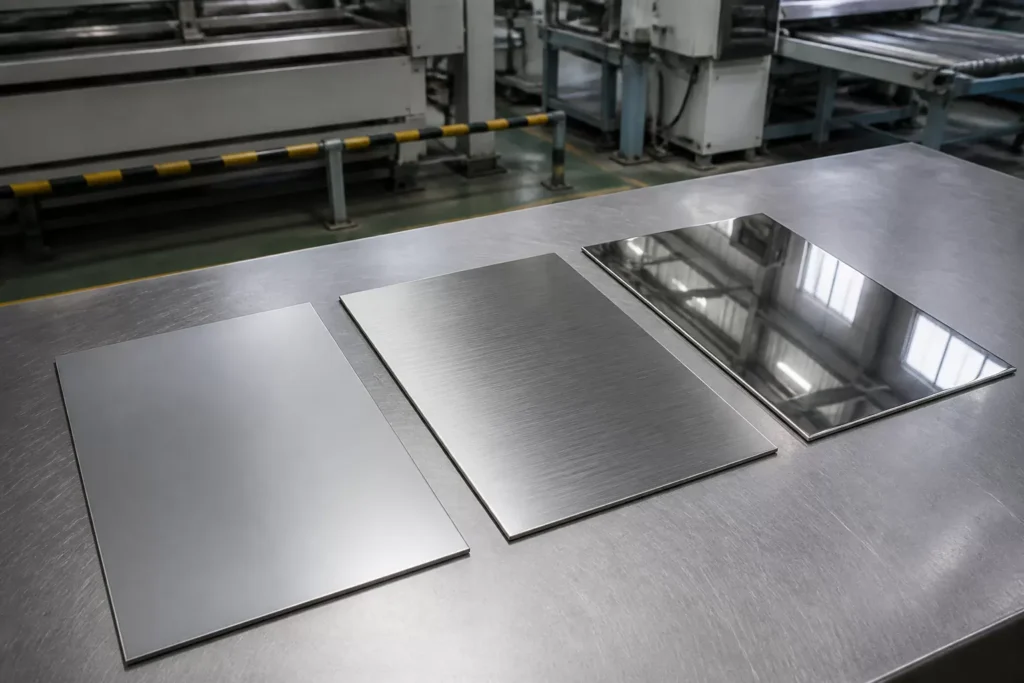
Polishing essentially relies on the micro-grinding and rolling actions of abrasive particles on the workpiece surface to remove an extremely thin metal layer, thereby eliminating grinding marks and reducing surface roughness. The uniqueness of magnesium oxide lies in the delicate balance of three key properties:
- Optimal Hardness: Magnesium oxide has a Mohs hardness of approximately 5.5, significantly lower than hard abrasives such as aluminum oxide (Mohs 9) and silicon carbide (Mohs 9.5). This allows it to act much more “gently” during metal cutting, minimizing the risk of scratching the workpiece surface or embedding abrasive particles into it.
- Inherently Sharp Morphology: Polishing-grade magnesium oxide is white with an ultrafine, uniform particle size. Its particles feature an octahedral, well-defined angular shape that provides excellent cutting edges capable of shearing off surface micro-asperities under minimal pressure.
- Chemical Inertness and Mildness: It is less prone to reacting with the polished metal and exerts a minimal “pull-out” effect on non-metallic inclusions in steel specimens. Therefore, it is exceptionally suitable for inclusion-sensitive metallographic evaluations, such as the polishing of graphite-containing cast iron specimens.
Consequently, magnesium oxide’s hallmark capability lies in the final fine polishing of soft metals. In addition, it is widely utilized in polishing precision components such as steel balls and bearing needle rollers, imparting high surface brightness and uniform smoothness. To achieve optimal performance, several key practical considerations should be kept in mind:
- Prepare freshly before use to avoid degradation. When exposed to water, magnesium oxide undergoes a hydration reaction to form magnesium hydroxide, which not only lowers grinding activity but may also contaminate the polishing disc. Therefore, in metallographic polishing, it is typically prepared into a suspension using distilled water just before use. Once polishing is complete, the polishing cloth should be removed immediately and rinsed thoroughly with running water to prevent residual slurry from deliquescing and deteriorating on the fabric.
- Susceptible to moisture and caking; store sealed against humidity. Magnesium oxide is highly hygroscopic; it readily absorbs moisture and carbon dioxide from the air, gradually leading to hydration, caking, and diminished activity. Mildly caked material can be crushed, sieved, and reused, whereas severely hardened material must be downgraded. It should be stored in a cool, dry, well-ventilated warehouse with relative humidity maintained below 50%–60%. Packaging must be sealed with an inner plastic liner, stacking height should be controlled, and the “First-In, First-Out” (FIFO) principle must be observed.
- Match particle size to the workpiece requirements. Different particle size grades correspond to different surface roughness targets: coarser particles offer stronger cutting power but may leave marks, making them suitable for removing larger defects; finer particles (W5 and below) are ideal for final mirror polishing. When selecting grades for bulk production, close attention should be paid to the particle size distribution (PSD) span, purity, and batch-to-batch consistency; otherwise, the stability of the polishing slurry formulation can be compromised.