
Messi Biology states that farmers planting fruit trees and vegetables in the acidic red soils of southern regions often encounter a tricky problem: yellowing leaves, interveinal chlorosis, and stunted fruit growth. In fact, this is largely a “sos signal” sent out by “magnesium-deficient” soil, and magnesium fertilizer pellets made from magnesium hydroxide are powerful helpers in dealing with this situation.
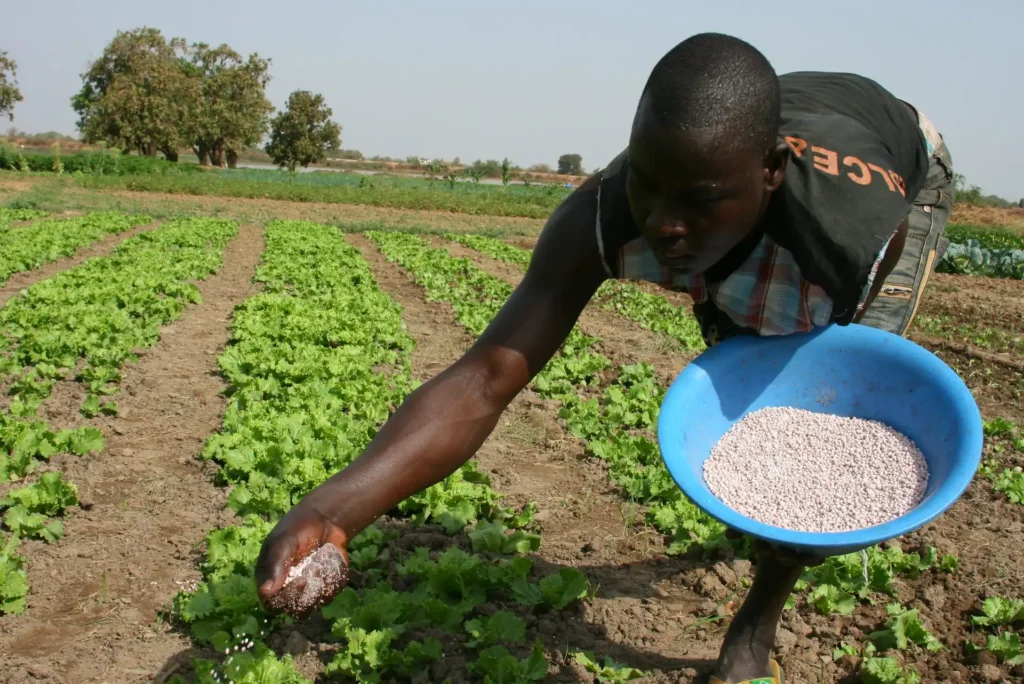
The main component of magnesium fertilizer pellets is magnesium hydroxide, with the chemical formula Mg(OH)₂. It is a weakly alkaline, slow-release magnesium fertilizer with a grayish-white appearance in the form of small particles or spheres. Compared with common magnesium sulfate, magnesium hydroxide has a lower solubility in water. Once it enters the soil, it does not release all at once; instead, driven by root exudates and soil microbial activity, it slowly and continuously releases magnesium ions, earning it the label of “long-lasting magnesium supplementation.” Magnesium fertilizer pellets are usually processed from magnesium hydroxide through a granulation process, resulting in uniform particles that are easy to spread and mechanically applied. Compared with traditional powdery magnesium fertilizers, they produce less dust, suffer less runoff, and are more conducive to precise application. Three core functions: magnesium supplementation, pH adjustment, and soil improvement.
First is magnesium supplementation. Magnesium is the core atom of the chlorophyll molecule, acting like the “ignition key” of the photosynthesis engine. Once magnesium is deficient, chlorophyll synthesis is hindered, and leaves develop typical interveinal yellowing, with older leaves showing symptoms first. After supplementing with magnesium, photosynthetic efficiency increases, sugar and dry matter accumulation multiply, and fruit sweetness, yield, and quality rise accordingly.
Second is pH adjustment. Acidification is severe in the red soils and latosols of southern China, and low pH exacerbates the toxicity of elements such as aluminum and manganese. Magnesium hydroxide is weakly alkaline; when applied to the soil, it can slowly neutralize acidic substances and raise the pH value. Field experiments in Nanan, Fujian, showed that after applying magnesium hydroxide together with organic fertilizer, the soil pH increased significantly by 0.45 units compared to the control group.
Third is soil improvement. After magnesium ions enter the soil colloids, they help improve the soil aggregate structure and enhance water and fertilizer retention capacities. Meanwhile, magnesium itself has a certain ability to adsorb heavy metals, offering auxiliary remediation value for mildly polluted cultivated land.
Magnesium fertilizer pellets are best suited for two types of scenarios: first, acidic soils deficient in magnesium (especially common in southern hilly and mountainous areas); second, crops that are magnesium-loving or sensitive to magnesium. Typical applicable targets include fruit trees such as citrus, pomelo, banana, grape, and loquat, as well as peanuts, root crops, tobacco, sugarcane, solanaceous vegetables, and leafy greens. Experiments in Minqing, Fujian, confirmed that applying magnesium hydroxide at 225 kg per hectare for Chinese cabbage and 120 kg for late rice resulted in yield increase amplitudes of up to 12.7% and 9.1%, respectively.
Because magnesium fertilizer pellets dissolve slowly, they are best applied deeply as a base fertilizer. After broadcasting, they should be plowed and thoroughly mixed with the tillage layer soil to ensure the fertilizer pellets are evenly distributed in the main active layer of the root system. For fruit trees, trenches or holes can be excavated and fertilized near the drip line of the canopy. During storage, they should be kept in a cool, dry place to prevent moisture absorption and caking. In acidic, magnesium-deficient plots, using magnesium fertilizer pellets as a “base fertilizer material”—applied deeply mixed into the soil and in measured quantities—allows them to quietly and slowly supply magnesium to crops while gently neutralizing the acidity. One small pellet yields a triple reward.