
Messi Biology states that within the multi-layer structure of a thermos flask’s glass inner liner, magnesium carbonate is not the main protagonist, yet it shoulders multiple responsibilities such as consolidating thermal insulation performance, protecting coatings, and extending lifespan. This white powder with the chemical formula MgCO₃ plays an irreplaceable role in the interlayer of the flask liner, owing to its porous structure, chemical stability, and thermal decomposition characteristics.
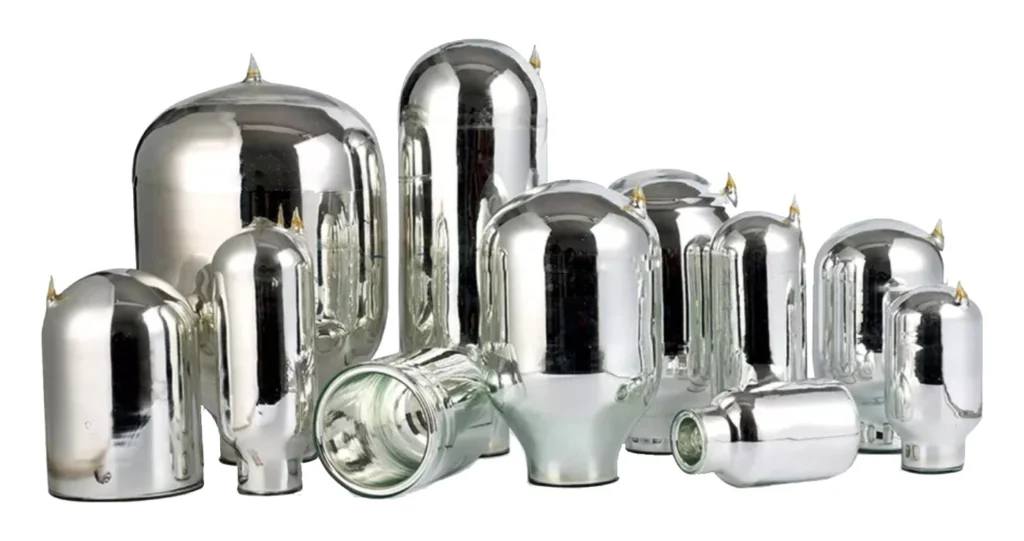
The inner liner of a thermos flask consists of two glass layers (inner and outer), with the middle interlayer evacuated to a high vacuum to block heat conduction and heat convection. Furthermore, a very thin reflective metal film (traditionally a silver mirror, but nowadays mostly aluminum or ion-plated coatings) is plated on the inner glass wall to reflect infrared heat radiation and “bounce” heat back into the flask. The problem is that the coating thickness is often only a few hundred nanometers, and it remains in a vacuum heating environment of nearly 300°C for a long time, making it highly vulnerable to oxidation, peeling, or interface reactions with the glass—which is precisely where magnesium carbonate steps in. The advantages of magnesium carbonate lie in: first, its decomposition temperature precisely matches the vacuuming process window; second, its decomposition product, magnesium oxide, continues to exert a protective effect (“one material, dual use”); and third, it is non-toxic, odorless, low-cost, and widely sourced, making it suitable for large-scale industrial production.
The Triple Action Mechanisms of Magnesium Carbonate
First layer: Sensitization and auxiliary deposition in the silver-plating process. The silver mirror reaction requires the glass surface to have extremely high cleanliness and activity; otherwise, silver atoms are difficult to attach evenly. After being slightly soluble in water, magnesium carbonate becomes weakly alkaline, which can adjust the pH value of the plating solution and provide a stable chemical environment for the reduction and deposition of silver. Its micro-fine particles can also form a uniform adsorption base layer on the glass surface, making the silver film smoother and denser, thereby reducing pinholes and flow marks.
Second layer: Acting as a protective intermediate isolation layer. During the vacuuming stage, the flask liner needs to be heated to 300–400°C to release adsorbed gases. At this time, the thermal stress and interface reactions between the silver film and the glass are most active. In this temperature range, magnesium carbonate just begins to decompose into magnesium oxide (MgO) and carbon dioxide. With a melting point as high as 2852°C, MgO is a typical high-temperature resistant, chemically inert material that can construct a stable “buffer barrier” between the glass and the silver film. This prevents silver atoms from diffusing into the glass and also blocks alkaline ions in the glass from seeping into the silver film to cause corrosion. This explains why early thermos manufacturing processes explicitly recorded combination schemes involving “silver plating and magnesium oxide plating.”
Third layer: Getter and desiccant in the interlayer. Even after vacuum treatment, trace amounts of water vapor and gas molecules may still remain in the interlayer, which over long periods would oxidize the silver film and reduce the vacuum level. The porous structure of magnesium carbonate endows it with excellent moisture absorption and adsorption capabilities, “locking” residual moisture in its micropores to maintain a dryness in the interlayer. This safeguards the vacuum degree and prevents the thermal insulation performance from decaying year by year.
From a chemical assistant in the silver mirror reaction to an isolation barrier for the coating and a drying guardian for the interlayer, magnesium carbonate runs through the key manufacturing links of thermos flask inner liners with a very low usage amount. It does not directly reflect heat, but it ensures that the silver film responsible for insulation lasts longer and the vacuum layer remains more stable—which is a textbook portrayal of “supporting roles enabling the protagonist” in industrial material design.