
Messi Biology states that at the seals of vials and infusion bags hides an inconspicuous rubber stopper—made of butyl rubber, it acts as the “gatekeeper” directly contacting medicinal liquids. The fact that this rubber stopper can remain in stable service for years is inseparable from the silent support of a white powder: magnesium oxide, seemingly an ordinary excipient, plays an irreplaceable role in the formulation of butyl rubber stoppers.
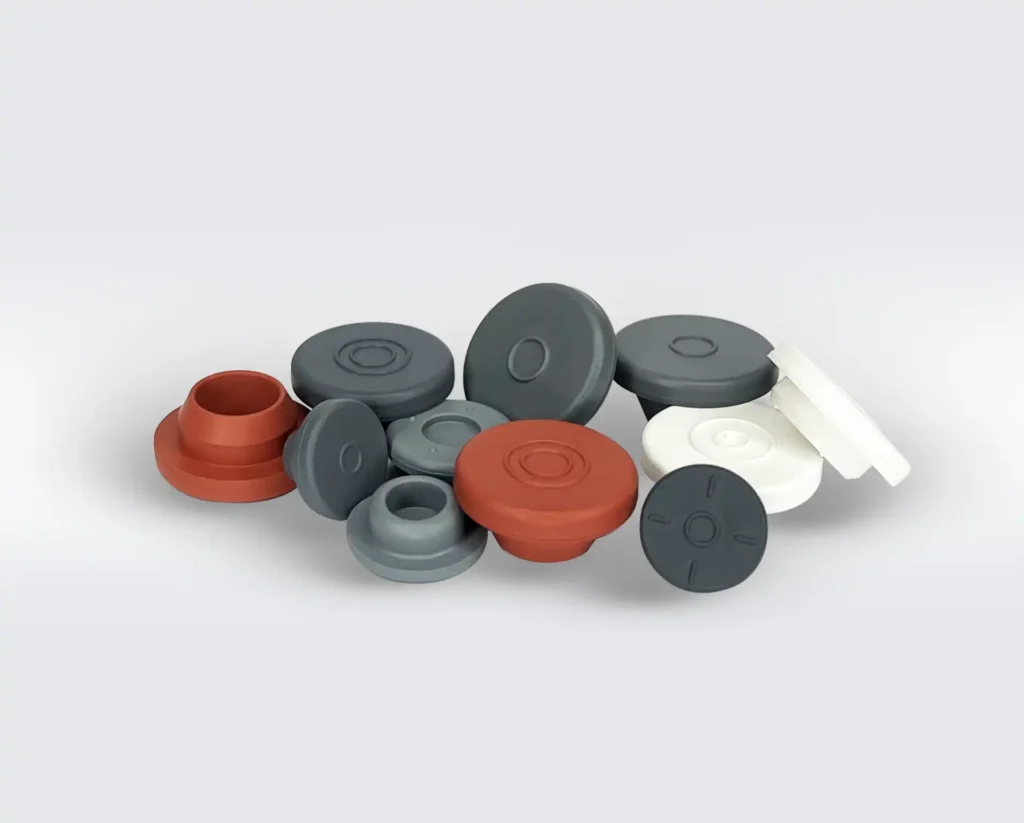
With its excellent airtightness and chemical inertness, butyl rubber has long replaced natural rubber to become the mainstream material for pharmaceutical bottle stoppers. However, it has an “inherent shortcoming” during vulcanization and molding: halogenated butyl rubber (brominated butyl, chlorinated butyl) releases acidic by-products such as hydrogen bromide and hydrogen chloride during high-temperature cross-linking. If these acidic substances are not treated in time, on the one hand, they will destroy the rubber macromolecular structure, causing the mechanical properties of the rubber stopper to decline and shedding particles; on the other hand, they may slowly migrate into the medicinal liquid, altering its pH value and triggering abnormal clarity or even excessive particle counts. Magnesium oxide was created precisely to solve this problem.
First is vulcanization activation. As a vulcanization activator, magnesium oxide can synergize with accelerators in the vulcanization system to accelerate the cross-linking reaction between rubber molecules, making vulcanization more uniform and thorough. Research shows that adding an appropriate amount of magnesium oxide can increase the tensile strength of the rubber compound to over 13 MPa, shorten the vulcanization cycle by 15%–30%, and significantly improve self-sealing performance after puncturing.
Second is acid absorption and neutralization. This is the most critical function of magnesium oxide. As an efficient acid scavenger, it can instantly capture the hydrogen halide generated during vulcanization, stabilizing the rubber compound system. This not only protects the rubber structure from acid corrosion and prevents equipment from being corroded, but also cuts off the pathway for acidic substances to migrate into the medicinal liquid from the source.
Third is heat-aging resistance. Pharmaceuticals need to undergo high-temperature sterilization and long-term storage. Rubber stoppers containing magnesium oxide can still maintain high tensile strength after hot-air aging, and the attenuation range of hardness and elasticity remains controllable, which is sufficient to support the 2–5 year shelf life of drugs.
The compatibility between the rubber stopper and the drug is directly related to medication safety. By neutralizing acidic residues and reducing extractables, magnesium oxide minimizes the risk of medicinal liquid contamination. Simultaneously, coordinated with surface coating technology, it can build an isolation barrier between the rubber and the medicinal liquid, which is particularly crucial for highly sensitive formulations such as vaccines and injections. However, not all magnesium oxide is suitable for rubber stopper formulations. Currently, mainstream applications predominantly use light active magnesium oxide, characterized by a fine particle size, large specific surface area, and moderate activity value (usually controlled between 100 and 150). It disperses more uniformly during mixing, preventing particle defects or surface blemishes inside the rubber stopper. Furthermore, the product must comply with pharmacopeia requirements, exercising strict control over calcium oxide, black spots, hydrochloric acid insolubles, and heavy metal impurities such as lead and arsenic.
From a rubber stopper to a bottle of medicine, even though magnesium oxide accounts for only a very small proportion of the formulation, it determines the stability of the entire chain. With its unique chemical properties, this white powder closely links rubber technology with drug safety, providing a visible guarantee for the quality of pharmaceutical packaging.