
Messi Biology states that relying on its comprehensive characteristics of fine particle size, low bulk density, weak alkalinity, and halogen-free environmental friendliness, light magnesium carbonate has become a core functional additive in PVC formulation systems. Integrating four major functions—filling and reinforcement, thermal stabilization synergy, flame retardance and smoke suppression, and processing improvement—it is widely used in downstream fields such as cable compounds, calendered films, artificial leather, and building profiles.
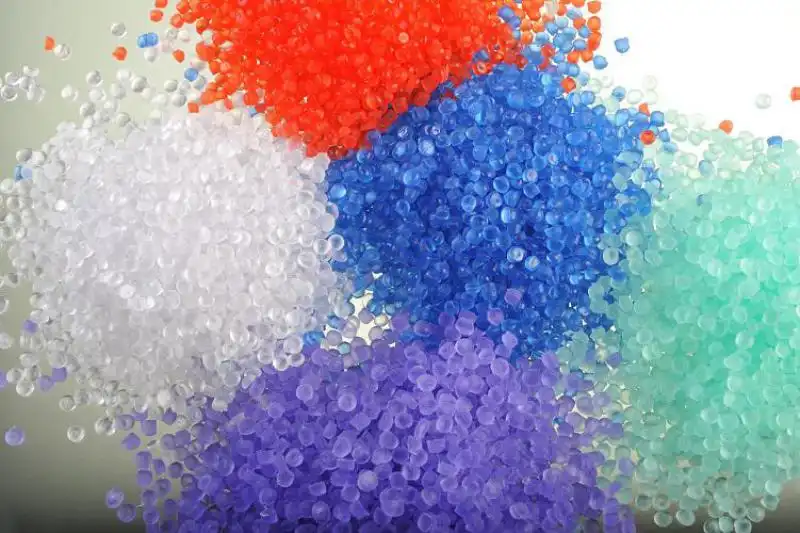
Light magnesium carbonate features a fine particle size and a specific surface area far higher than that of heavy calcium carbonate, with a bulk density as low as 0.15–0.2 g/cm³ and a fluffy flaky or chain-like crystal morphology. This structure enables it to uniformly embed into the gaps between polymer chains in the PVC matrix as “rigid support points,” forming a relatively tight interfacial bond with the resin. This enhances the tensile strength, flexural modulus, and tear resistance of the products while improving stiffness and dimensional stability. Compared with heavy calcium carbonate, its lower density also endows products with lightweight advantages, performing particularly prominently in flexible PVC applications requiring softness, such as shoe sole compounds and artificial leather.
At processing temperatures of 180–210°C, PVC continuously eliminates HCl, and the released HCl reversely catalyzes decomposition, creating a vicious cycle. Being weakly alkaline, light magnesium carbonate can neutralize free HCl and active chlorine sites in the system, mitigating chain degradation reactions and delaying yellowing and embrittlement of the products. In lead-free eco-friendly systems such as calcium-zinc stabilizers, it is often used as an auxiliary stabilizer compounded with stearic acid, organotin, or β- diketone synergists to compensate for the shortcomings of primary stabilizers in the mid-to-long-term thermal stability window. Its weak alkalinity can also neutralize trace acidic components generated by ester plasticizers or acidic lubricants at high temperatures, reducing the risk of equipment corrosion.
When a product is exposed to fire at temperatures exceeding 350°C, MgCO₃ undergoes endothermic decomposition: MgCO₃→MgO+CO₂↑. On one hand, this reaction absorbs a large amount of heat, lowering the surface temperature of the substrate; on the other hand, the released CO₂ forms an inert gas layer on the burning surface, diluting oxygen and combustible volatiles; meanwhile, the newly generated MgO deposits onto the molten surface, constructing a dense inorganic ceramic-like barrier layer that blocks the inward transfer of heat and oxygen. The entire combustion process is halogen-free, low-smoke, and low-toxicity, meeting the strict environmental flame-retardant requirements of high-end applications such as LSZH (Low Smoke Zero Halogen) cable compounds, home appliance housings, and mining plastics. It is also frequently compounded with magnesium hydroxide and aluminum hydroxide to form a synergistic flame-retardant system.
The flaky structure of light magnesium carbonate can reduce PVC melt viscosity during compounding, decrease friction between the material and the screw or mold, and inhibit roller sticking and mold sticking phenomena, making calendering, extrusion, and coating processes smoother. Its fine particles also assist pigments and stabilizers in dispersing more uniformly, improving product color consistency. Furthermore, its white, high-purity characteristics do not affect base color toning, allowing it to replace 20%–40% of high-priced functional fillers and significantly lowering formulation costs while ensuring performance.
In PVC cable sheathing and insulation compounds, the addition amount of light magnesium carbonate is usually controlled at 5–15 phr, balancing flame-retardant ratings and electrical insulation performance. In calendered films and advertising inkjet banners, 3%–8% is recommended, as excessive amounts may lead to a decrease in elongation at break. In building profiles and pipes, it can be compounded with heavy calcium carbonate—using light magnesium carbonate to boost toughness and heavy calcium carbonate to reduce costs—forming a complementary filler system. In artificial leather and wallpaper, it primarily functions to fill and thicken, as well as improve hand feel and whiteness.
It is worth noting that the application effect of light magnesium carbonate in PVC heavily depends on three indicators: particle size distribution, oil absorption value, and whiteness. Excessively coarse particle sizes easily produce surface “pitting,” excessively high oil absorption values will consume extra plasticizers, and insufficient whiteness restricts applications in light-colored products. As environmental regulations such as lead-free and low-VOC standards continue to tighten, the application boundaries of light magnesium carbonate—combining the dual attributes of stabilization synergy and halogen-free flame retardance—will continue to extend toward high-end PVC products.