
Powder Engineering Challenges of Whey Protein Powder
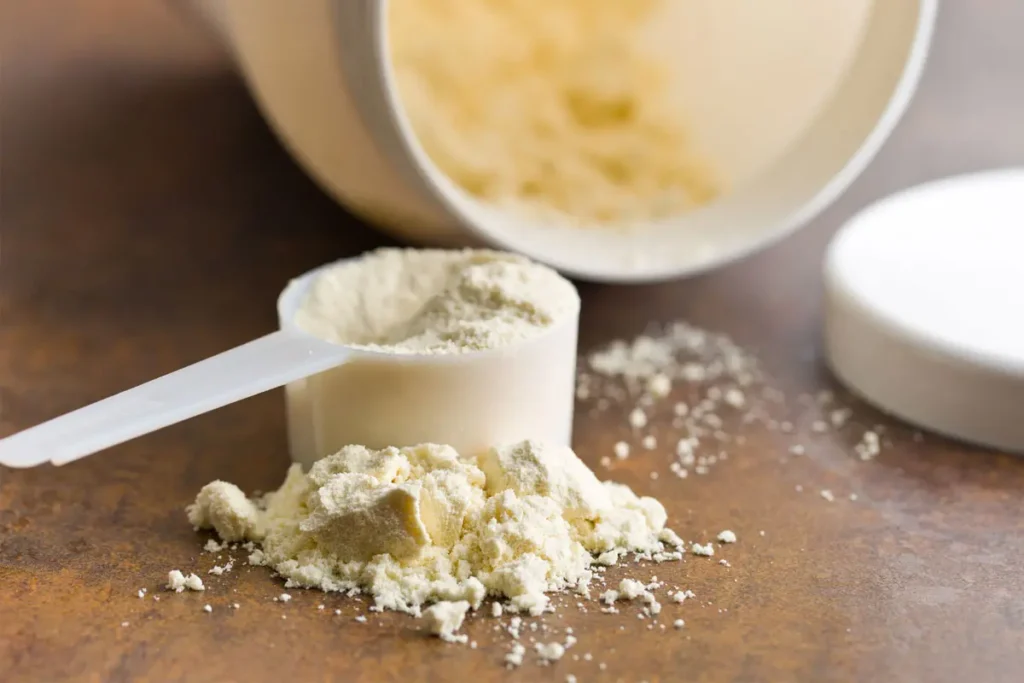
After spray drying and entering the packaging, storage, transportation, and terminal reconstitution stages, whey protein powder (whey protein concentrate, whey protein isolate) has long plagued manufacturers with issues such as caking, decreased flowability, and agglomeration during dissolution. Whey protein itself is highly hygroscopic; when water activity increases or the humidity of the storage environment changes, the particle surfaces tend to adhere, forming soft or hard lumps. When terminal consumers mix the powder using a shaker bottle, if the flowability is poor, the powder particles tend to float on the water surface or settle and clump at the bottom, directly affecting the user experience.
Common anti-caking solutions in the industry include adding anti-caking agents such as silicon dioxide, tricalcium phosphate, and magnesium stearate, or performing granulation and agglomeration during the fluidized-bed drying stage. Adding magnesium oxide as a food-grade processing aid or excipient represents an alternative approach.
Mechanism of Action of Magnesium Oxide as an Anti-caking Component
Magnesium oxide is a finely dispersed inorganic oxide powder that plays a dual role of physical isolation and moisture absorption regulation within the powder. Its particles form a thin layer of attachment on the surface of the whey protein particles, hindering direct contact between particles and the formation of capillary bridges. When ambient humidity fluctuates, the relatively low hygroscopicity of magnesium oxide (compared to whey protein) can buffer local moisture changes and delay the formation of liquid films on particle surfaces.
In addition, while the weak alkalinity of magnesium oxide holds little significance in a dry powder environment, upon contact with water during the reconstitution stage, its mild pH buffering capacity can help whey protein achieve the pH environment required for wetting more quickly, thereby reducing surface agglomeration. It should be noted that this effect is relatively weak and cannot replace the contribution of the granulation process to solubility and dissolution.
Addition Methods and Uniformity Control
Magnesium oxide is typically added during the powder post-treatment stage after spray drying and before packaging, utilizing a dry powder blending method. The key issue lies in mixing uniformity. The addition amount is very low (often on the order of a few per thousand, depending on product positioning and regulatory requirements). Inadequate mixing can result in local enrichment or absence of magnesium oxide; the former may cause fine white precipitates or taste variations during reconstitution, while the latter results in a failure of the anti-caking effect.
Multi-stage mixing is recommended: first pre-mix magnesium oxide with a small amount of whey protein powder (the dilution ratio can start from 1:10), and then feed it into the main blender to mix with the entire batch of powder. Mixing time and rotation speed should be validated based on the type of blender, with the relative standard deviation (RSD) of mixing uniformity used as one of the release indicators.
Quality Control Indicators and Regulatory Boundaries
The evaluation of anti-caking performance should not rely solely on “feel.” It is recommended to simulate accelerated storage conditions in the laboratory (such as placement at 40°C and 75% RH for a fixed period) to test the powder’s bulk density change, angle of repose, caking rate (sieve method), and reconstitution time. The relationship between the magnesium oxide addition amount and the aforementioned indicators should be supported by internal data rather than adopting a universal ratio.
At the regulatory level, it is necessary to confirm the usage identity and scope of application of magnesium oxide as a processing aid or food additive in the target product category, and the labeling method on the package should be confirmed with the compliance department. For export products, the corresponding regulations of the target markets (such as the US FDA and EU E530) must also be checked.
The anti-caking treatment of whey protein powder is a systematic project: spray drying parameters, granulation technology, packaging barrier properties, and warehouse temperature and humidity all play a role in every link. Magnesium oxide is one variable that can be utilized within this system, rather than a universal panacea. R&D personnel need to evaluate its marginal contribution within the entire powder supply chain.