
Messi Biology states that with the rapid popularization of lithium batteries today, battery safety remains the core focus of both the industry and users. As the “heart valve” of a lithium battery, the separator bears the critical mission of isolating the positive and negative electrodes while allowing the free passage of ions. Its performance directly determines the safety and stability of the battery. As a core functional material for battery separators, magnesium hydroxide has become a key force in enhancing battery safety due to its excellent heat resistance, flame retardancy, and protective characteristics, building a solid safety defense line for new energy power systems.
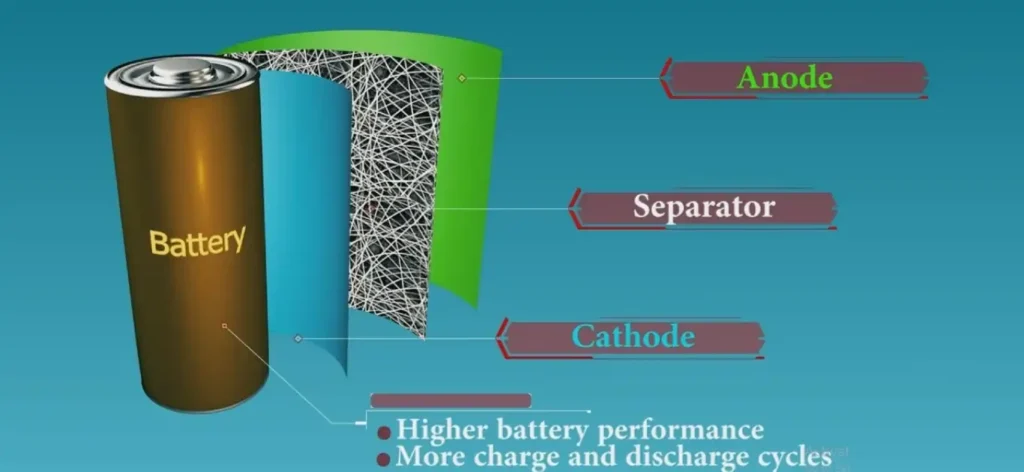
Traditional lithium battery separators are mostly made of polyolefin materials. While they offer advantages such as being thin, flexible, and having good ion conductivity, they possess obvious shortcomings: poor heat resistance, a tendency to shrink or melt at high temperatures (which triggers short circuits through direct contact between the positive and negative electrodes), insufficient mechanical strength (making them prone to penetration by lithium dendrites formed during charging and discharging), and a lack of flame retardancy, which exacerbates the risk of thermal runaway during abnormal temperature spikes. These defects are major triggers for battery fires and explosions. The emergence of magnesium hydroxide-coated separators precisely addresses these industry pain points.
The core role of magnesium hydroxide in battery separators stems from its unique thermochemical properties. When a battery experiences abnormal conditions such as overcharging, extrusion, or high temperatures, and the internal temperature reaches approximately 340°C, magnesium hydroxide undergoes an endothermic decomposition reaction. This instantly absorbs a large amount of heat, rapidly “cooling” the interior of the battery and effectively delaying the thermal runaway process. The water vapor released during decomposition dilutes the flammable gases volatilized from the electrolyte, reducing the possibility of combustion. Meanwhile, the resulting solid magnesium oxide forms a dense and hard ceramic protective layer on the separator surface. Even in high-temperature environments exceeding 200°C, the separator maintains its structural integrity, eliminating shrinkage and short-circuit issues and blocking safety hazards at the source.
Beyond flame retardancy and heat resistance, magnesium hydroxide significantly enhances the mechanical protection of the separator. Nano-scale magnesium hydroxide particles are uniformly coated on the separator surface to form a rigid skeletal structure, effectively increasing the separator’s puncture and tensile resistance. During battery cycling, it strongly inhibits the growth and penetration of lithium dendrites, reducing the risk of internal short circuits and extending battery life. Additionally, magnesium hydroxide possesses excellent electrolyte wettability, which improves the separator’s ability to adsorb and retain the electrolyte. This optimizes ion transmission efficiency, ensuring more stable battery charging and discharging while balancing safety and electrochemical performance.
As an inorganic functional material, magnesium hydroxide offers outstanding advantages in terms of environmental protection, non-toxicity, and chemical stability. It contains no harmful substances, and its high-temperature decomposition products are solely magnesium oxide and water, releasing no toxic gases and meeting green environmental standards. Within the battery environment, magnesium hydroxide does not react adversely with the electrolyte or electrode materials and does not interfere with the battery’s normal electrochemical processes, showing excellent compatibility. Compared to traditional alumina (aluminum oxide) coating materials, nano-magnesium hydroxide has a lower density, which reduces the overall weight of the separator and helps improve battery energy density, making it the preferred coating material for power battery separators.
Magnesium hydroxide-modified separators are already widely used in fields such as new energy vehicles, energy storage power stations, and consumer electronics. Whether navigating the rigorous driving environments of electric vehicles or meeting the long-term stability requirements of large-scale energy storage systems, magnesium hydroxide provides stable performance to safeguard battery operations. As nano-modification and coating processes continue to advance, the performance advantages of magnesium hydroxide will be further unleashed, adapting to the next generation of lithium batteries with higher energy densities and stricter safety standards.
The small separator holds the key to battery safety. In the form of a modest white powder, magnesium hydroxide serves as a “safety shield” for battery separators through its multi-faceted advantages in heat resistance, flame retardancy, protection, and environmental friendliness. It not only addresses the performance gaps of traditional separators but also pushes lithium battery safety standards to new heights. Amidst the rapid development of the new energy industry, magnesium hydroxide will continue to play a pivotal role, contributing indispensable material strength to the safe application and popularization of clean energy.