
Messi Biology states that bentonite is a type of layered silicate clay with montmorillonite as its core. Leveraging its properties of water absorption, expansion, ion exchange, adsorption, and colloidal characteristics, it is widely used in fields such as drilling, metallurgy, environmental protection, and construction materials. However, natural bentonite often faces shortcomings such as insufficient acid and alkali resistance, limited adsorption selectivity, and poor colloidal stability. Magnesium oxide (MgO), as a mild, low-cost, and environmentally friendly inorganic modifier, has become a key auxiliary agent for improving bentonite performance. The synergy between the two revitalizes this traditional mineral material.
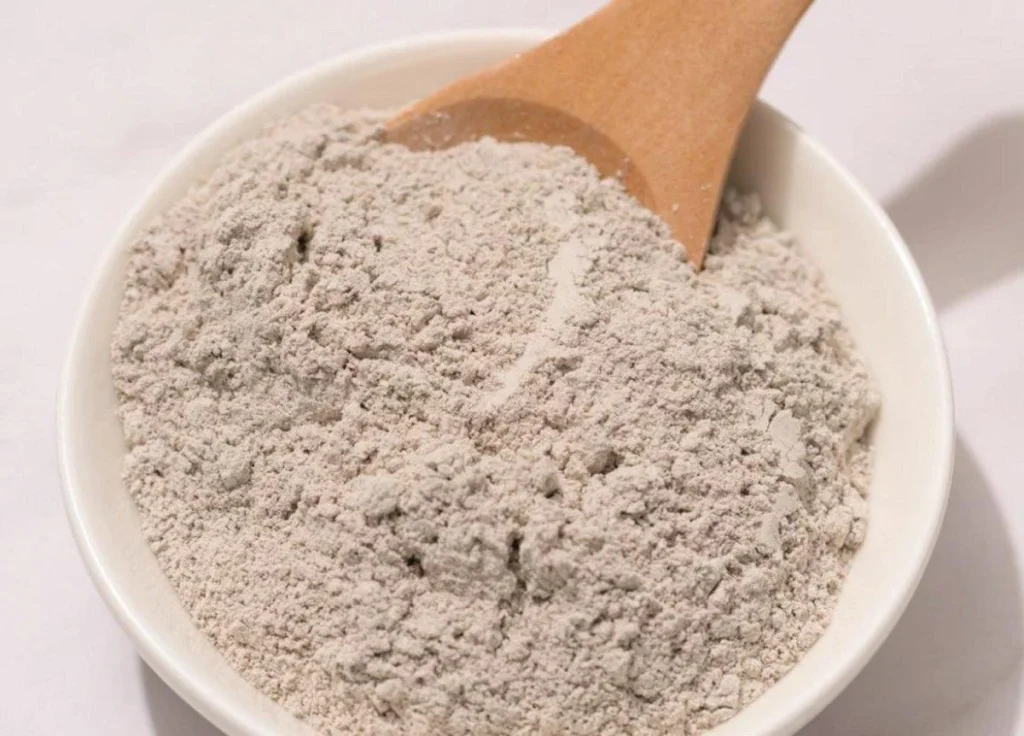
The core of magnesium oxide’s modification of bentonite lies in interlayer regulation and surface charge reconstruction. The surfaces of bentonite lamellae are negatively charged, with exchangeable cations filling the interlayers. Magnesium oxide dissolves slightly in water and slowly releases magnesium ions (Mg²⁺). These ions enter the interlayers to displace original ions, propping up the interlayer spacing and expanding the specific surface area while simultaneously adjusting the surface potential to stabilize the system. This process produces no toxic by-products, aligning with green chemical requirements.
In the quality evaluation of bentonite, magnesium oxide is an essential reagent for testing the “colloidal value.” The colloidal value reflects the dispersion, hydration, and gel-forming ability of bentonite, serving as a core index for determining mineral types and grades. During testing, bentonite is mixed with water, and magnesium oxide is added to promote the uniform aggregation of particles into a stable gel; the quality is then quantified by measuring the gel volume. Without magnesium oxide, it would be difficult to accurately calibrate the colloidal performance of bentonite, making it indispensable for industry testing.
Environmental water treatment is a significant application scenario for MgO-modified bentonite. Ordinary bentonite has limited adsorption for anionic pollutants, heavy metals, and antibiotics. Once loaded with nano-magnesium oxide, the material’s acid and alkali resistance is significantly improved, maintaining high activity even under slightly acidic conditions. It can efficiently capture heavy metals such as cadmium and lead, as well as antibiotic pollutants, forming stable complexes for easy separation and recovery. Compared to iron and manganese oxides, magnesium oxide offers lower costs and better environmental compatibility, showing prominent advantages in treating industrial wastewater and landfill leachate.
In the field of drilling mud, magnesium oxide also plays a vital role. It optimizes the rheology of the mud, enhancing plastic viscosity and thixotropy. This ensures the mud is easy to pump during agitation and quickly forms a gel when static, effectively carrying rock cuttings and protecting the wellbore from collapse. Meanwhile, magnesium-based modification improves the salt and temperature resistance of the mud, making it suitable for complex strata and deep-well drilling, reducing water loss, enhancing the density of the filter cake, and extending the lifespan of drilling tools.
In metallurgy pellets and construction materials, magnesium oxide can improve the bonding strength and thermal stability of bentonite. As a binder for iron ore pellets, MgO-modified bentonite reduces the required dosage, increases the cold and hot strength of the pellets, and lowers smelting energy consumption. In refractory and leak-stopping materials, the hydration of magnesium oxide produces magnesium hydroxide crystals, which fill pores, enhance anti-shrinkage and airtightness, and improve material durability.
Furthermore, magnesium oxide endows bentonite with flame-retardant and weather-resistant potential. Magnesium-based composites decompose when heated to absorb heat, release inert gases, and form a dense ceramic layer that blocks heat and oxygen. This makes them suitable for flame-retardant coatings, plastics, and rubber. Their acid, alkali, and salt-spray resistance also make them ideal for marine anti-corrosion and outdoor weather-resistant materials.
From testing reagents to functional modification, and from environmental water purification to engineering materials, magnesium oxide compensates for the performance gaps of bentonite and expands its application boundaries in a mild and efficient manner. In the future, with advancements in nano-composites and precise surface regulation technologies, MgO-modified bentonite will play an even more critical role in low-carbon materials, pollution control, and high-end manufacturing, ensuring that natural minerals continue to create value in modern industry.