
Hebei Messi Biology Co., Ltd. states that in the process of modern industrial civilization, activities such as iron and steel smelting, thermal power generation, and chemical production have driven social progress while also bringing severe environmental challenges. Among them, nitrogen oxide (NOx) emissions are one of the primary culprits leading to air pollution, acid rain, and smog. To protect the blue skies, the industrial sector has widely adopted SCR (Selective Catalytic Reduction) denitration technology. In this core technology, the catalyst serves as the “heart,” while magnesium oxide, functioning as a key component or support, is an indispensable “unsung hero.”
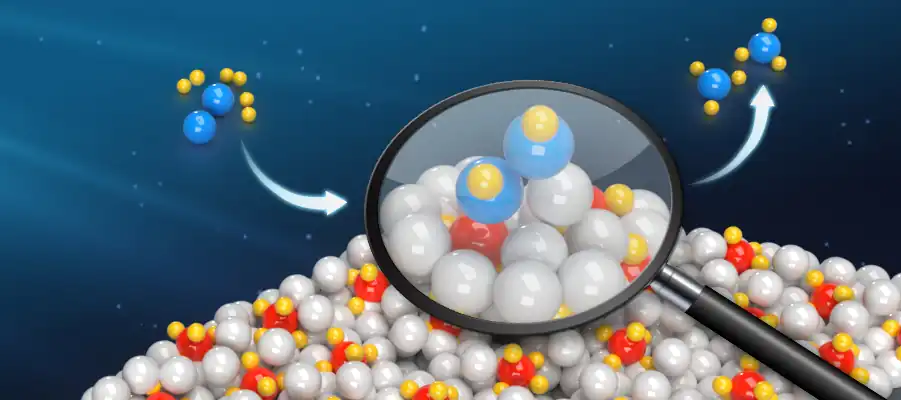
Magnesium oxide (MgO), a common white powder, exhibits exceptional performance in the field of denitration catalysts due to its unique physical and chemical properties. First, it possesses outstanding thermal stability. Industrial flue gases typically have high and fluctuating temperatures, and many carrier materials are prone to sintering or structural collapse under prolonged high-temperature erosion, leading to catalyst deactivation. Known for its high melting point, magnesium oxide can maintain a robust framework structure under harsh operating conditions, ensuring that the catalyst enjoys a “long service life and high reliability.”
Second, the surface basicity of magnesium oxide is the secret weapon behind its poisoning resistance. Industrial flue gas not only contains nitrogen oxides that need to be treated, but also frequently carries harmful impurities such as sulfur and arsenic. Traditional acidic supports tend to react with these acidic gases, forming stable salts that cover the catalyst surface, resulting in “poisoning” and deactivation. As a basic oxide, magnesium oxide can inhibit such side reactions to a certain extent, protecting the active sites on the catalyst surface, thereby extending the service cycle of the catalyst and reducing replacement costs for enterprises.
Furthermore, from the perspective of reaction mechanism, magnesium oxide can also promote the dispersion of active components (such as vanadium, tungsten, titanium, etc.). By supporting active ingredients on a magnesium oxide carrier with an appropriate specific surface area, the activity and efficiency of the catalyst can be significantly enhanced, enabling efficient denitration reactions even at lower temperatures. This means that enterprises can reduce energy consumption while meeting environmental emission standards.
It is worth mentioning that with increasingly stringent environmental requirements, researchers are developing novel magnesium-based catalysts, such as magnesium-aluminum spinel. While maintaining high strength and resistance to poisoning, these materials further enhance catalytic activity and wear resistance. The application of magnesium oxide in denitration catalysts is a paradigm of the perfect combination of materials science and environmental engineering. Although it quietly resides within the reaction tower without seeking the spotlight, it builds a solid defense line through its excellent characteristics of high temperature resistance, poison resistance, and high stability. It is precisely this “invisible armor” that assists the industrial juggernaut in achieving a green transition, making our skies bluer.