
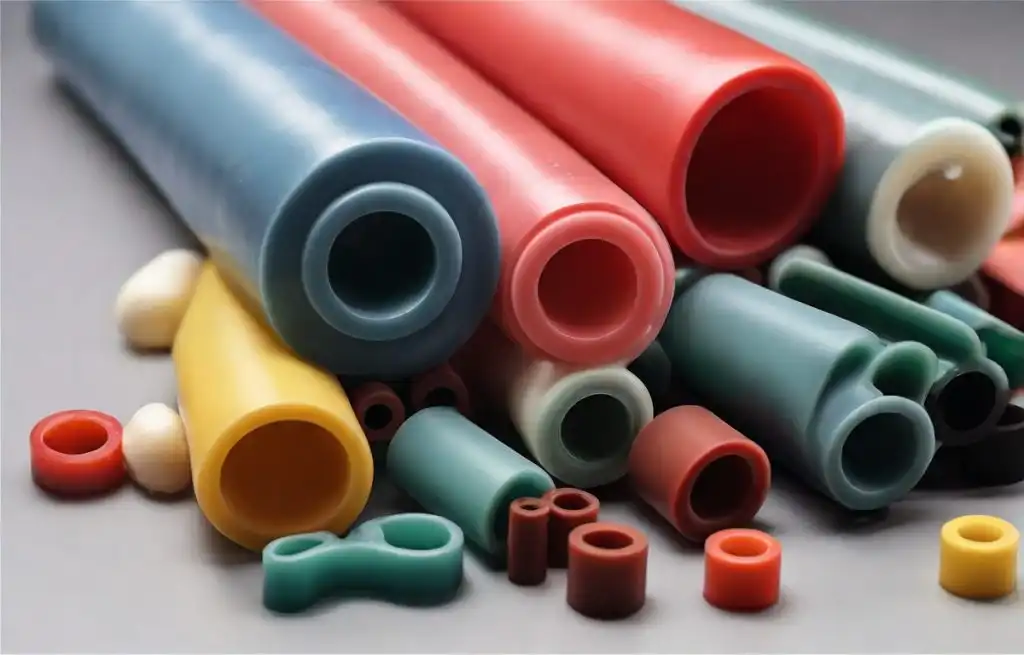
Messi Biology states that Thermoplastic Elastomers (TPE) combine the high elasticity of rubber with the recyclable processability of plastics, making them widely used in fields such as cabling, automotive sealing, consumer electronics, and household accessories. Within their formulation systems, active magnesium oxide (MgO) serves as a critical functional additive that determines processing stability, mechanical properties, and service life. Although used in small quantities, its unique chemical and physical characteristics empower and upgrade TPE materials.
Distinct from ordinary light or heavy magnesium oxide, the core advantages of active magnesium oxide lie in its high specific surface area, nano-scale particle size, and high chemical reactivity. Microscopically, it possesses a loose, porous structure with a surface rich in unsaturated bonds and lattice defects. This allows it to react rapidly with the TPE matrix, vulcanization systems, stabilizers, and other components. It functions consistently throughout the entire process of mixing, extrusion, and injection molding, acting as an indispensable “invisible helper” in high-end TPE formulations.
In the processing of thermoplastic elastomers, the primary roles of active magnesium oxide are acid absorption, stabilization, and anti-scorching. Halogen-containing TPEs (such as chlorinated polyethylene-based TPE) are prone to releasing acidic substances like hydrogen chloride (HCl) during high-temperature processing and long-term use, which triggers molecular chain degradation and causes the material to yellow or become brittle. Due to its alkaline nature, active magnesium oxide quickly neutralizes these acidic byproducts, blocking the autocatalytic aging pathway. Simultaneously, it inhibits early vulcanization, enhancing the safety of mixing and storage, which leads to more stable production and higher yield rates.
Furthermore, it serves as an efficient vulcanization activator and reinforcing/toughening agent. By working synergistically with zinc oxide and accelerators to form an activation system, it lowers the activation energy of the cross-linking reaction, accelerates the vulcanization speed, and increases cross-link density. This ensures that while the TPE maintains its soft elasticity, its tensile strength, tear resistance, and wear resistance are significantly improved. Nano-scale particles disperse uniformly between the soft and hard segments, forming rigid support points that limit excessive molecular chain slippage, balancing elasticity with structural strength—ideal for applications with rigorous mechanical requirements like seals and handles.
Additionally, active magnesium oxide imparts excellent anti-aging and environmental characteristics to TPE. Its lattice oxygen ions can capture free radicals generated by thermal-oxidative and UV aging, inhibiting the oxidation chain reaction. This allows the material to be used long-term across a wide temperature range of -40°C to 120°C without cracking or deformation. As an inorganic, eco-friendly additive, it is halogen-free and low-smoke, releasing no harmful substances and reducing VOC (Volatile Organic Compound) emissions. This helps TPE meet stringent environmental standards for automotive interiors, food contact materials, and children’s products while increasing the number of times a material can be recycled, aligning with green manufacturing trends.
Selecting the right active magnesium oxide for TPE requires a focus on activity value, specific surface area, particle size distribution, and purity. Products with high activity, high dispersibility, and low impurities can achieve superior results at lower dosages, avoiding surface defects caused by poor dispersion. Currently, as TPE moves toward high-performance, lightweight, and eco-friendly upgrades, specialized active magnesium oxide has evolved from an optional additive into a core formulation component, supporting the iteration of high-end elastomer materials.
From the soft grips of daily necessities to automotive seals and precision cable sheathing, active magnesium oxide for thermoplastic elastomers plays a massive role despite its small physical presence. With its stable chemical performance and efficient functional traits, it optimizes processing, enhances performance, and extends product life. It has become an essential bridge connecting basic materials to high-end applications, injecting lasting momentum into the green and efficient development of polymer materials.