
According to Messi Biology, in the fields of modern industry and energy, gas turbines are hailed as the “pearl in the crown” of industrial manufacturing. From powering giant aircraft soaring through the blue skies to providing surging propulsion for ocean-going mega-vessels, and serving as the “backbone” for power grid peak shaving, the efficient operation of gas turbines relies on rigorous fuel standards. However, lurking within the “diet” of these power behemoths is an invisible “killer”—vanadium. To tame the hazards of vanadium, a special material named “magnesium oxide” has emerged, becoming an indispensable “guardian” for heavy-duty gas turbines.
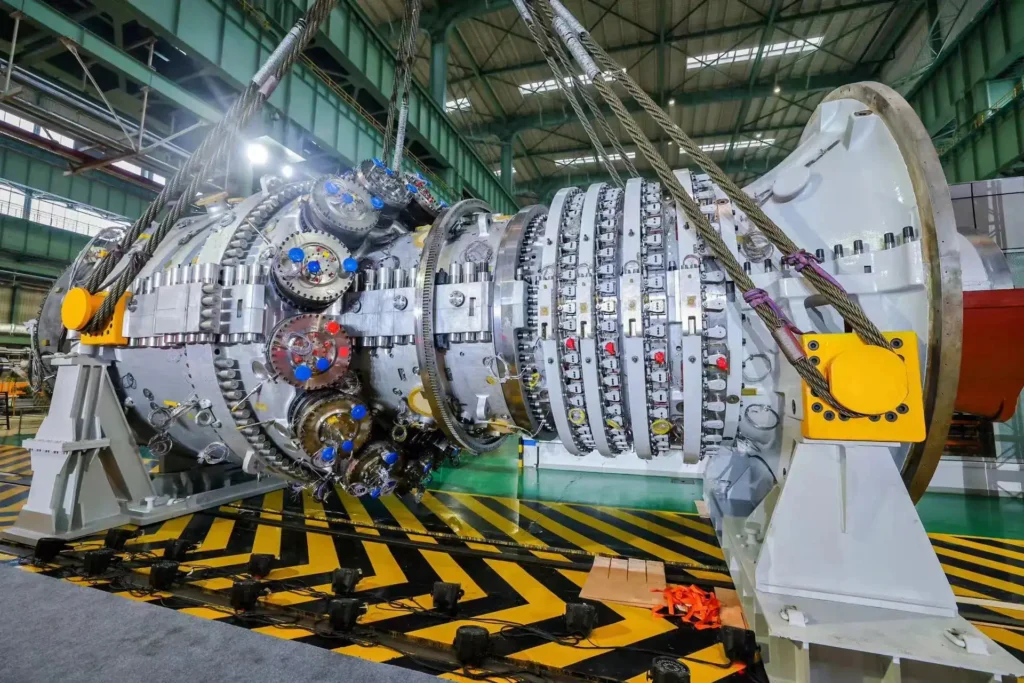
Many gas turbines, especially heavy-duty units used in marine propulsion and power generation, often run on heavy fuel oil (such as residual oil). While such fuels are low in cost and high in calorific value, they also contain relatively high levels of impurities. Among them, vanadium (V) is one of the most troublesome elements. Vanadium exists in fuel oil in the form of organometallic compounds. In the high-temperature environment of the gas turbine combustion chamber, vanadium is oxidized into vanadium pentoxide (V2O5). This is far more than a simple oxidation reaction; vanadium pentoxide is a strongly acidic oxide with a very low melting point (approx. 690°C). When it flows across turbine blades along with high-temperature combustion gases, it melts, adheres to the blade surfaces, and reacts chemically with the protective aluminum oxide (Al2O3) or chromium oxide (Cr2O3) films on the blades. This reaction is known as “hot corrosion.” It rapidly dissolves the protective layer on the metal surface, exposing the base alloy directly to the erosion of high-temperature gases, leading to blade thinning, pitting, and even fracture. Once turbine blades fail, the entire gas turbine faces a catastrophic shutdown accident.
To prevent vanadium corrosion, engineers have devised a simple yet highly efficient solution—adding “vanadium inhibitors.” Among numerous inhibitors, magnesium oxide is highly favored for its exceptional chemical properties. The reason magnesium oxide can become the “bane” of vanadium is primarily due to its basic (alkaline) nature, akin to an “acid-base neutralization” reaction in chemistry. When specially processed magnesium oxide powder is injected into the fuel system or combustion chamber, it reacts with the highly corrosive vanadium pentoxide.
At high temperatures, magnesium oxide (MgO) “captures” vanadium pentoxide, converting it into high-melting-point magnesium vanadates (such as 3MgO⋅V2O5 or 2MgO⋅V2O5). The melting points of these vanadates are typically much higher than the operating temperature of gas turbines; therefore, they no longer exist in the form of liquid slag, but are discharged with the exhaust gas as solid powder. In this way, liquid corrosive agents that would otherwise attack metal blades are transformed into harmless solid dust, thereby completely cutting off the source of hot corrosion. However, not all magnesium oxide is suitable for use as a vanadium inhibitor. Magnesium oxide applied in gas turbines requires extremely high purity, ultra-fine particle size, and excellent dispersibility. Only nano-scale or micro-scale high-activity magnesium oxide can fully contact and react with vanadium within the brief flash of combustion. In addition, the dosage of the additive must be precisely controlled—usually added according to specific stoichiometric ratios based on the vanadium content in the fuel oil—to ensure neutralization efficacy while preventing excessive ash content from affecting turbine efficiency.
From microscopic chemical neutralization reactions to macroscopic power machinery protection, small magnesium oxide powders play a crucial “scavenger” role inside gas turbines. By sacrificing itself and transforming into high-melting-point ash, it trades for the long-term safety of multi-million-dollar turbine blades. The application of this material not only extends the service life of gas turbines and reduces expensive maintenance costs, but also allows us to enjoy cheap energy and powerful propulsion while marveling at the wisdom and charm of materials science.