
Messi Biology states that waterproofing membranes are core materials in construction waterproofing engineering, widely used in scenarios such as roofing, basements, and tunnels. Among numerous functional additives, magnesium oxide (MgO), with its stable chemical properties and excellent heat resistance and acid inhibition capabilities, has become a key raw material for enhancing the performance and extending the service life of waterproofing membranes. It is extensively applied in rubber-based, modified bitumen, and thermoplastic elastomer (TPE) waterproofing membranes.
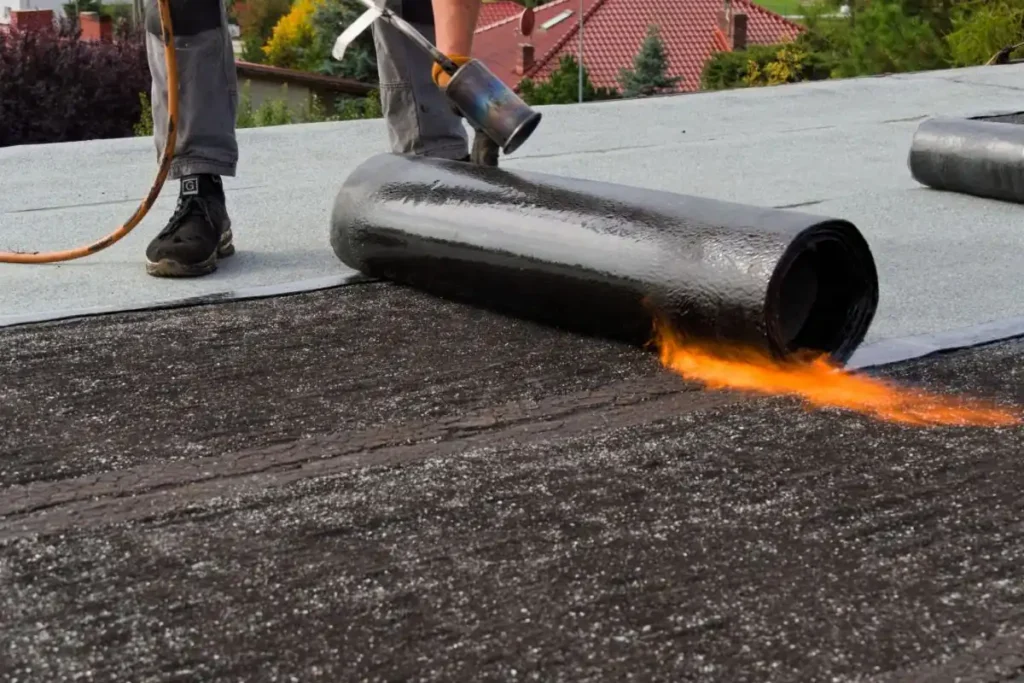
The core role of magnesium oxide in waterproofing membranes is acid absorption and thermal stability. Chlorinated polyethylene (CPE) and chloroprene rubber (CR) are commonly used base materials for waterproofing membranes. These chlorine-containing polymer materials are prone to decomposition and the release of acidic gases such as hydrogen chloride (HCl) during high-temperature processing or long-term exposure to sun and rain. This not only corrodes equipment and building structures but also accelerates the aging, cracking, and loss of elasticity of the membranes. Magnesium oxide, being weakly alkaline, can quickly neutralize acidic gases and block the autocatalytic degradation of the material. This significantly improves the heat resistance, weatherability, and service life of the membranes, ensuring they do not easily powder or crack during long-term outdoor use.
Secondly, magnesium oxide serves as a cross-linking reinforcement and processing aid. Rubber-based waterproofing membranes need to form a stable network structure through cross-linking. Magnesium oxide acts as a cross-linking assistant, improving cross-linking density and reaction efficiency, which results in better tensile strength and elongation at break, balancing toughness and strength. Simultaneously, it improves the flowability of the compound, reduces scorching and defects during extrusion and calendering processes, ensures a smooth surface and uniform thickness, and increases the yield rate and construction adaptability.
In terms of flame retardancy and safety, magnesium oxide also performs outstandingly. It is non-toxic, halogen-free, and non-volatile, and it does not release toxic fumes at high temperatures. It serves as an environmentally friendly flame retardant and smoke suppressant component, elevating the fire rating of the membranes. During combustion, magnesium oxide forms a dense char layer on the surface, isolating oxygen and heat, delaying the spread of flames, and reducing fire risks. This makes it suitable for engineering projects with high safety requirements, such as residential buildings, subways, and underground pipe galleries.
Furthermore, magnesium oxide enhances the chemical resistance and dimensional stability of the membranes. Its strong chemical inertness allows it to resist erosion from acids, alkalis, oils, and mold, making it suitable for special environments like chemical workshops and sewage treatment plants. It also reduces the thermal expansion and contraction coefficient of the material, minimizing bulging and deformation caused by temperature fluctuations, thus ensuring the continuity and reliability of the waterproof seal. Different types of membranes have varying requirements for magnesium oxide: rubber membranes prioritize high-activity and high-purity MgO to ensure acid absorption and cross-linking efficiency; thermoplastic membranes like TPO and EVA often use nano-scale or surface-modified MgO to improve dispersibility and flame retardancy; modified bitumen membranes utilize MgO to enhance heat stability and reduce the risks of high-temperature flowing or low-temperature cracking.
As construction waterproofing moves toward long-term durability, environmental protection, and safety, the application of magnesium oxide is becoming increasingly widespread. With its advantages of low cost, multi-functionality, and lack of environmental hazards, it has become an indispensable functional raw material for waterproofing membranes. In the future, technological progress in ultrafine, high-activity, and specialized magnesium oxide will further drive waterproofing membranes toward high performance, long life, and green low-carbon development, providing more reliable waterproofing protection for construction engineering.