
With the rapid development of 5G communications, new energy vehicles, and LED lighting, the integration level of electronic components is becoming increasingly high, and the accompanying “heat dissipation” issue has become a major headache for engineers. If heat cannot be dissipated in a timely manner, equipment will not only suffer from performance degradation but may even have a shortened lifespan. Traditional thermal management materials largely rely on metals, but metals are usually conductive, making them unsuitable for applications requiring electrical insulation. Thus, PA (polyamide, commonly known as nylon) thermal conductive materials—which are both insulating and thermally conductive—have emerged. The unsung hero in this field is modified magnesium oxide.
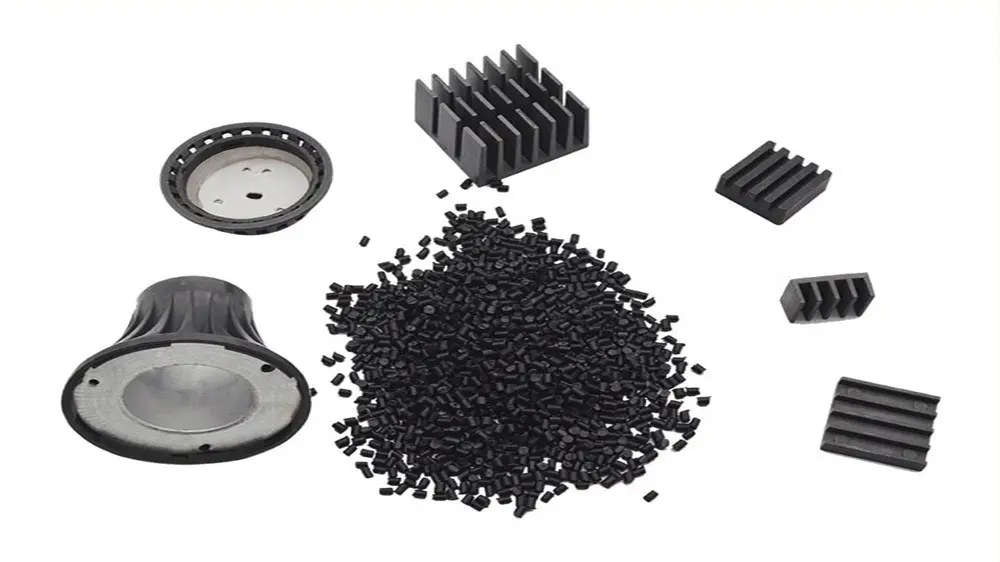
As we all know, ordinary nylon plastic is a poor thermal conductor, acting much like a thermal underwear worn by electronic components, trapping heat inside so it cannot escape. To change this, scientists have attempted to incorporate thermally conductive fillers into nylon. Among numerous options, magnesium oxide stands out due to its high thermal conductivity, excellent electrical insulation, and relatively low cost. However, directly mixing ordinary magnesium oxide powder into nylon often yields unsatisfactory results. This is because inorganic powders and organic resins are naturally as incompatible as oil and water. At this point, “modification” becomes a crucial step. Unmodified magnesium oxide has high surface energy and is prone to agglomeration. In the nylon matrix, it behaves like scattered sand, making it not only difficult to form effective thermal pathways but also detrimental to the mechanical strength of the plastic, rendering it brittle. Modified magnesium oxide, on the other hand, is coated with a specially tailored “organic outer layer” through special surface treatment technologies (typically using coupling agents or other modifiers).
This “outer layer” magically improves the interfacial compatibility between magnesium oxide and the nylon resin. The modified magnesium oxide can be evenly and uniformly dispersed “lurking” within the nylon matrix without clumping together. When these particles reach a certain filling volume, they can contact one another, building microscopic “thermal highways” inside the plastic. Heat is rapidly transferred along these pathways constructed by the modified magnesium oxide, thereby achieving a leap in the overall thermal conductivity of the material. Meanwhile, thanks to the enhanced interfacial bonding force, the toughness of the composite material does not drop drastically despite the filler addition, preserving the excellent processing performance and mechanical strength inherent to nylon.
It can be said that modified magnesium oxide not only resolves the contradiction between thermal conductivity and electrical insulation being difficult to achieve simultaneously, but also overcomes the challenge of incompatibility between inorganic fillers and polymer materials. It transforms ordinary nylon into a new favorite in the field of electronic thermal management. From power battery packs in new energy vehicles to precision LED lamp holders, modified magnesium oxide is quietly building bridges for heat escape in the microscopic world, escorting the “cool” and stable operation of modern electronic equipment.