
Messi Biology states that combining magnesium oxide and glass fiber in concrete to enhance crack resistance and permeability resistance is theoretically feasible. However, it requires a comprehensive consideration of factors such as material properties, compatibility, and construction processes. Below is a detailed analysis and recommendation:
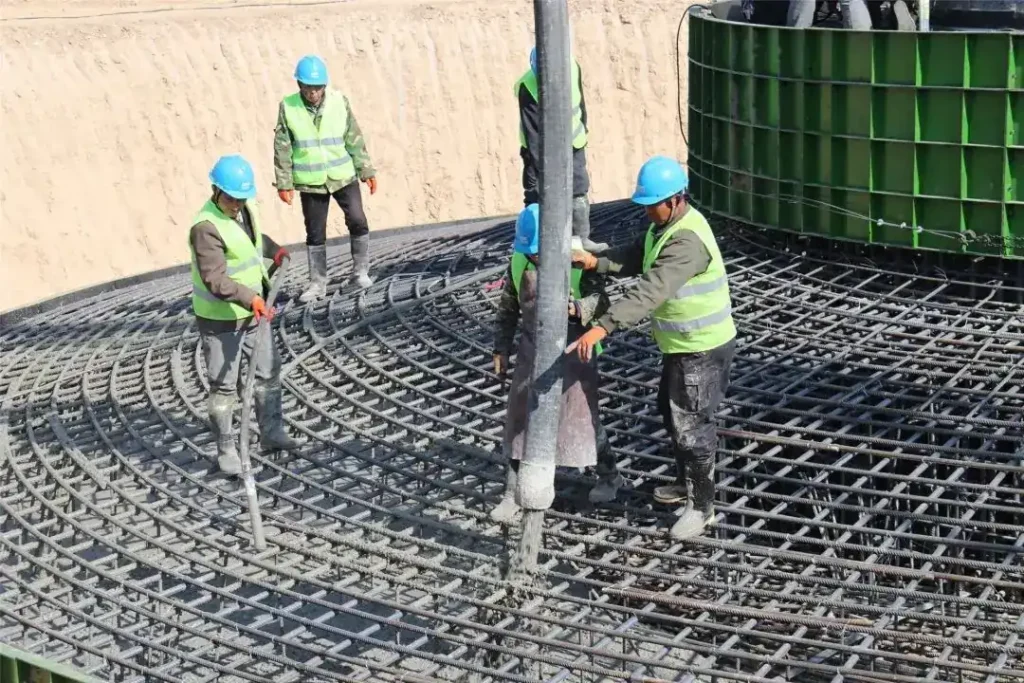
1. Synergistic Effect of Magnesium Oxide and Glass Fiber
The Role of Magnesium Oxide:
- Shrinkage Compensation: Magnesium oxide (MgO) acts as an expansion agent. During hydration, it generates magnesium hydroxide crystals, which produce moderate expansion. This offsets drying shrinkage and thermal shrinkage during the hardening process of concrete, reducing the formation of cracks.
- Improving Density: The expansion effect can fill pores, enhancing permeability resistance, reducing the penetration of chloride ions and carbon dioxide, and thereby extending the service life of the structure.
The Role of Glass Fiber:
- Crack Resistance and Reinforcement: Chopped glass fibers form a three-dimensional network structure in concrete to distribute stress, inhibit the propagation of micro-cracks, and improve tensile strength and toughness.
- Impact Resistance: The bridging effect of the fibers can improve the fatigue resistance and impact resistance of the concrete.
Synergistic Effect:
- Magnesium oxide reduces shrinkage cracks from a chemical perspective, while glass fiber inhibits crack propagation from a physical perspective. Their combination can establish a dual protective mechanism of “active crack prevention + passive reinforcement.”
2. Key Considerations
(1) Material Compatibility
- Alkali Corrosion Risk: Glass fibers must undergo alkali-resistant treatment (such as using alkali-resistant glass fibers, or AR-GF); otherwise, the high-alkali environment of concrete (
pH>12.5pH>12.5) can cause fiber corrosion, degrading long-term performance. Magnesium oxide itself is alkaline, but at a reasonable dosage, its impact on thepHpHlevel is limited. Nevertheless, testing is needed to verify fiber durability. - Matching Magnesium Oxide Expansion Rate: The expansion rate of MgO must be synchronized with the strength development of the concrete; expansion that is too rapid or too slow can lead to structural damage. It is necessary to select magnesium oxide with the appropriate reactivity (such as light-burned, medium-burned, or dead-burned) based on the environmental conditions (temperature and humidity) of the project.
(2) Optimization of Construction Processes
- Fiber Dispersion: The dosage of glass fiber is typically
0.5%0.5%—2%2%by volume. Mechanical mixing is required to prevent clumping, which can be achieved by pre-mixing fibers with aggregates or using a fiber dispersing agent. Magnesium oxide must be uniformly incorporated into the cementitious materials; it is recommended to dry-mix it with cement, fly ash, etc., before adding water. - Mix Proportion Adjustment: Fibers may reduce the workability of concrete, requiring a suitable increase in superplasticizer dosage or adjustments to the water-binder ratio. The dosage of magnesium oxide is generally
5%5%—8%8%of the cementitious materials, as excessive amounts can lead to over-expansion. Testing is required to determine the optimal ratio of both materials.
(3) Long-Term Durability Verification
- Volume Stability: The long-term expansion and shrinkage behavior of the composite materials must be tested to avoid stress concentration caused by late-stage residual expansion.
- Permeability Resistance Evaluation: Quantify the improvement in permeability resistance using indicators such as the chloride ion diffusion coefficient and water absorption rate.
- Freeze-Thaw and Carbonation: Verify the performance retention of the fiber-magnesium oxide system under harsh environmental conditions.
3. Recommended Implementation Plan
1. Preliminary Laboratory Testing
- Design control groups (plain concrete, MgO only, fiber only, and co-doped) to test compressive strength, flexural strength, drying shrinkage rate, and permeability at 7, 28, and 90 days.
- Use scanning electron microscopy (SEM) to observe fiber distribution and the interfacial bonding states.
2. Engineering Application Recommendations
- Material Selection:
- Magnesium Oxide: Select medium-burned MgO with a reactivity of 60–120 seconds, keeping the dosage
≤8%≤8%. - Glass Fiber: Use alkali-resistant glass fiber (AR-GF) with a length of 12–24 mm and a dosage of
1.0%1.0%—1.5%1.5%.
- Magnesium Oxide: Select medium-burned MgO with a reactivity of 60–120 seconds, keeping the dosage
- Key Construction Steps:
- Mixing Sequence: Aggregates
→→Cement + Magnesium Oxide→→Fibers→→Water + Superplasticizer. - Curing: Enhance early wet curing (at least 7 days) to support hydration and prevent moisture loss during the expansion process of magnesium oxide.
- Mixing Sequence: Aggregates
3. Economic Evaluation
- Calculate the incremental material costs (magnesium oxide at approximately 300–500 RMB/ton, and AR-glass fiber at approximately 15–20 RMB/kg) and weigh this against the potential reduction in maintenance costs from an extended service life to evaluate overall cost-effectiveness.
4. Conclusion
The combined use of magnesium oxide and glass fiber in concrete is technically feasible and can potentially enhance crack resistance and permeability resistance through synergistic effects. However, systematic testing is required to verify material ratios, construction processes, and long-term durability. It is recommended to conduct local trials in key projects before wider application. If conditions permit, nanomaterials (such as nano-
SiO2SiO2
) or polymer emulsions can be introduced to form a multi-scale reinforcement system.