
According to Messi Biology, polyurethane (PU) materials are widely used in foams, coatings, insulation boards, synthetic running tracks, and other fields due to their excellent elasticity, abrasion resistance, and adhesion properties. However, polyurethane itself is flammable and releases a large amount of toxic smoke when burning, which poses a significant safety hazard during use. As a halogen-free, low-smoke, and non-toxic environmentally friendly flame retardant, magnesium hydroxide has become a key functional component for improving the fire safety of polyurethane materials, playing a vital role in flame retardancy, smoke suppression, and stabilizing material performance.
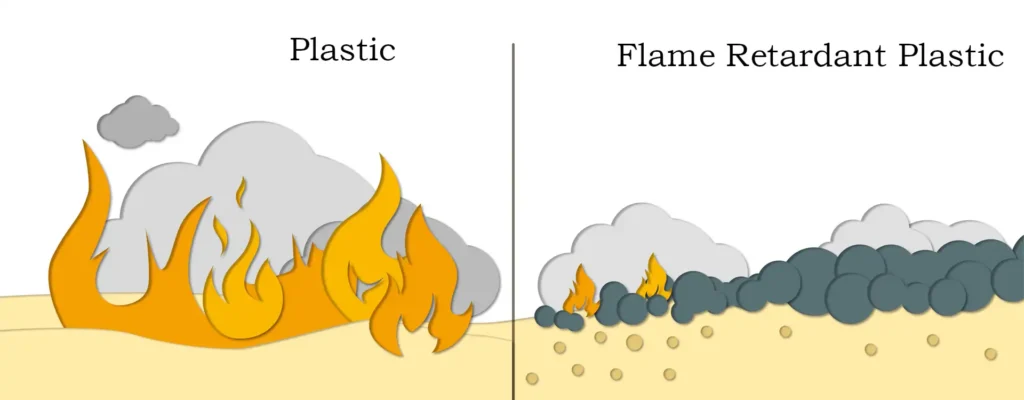
Magnesium hydroxide is an inorganic compound that undergoes an endothermic decomposition reaction when heated, which is the core principle behind its flame retardancy. When the temperature reaches above 340°C, magnesium hydroxide rapidly decomposes into magnesium oxide and water. This process absorbs a significant amount of heat, quickly lowering the temperature of the polyurethane matrix and preventing continuous combustion. Meanwhile, the water vapor generated during decomposition dilutes the concentration of oxygen and combustible gases, forming a natural “fire barrier” that effectively inhibits flame propagation. During the combustion of polyurethane, magnesium hydroxide also plays an important role in smoke and toxicity suppression. The burning of polyurethane typically produces dense black smoke and toxic gases. The magnesium oxide formed after the decomposition of magnesium hydroxide creates a dense, stable inorganic char layer on the material’s surface. This layer insulates heat and oxygen, prevents melting and dripping, and adsorbs smoke particles and harmful gases, significantly reducing smoke generation and toxicity, thereby providing valuable time for fire evacuation.
Compared to halogenated flame retardants, magnesium hydroxide offers notable advantages in polyurethane in terms of environmental protection, safety, and stability. It is halogen-free and does not produce dioxins or corrosive gases during combustion, making it environmentally and human-friendly, and compliant with strict standards such as the EU RoHS and domestic building material environmental regulations. Furthermore, it possesses good compatibility with polyurethane; after surface modification, it can be uniformly dispersed without significantly impacting the material’s flexibility, mechanical strength, or service life, making it suitable for various polyurethane products such as flexible foams, rigid foams, and elastomers. In rigid polyurethane foam insulation, magnesium hydroxide can increase the limiting oxygen index (LOI) to meet the Class B1 flame retardancy standard, making building exterior walls and cold storage insulation safer. In flexible polyurethane foam, it can reduce the burning rate and smoke emission, upgrading the fire safety ratings of furniture, mattresses, and automotive seats. In polyurethane coatings and adhesives, it enhances the fire performance of the coating while improving heat and aging resistance.
When using magnesium hydroxide as a flame retardant in polyurethane, it is advisable to select specialized products characterized by high purity, ultra-fine particle size, and surface modification. Ultra-fine particles improve dispersibility and prevent agglomeration, while surface modification enhances bonding with the organic matrix, helping to maintain the mechanical properties of the material. Proper dosage can achieve effective flame retardancy, balancing both safety and practicality. With the growing popularity of green fire safety concepts, halogen-free flame retardancy has become an industry trend. Utilizing its characteristics of endothermic flame retardancy, smoke/toxicity suppression, and eco-friendliness, magnesium hydroxide has become a highly suitable option for upgrading polyurethane materials. While maintaining material performance, it helps improve fire safety levels, providing protective support for construction, home furnishing, transportation, and other sectors, and serving as an important driver for the safe and green development of the polyurethane industry.