
In our daily impression, ceramics often seem synonymous with indestructibility. Whether it is an ancient porcelain vase that has weathered a thousand years of wind and rain, or modern household tableware, they all give a sense of stability and durability. However, in the microscopic world of materials science—especially for “advanced ceramics” applied in extreme environments such as aerospace and high-temperature kilns—they actually face an invisible chemical war: oxidation. In this war, magnesium oxide (MgO) plays a crucial role as an “antioxidant.”
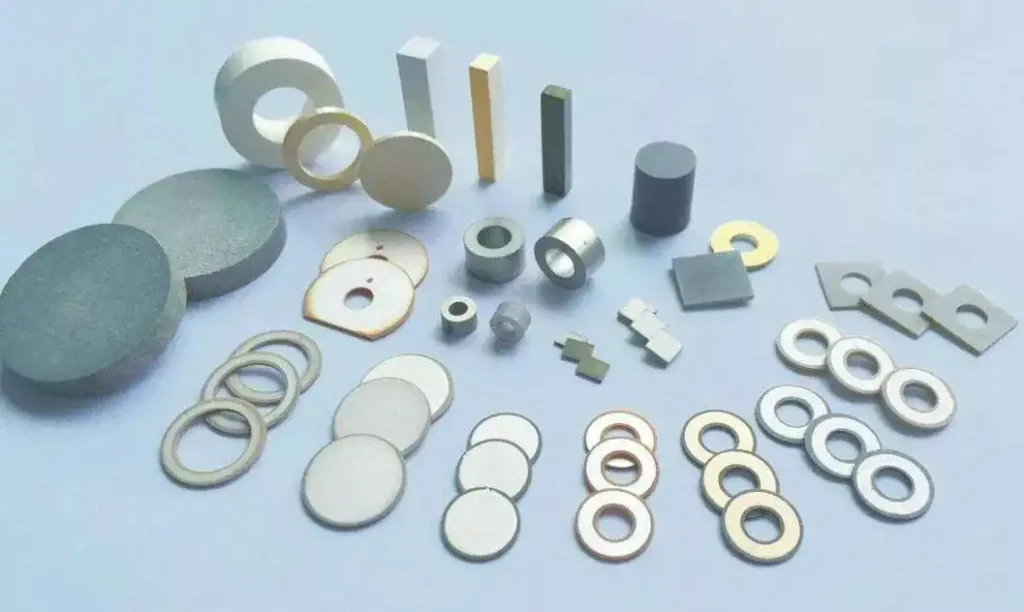
First, we need to understand why ceramics can also “rust.” Although common traditional ceramics are mainly composed of silicates and are very stable, in high-tech fields, scientists heavily use non-oxide ceramics such as silicon carbide and silicon nitride to pursue higher hardness, heat resistance, and toughness. Although these materials exhibit exceptional performance, the atoms on their surfaces react violently with oxygen in high-temperature, oxygen-rich environments. This leads to loose material structures, performance degradation, and even pulverization and disintegration much like metal rusting. This is the “pain of oxidation” in ceramic materials.
This is where magnesium oxide steps onto the stage. As a typical basic oxide, magnesium oxide boasts an extremely high melting point and outstanding chemical stability. Applying magnesium oxide as an antioxidant in ceramic materials is not as simple as adding a preservative to food; rather, it is achieved through an ingenious microscopic mechanism. When magnesium oxide is added to the ceramic matrix and undergoes high-temperature sintering, it triggers a fascinating “liquid-phase sintering” effect. Simply put, at high temperatures, magnesium oxide acts like glue, filling the tiny gaps between ceramic particles and promoting particle rearrangement and mass transport. This process greatly increases the density of the ceramic and eliminates internal micro-pores. As we know, oxygen penetrates deep into the interior of ceramics through these tiny pores just like water soaking into a sponge. Magnesium oxide helps ceramics build a dense physical defense line, leaving oxygen with nowhere to go.
Furthermore, magnesium oxide is much more than just a “gap-filler.” In certain ceramic systems, magnesium oxide can react with other oxide components on the surface to form an extremely dense and stable composite protective film (such as magnesium-aluminum spinel). This thin film acts like a “rust-proof suit” worn by the ceramic, completely isolating the inner ceramic material from external oxygen. Even when the ambient temperature reaches over a thousand degrees Celsius, oxygen cannot easily penetrate this barrier to erode the internal structure of the ceramic. Because of these characteristics, ceramic materials doped with magnesium oxide experience a qualitative leap in high-temperature oxidation resistance. This enables them to perform in even more extreme working environments—ranging from hypersonic vehicle thermal protection systems flying through the atmosphere to core components of high-efficiency gas turbines—where magnesium oxide silently exerts its “anti-oxidation” magic to safeguard material safety.
The application of magnesium oxide in ceramic materials is a textbook example of “a small effort yielding great results” in materials science. In the form of powder, it endows ceramics with the super-ability to resist high-temperature oxidation by altering their microstructures. This is not only a victory for chemistry, but also the ultimate carving of material performance by human wisdom in the microscopic world. Next time you see a hard piece of ceramic, consider this: deep within its microscopic world, there may be a copper-and-iron wall built by magnesium oxide, silently guarding its toughness.