
Messi Biology states that as a sintering additive for aluminum nitride ceramics, magnesium oxide can effectively lower the sintering temperature, purify grain boundaries, and enhance density and thermal conductivity. It is an indispensable key additive in the preparation of high-end electronic ceramics, and its application efficacy has been widely recognized by the industry and research fields.
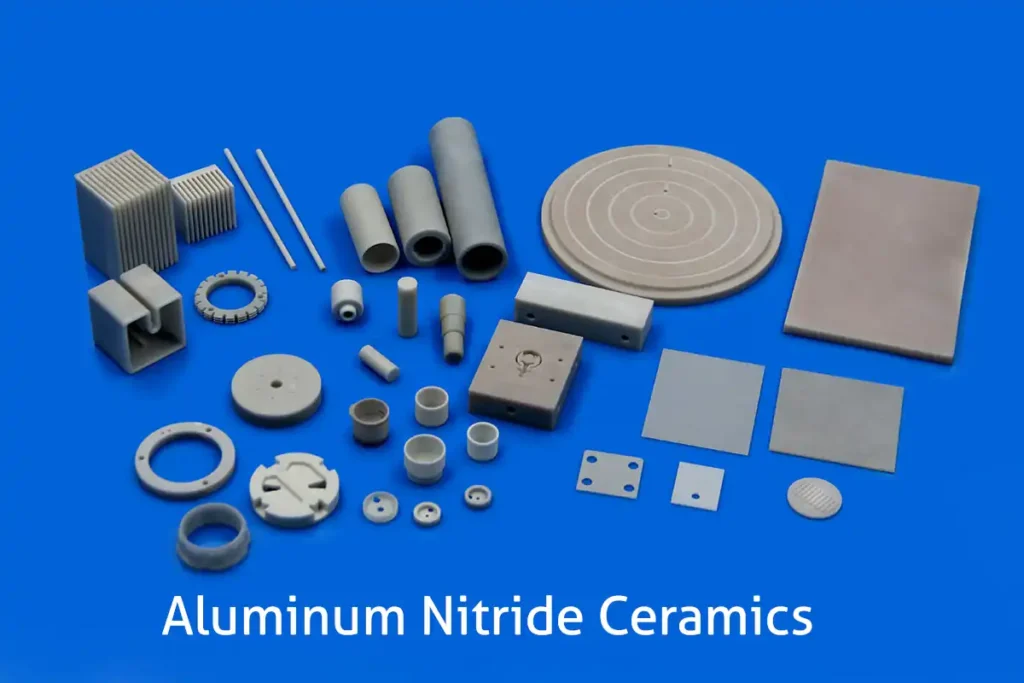
Aluminum nitride (AlN) possesses a hexagonal wurtzite crystal structure, with a theoretical thermal conductivity as high as 319 W/(m·K) and practical ceramic products reaching 150–220 W/(m·K), which is 5 to 10 times that of alumina ceramics. At the same time, its thermal expansion coefficient highly matches that of silicon materials, making it an ideal material for power devices and LED cooling substrates. However, as a strong covalent compound, it has an extremely low self-diffusion coefficient, requiring pure AlN powders to undergo densification sintering at temperatures above 1800°C, resulting in high energy consumption and demanding equipment requirements. More troublingly, the surface of AlN particles easily generates an Al₂O₃ oxide layer, where oxygen atoms substitute nitrogen positions in the crystal lattice, forming aluminum vacancies and scattering phonons, which severely pulls down thermal conductivity.
Magnesium oxide plays a dual role in the AlN system. The first is a sintering-aid effect: MgO reacts with Al₂O₃ on the surface of AlN at high temperatures to form a low-melting-point magnesium aluminum spinel (MgAl₂O₄) liquid phase. Through the liquid-phase sintering mechanism, it accelerates particle rearrangement and mass transfer, causing the densification temperature to drop significantly. Practice has proven that nano-grade MgO can reduce the sintering temperature by 30–50°C and increase density to over 98%. The second is the “oxygen-fixing” effect: MgO preferentially reacts with surface aluminum oxide to form a second phase, “extracting” oxygen elements from the crystal lattice, reducing aluminum vacancy defects, extending the phonon mean free path, and thereby improving the thermal conductivity of the final product. In addition, MgO can be evenly distributed at the grain boundaries, inhibiting abnormal grain growth, yielding a fine-grain structure, and enhancing mechanical properties and thermal shock resistance.
Industrial data show that after adding 0.2%–2% high-purity magnesium oxide, the compactness, flexural strength, and dielectric performance of AlN ceramic substrates are significantly improved. Combined with yttria (Y₂O₃) to form a composite additive system, it can further purify grain boundaries and eliminate lattice oxygen, representing the current mainstream route for preparing high-thermal-conductivity AlN. Requirements for raw materials are equally critical—impurities (Fe, Ca, Si, Na) must be controlled at the ppm level; otherwise, segregation phases will form, leading to leakage current failure. Nano-scale particle sizes are optimal, featuring good dispersibility and high activity, which facilitate uniform slurry mixing.
Overall, magnesium oxide is a “capable assistant” for cost reduction and efficiency enhancement in aluminum nitride ceramics—leveraging multiple improvements in sintering temperature, density, and thermal conductivity with an extremely low addition amount. However, its effectiveness heavily relies on the control of purity, particle size, and dosage. As electronic packaging continues to evolve toward high power and high density, the application space for high-purity nano-magnesium oxide in the field of AlN ceramics will continue to expand.