
Messi Biology states that in modern life, ABS plastic is everywhere. From computer keyboards and mouse shells to automotive interior parts and Lego bricks, this engineering plastic with exceptional comprehensive performance supports the convenient corners of our lives. However, did you know that at the very birth of these sturdy and aesthetically pleasing plastic products, a white powder plays a crucial “coagulating” role? That is—magnesium oxide for ABS plastic coagulation.
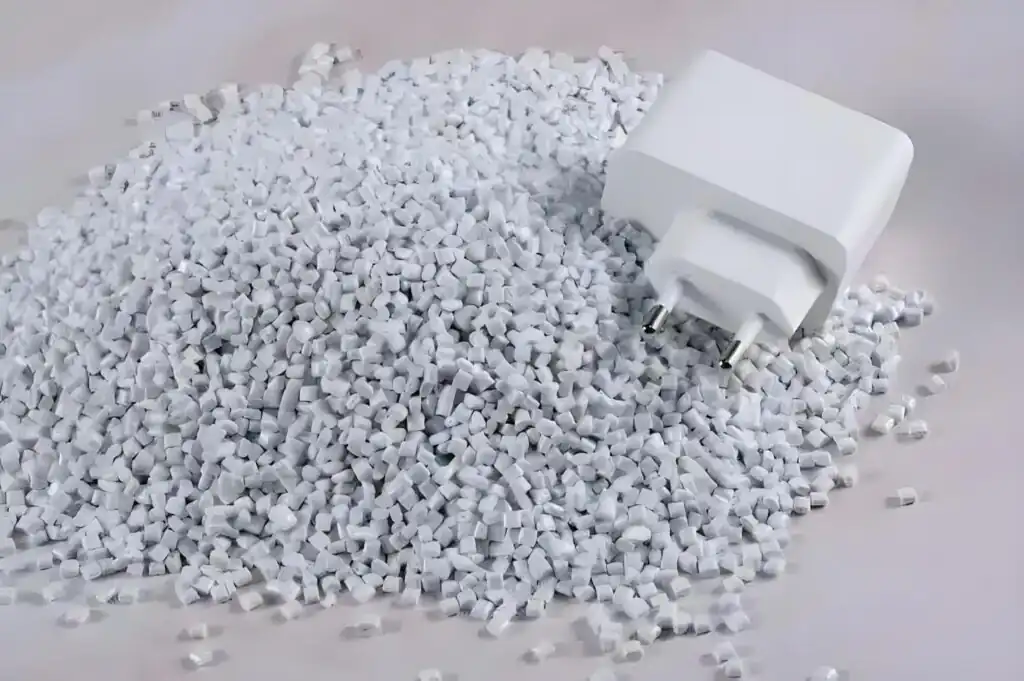
To understand the role of magnesium oxide, we must first understand how ABS plastic is produced. The synthesis of ABS resin typically employs emulsion polymerization. In this process, various monomers react in water, and the resulting ABS latex looks like milk—a suspension of milky-white micro-particles. However, this liquid latex cannot be directly used for injection molding; it must be separated from the water and turned into a solid powder. In chemical engineering, this process is known as “coagulation.” It is analogous to extracting salt dissolved in water, but ABS latex particles are much smaller and more stable than salt grains, making separation by simple precipitation extremely slow. At this point, a “game-changer” is needed to break this stability, allowing the tiny particles to join hands and aggregate into large particles—this is the function of a coagulant. Magnesium oxide is precisely one of the finest coagulants for this purpose. Why magnesium oxide in particular? This is mainly attributed to its unique chemical properties and physical morphology.
First, charge neutralization: ABS latex particles typically carry a negative charge, and like charges repel, preventing them from approaching each other in water. Magnesium oxide is a weak base that hydrolyzes in water, carrying a positive charge. When magnesium oxide is added to the latex, it acts like a positively charged magnet, instantly neutralizing the negative charge of the latex particles. Deprived of the protection of charge repulsion, the latex particles are finally able to collide and combine with one another.
Second, bridging and adsorption: Active magnesium oxide typically features a massive specific surface area and porous structure, endowing it with extremely strong adsorption capacity. It not only disrupts charge balance but also acts like a bridge, adsorbing multiple latex particles together to form loose flocs (flocculation). Finally, mild and efficient: Compared with acid coagulants, the action of magnesium oxide is much milder. It does not violently disrupt the polymer structure like strong acids do, nor does it cause equipment corrosion. More importantly, the ABS powder coagulated with magnesium oxide has a uniform particle size distribution and favorable porosity, which is highly beneficial for subsequent washing and drying processes, significantly reducing energy consumption and improving production efficiency.
In the production process of ABS resin, the requirements for magnesium oxide are extremely high. Not all types of magnesium oxide can be used; high-reactivity, high-purity light magnesium oxide is typically required. If the reactivity is insufficient, the coagulation effect will be severely compromised, resulting in poor fluidity of the produced ABS resin and making the surface of processed products prone to defects, which affects the strength and gloss of the final product. In addition, magnesium oxide introduces a small amount of magnesium ions during the coagulation process, which can even act as a thermal stabilizer in certain formulations—truly serving multiple purposes at once.
Although people cannot see the presence of magnesium oxide when purchasing ABS products, as a behind-the-scenes hero, it plays an irreplaceable role in the synthesis chain of ABS resin. It is precisely this inconspicuous white powder that coagulates the originally dispersed latex into solid resin powder, paving the way for the subsequent versatile plastic products. Technological progress is often hidden in these details, and the application of magnesium oxide is the best testimony to the chemical industry’s pursuit of excellence in material quality.