
Messi Biology states that in dental restorative treatments such as fillings, dentures, and crowns, the dental impression is a critical step in determining whether the prosthesis fits well, is comfortable, and remains durable. Within commonly used impression materials such as alginates, magnesium oxide serves as a core functional additive, quietly supporting the precision and stability of the impression and acting as an indispensable “invisible assistant” in clinical dentistry.
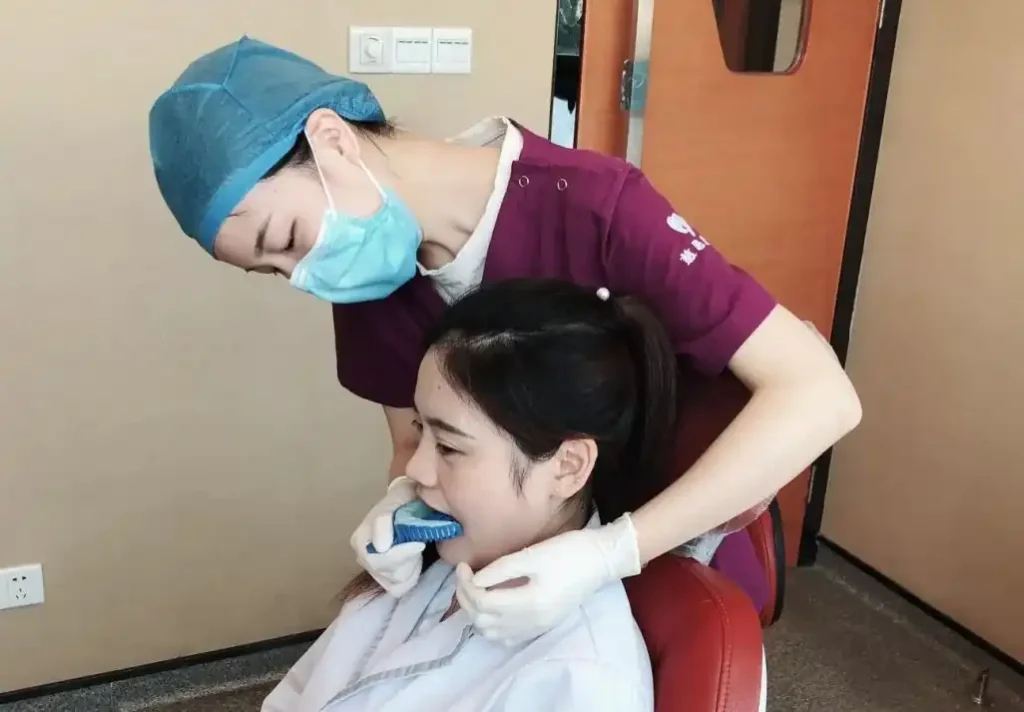
The fundamental purpose of a dental impression is to quickly replicate the three-dimensional shape of the teeth and gums using a flexible material, providing a 1:1 precise model for the subsequent fabrication of dentures and crowns. If standard impression materials lack regulating components, they are prone to issues such as premature setting, rough surfaces, and dimensional deformation. This directly leads to significant deviations in the prosthesis and discomfort during wear. Magnesium oxide, added to the formulation as a fine white powder, leverages its unique physical and chemical properties to optimize impression performance across multiple dimensions.
Its primary role is to precisely regulate the setting time. Dental procedures require sufficient time to complete impression taking, placement, and trimming. Magnesium oxide can gently adjust the cross-linking rate of the material to ensure a controllable setting pace. This prevents the material from hardening before the impression is completed, while also avoiding prolonged setting times that could reduce clinical efficiency, thereby significantly increasing the operational tolerance for dentists. At the same time, magnesium oxide can enhance the hardness and surface smoothness of the impression, ensuring clear margins and complete details of the model, allowing for smooth demolding without sticking, and reducing model damage and the need for repeated impressions.
Dimensional stability is the lifeline of an impression. The oral cavity is moist and subject to temperature fluctuations, making ordinary materials prone to swelling from water absorption or shrinkage from water loss, which leads to model distortion. As an inert filler and pH buffer, magnesium oxide stabilizes the internal structure of the material and inhibits dimensional drift. This allows the impression to maintain precise morphology during removal, transportation, and gypsum pouring, establishing a solid foundation for technicians to fabricate prostheses. Furthermore, medical-grade magnesium oxide exhibits excellent biocompatibility, is non-toxic and non-irritating, and does not cause oral mucosal allergies or inflammation. It is suitable for various patient populations and complies with safety standards for dental materials. In clinical applications, magnesium oxide is primarily used in conjunction with alginate impression materials and is widely applied in scenarios such as full dentures, fixed crowns and bridges, and orthodontic impressions. With the upgrading of dental materials, composite magnesium oxide powders have further optimized fineness, dispersibility, and activity. This yields higher impression precision and more convenient operation, while also promoting more efficient auxiliary impression taking for personalized restorations and digital intraoral scanning.
Legitimate dental practices use food- and pharmaceutical-grade magnesium oxide that has undergone strict purity and toxicological testing. Short-term contact with the oral cavity leaves no residue and poses no hazards, eliminating concerns over health risks. Standardized mixing and rapid impression-taking by dentists can fully leverage the advantages of magnesium oxide while ensuring clinical safety. Despite its small scale, magnesium oxide holds great significance in dental restoration. With its stable, safe, and precise properties, it safeguards the quality of every impression, making dentures fit better, treatments more efficient, and patients more comfortable. In the future, as material technology continues to progress, magnesium oxide will continue to empower the dental field, contributing greater value to oral health and precision medicine.