
Messi Biology states that in the field of advanced materials, transparent ceramics have broken the traditional perception that “ceramics are opaque.” They combine the light transmittance of glass with the high strength and high-temperature resistance of ceramics. High-purity magnesium oxide (MgO) serves as both a core raw material and a key additive for preparing high-performance transparent ceramics. Referred to as the “optical skeleton” of transparent ceramics, it supports technological developments in fields such as aerospace, infrared optics, and high-end illumination.
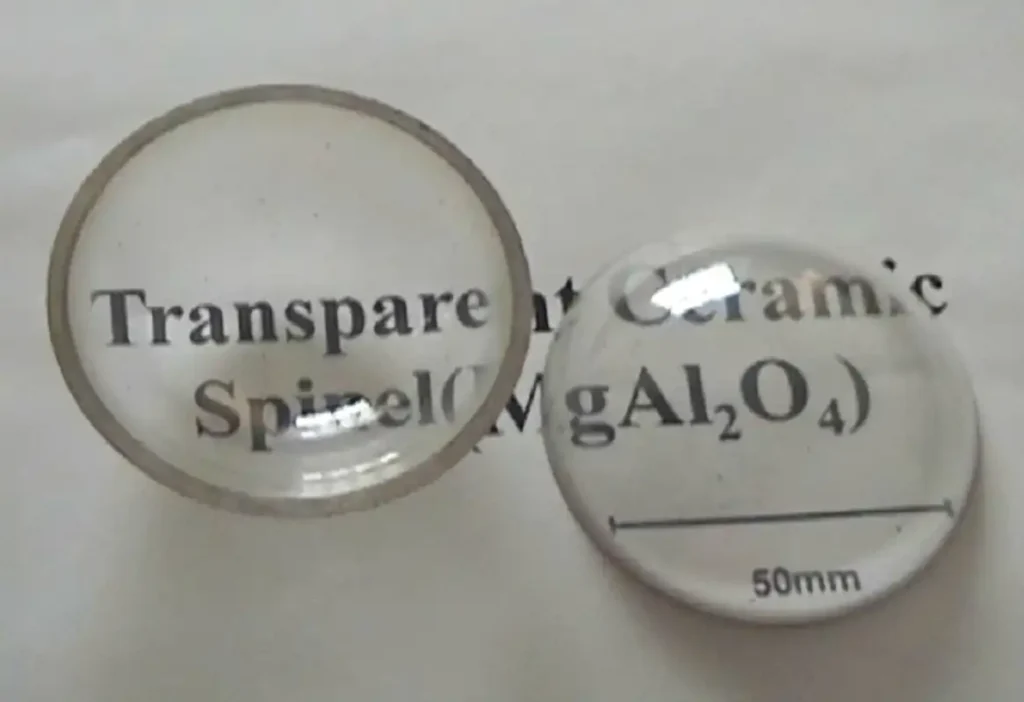
The core of achieving transparency in ceramics lies in eliminating internal pores and achieving dense, uniform crystal grains. Common ceramics are opaque due to light scattering caused by numerous internal pores and disordered grain boundaries. Magnesium oxide (MgO) belongs to the cubic crystal system, is optically isotropic, and does not present grain boundary birefringence issues, making it a natural base material for transparent ceramics. With a melting point of 2852°C and stable chemical properties, high-purity magnesium oxide (purity ≥99.9%) can be used as a raw material through processes such as vacuum sintering and hot-press sintering to prepare magnesium oxide transparent ceramics with a density close to the theoretical value. Its light transmittance in the mid-infrared band (3–5 microns) reaches 80%–85%, presenting comparative performance advantages over traditional alumina transparent ceramics.
Magnesium oxide plays a dual role in transparent ceramics as both a “primary material” and an “additive.” As a primary material, it can be directly sintered into magnesium oxide transparent ceramics, which offer high infrared transmittance, high electrical insulation, and resistance to alkali metal corrosion. This makes it a key material for high-temperature infrared windows, missile radomes, and arc tubes in high-pressure sodium lamps. As an additive, trace amounts of magnesium oxide (typically 0.1%–0.5%) can effectively inhibit the rapid growth of grains in transparent ceramics like alumina and YAG (yttrium aluminum garnet), facilitating the complete elimination of pores and improving overall density and light transmittance. However, excessive addition can form a second-phase scattering center, which conversely reduces transparency.
The performance characteristics of magnesium oxide transparent ceramics are highly distinct. In terms of high-temperature resistance, they can withstand temperatures up to 1800°C for long periods with a thermal shrinkage rate of less than 5%, which compares favorably to glass and common ceramics. Regarding optical properties, they offer a wide infrared transmission band and low optical loss, meeting the high-precision requirements of laser devices and infrared detectors. In terms of mechanical properties, they exhibit a flexural strength of 134 MPa and strong thermal shock resistance, allowing them to withstand extreme and rapid temperature fluctuations. Additionally, high-purity magnesium oxide is non-toxic and chemically stable, aligning with the requirements of high-end equipment and green manufacturing.
Today, magnesium oxide transparent ceramics have achieved commercial application across several fields. In aerospace, they are utilized for aircraft infrared windows and radomes to withstand high temperatures from high-speed airflow and sand erosion. In the industrial sector, they serve as observation windows for high-temperature kilns and protective covers for infrared thermometers, enabling visual monitoring in high-temperature environments. In the civil sector, they are used in high-pressure sodium lamps and infrared night-vision lenses to improve luminous efficiency and imaging clarity. With advances in nanostructure preparation and sintering technologies, magnesium oxide-doped fluorescent transparent ceramics (such as MgO:Cr³⁺) also show potential for cutting-edge fields such as high-power near-infrared light sources and medical non-destructive testing.
From basic raw material to performance core, magnesium oxide has become a key support for the development of the transparent ceramics industry due to its unique material characteristics. In the future, with the continuous optimization of preparation processes for high-purity magnesium oxide and developments in low-cost sintering technologies, magnesium oxide transparent ceramics are expected to serve as alternatives to traditional materials in more high-end fields, contributing to industries such as advanced optics, aerospace, and new energy, and demonstrating the value of “small powder, great energy” in material science.