
Messi Biology states that in the field of rare earth hydrometallurgy, magnesium oxide is widely used as a tri-functional industrial auxiliary serving as a pH regulator, impurity precipitant, and extractant saponification agent. Particularly in the purification and enrichment stages of acid leach liquors for light rare earths such as lanthanum, cerium, praseodymium, and neodymium, it has gradually replaced traditional ammonia water, liquid alkali, and lime, becoming a key neutralizing material in the processing flows of Baotou mixed rare earth ores and Southern ion-adsorption rare earth ores. Below is a systematic breakdown of the specific applications of magnesium oxide in the lanthanum extraction process from four dimensions: chemical principles, process flow, neutralizer comparison, and key usage guidelines.
Magnesium oxide (MgO) is a weakly basic oxide that slowly hydrates upon contact with water to form magnesium hydroxide. Owing to its low alkalinity and gentle pH rise, it has been selected by the rare earth smelting industry as a controllable neutralizing reagent in hydrometallurgical processes. It primarily undergoes two types of reactions along the lanthanum extraction chain:
The first type is acid-base neutralization. Acid leaching processes typically use excess concentrated sulfuric acid or hydrochloric acid to decompose rare earth concentrates, yielding an acidic leach liquor containing rare earth ions such as La³⁺, Ce³⁺, Pr³⁺, and Nd³⁺. Adding magnesium oxide triggers the following neutralization reactions:
MgO+H2SO4→MgSO4+H2O
MgO+2HCl→MgCl2+H2O
Because the dissolution rate of magnesium oxide is inhibited by pH self-feedback—its hydration speed automatically slows down as the pH rises—this characteristic prevents the system pH from easily “overshooting,” avoiding the instantaneous hydrolytic co-precipitation of rare earth ions caused by a strongly alkaline environment.
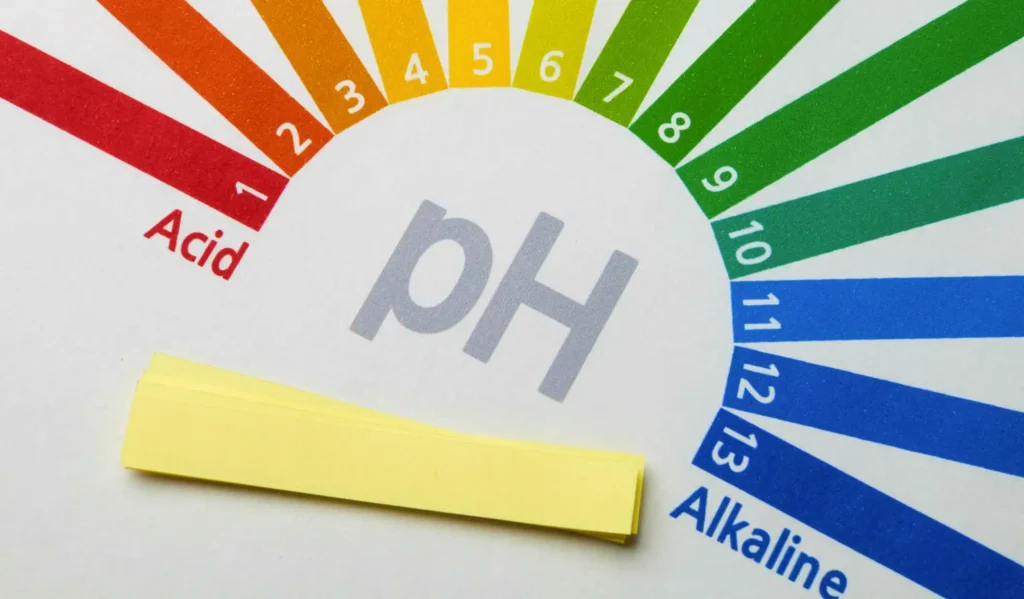
The second type is selective precipitation separation. Rare earth ions have relatively high hydrolysis thresholds; La³⁺, Ce³⁺, and others generally only hydrolyze significantly at pH>6, whereas impurities such as Fe³⁺, Al³⁺, Th⁴⁺, and Ti⁴⁺ hydrolyze into hydroxide precipitates between pH 2.5 and 5. This difference becomes the core window for selective impurity removal using magnesium oxide: within the pH 4–5 range, impurities precipitate in the form of Fe(OH)₃, Al(OH)₃, and Th(OH)₄, while rare earth ions remain stably in solution; when the pH continues to rise to around 8.5, the rare earths themselves are precipitated and enriched as RE(OH)₃.
Magnesium oxide is not used in just a single step of the lanthanum extraction chain, but runs through three stages: pretreatment, extraction, and enrichment.
Stage 1: Neutralization and Impurity Removal of Water Leach Liquor (pH 4.5)
After Baotou mixed rare earth concentrate undergoes concentrated sulfuric acid roasting and water leaching, the leach liquor contains multiple impurities such as Fe³⁺, Th⁴⁺, Ca²⁺, and Mn²⁺. Industrially, a 20%–30% concentration magnesium oxide slurry is slowly added to the water leach liquor and mixed to react for 0.5–1 hour, adjusting the pH to around 4.5 to precipitate thorium and iron as hydroxides, which are then separated via a plate-and-frame filter press to obtain a “qualified water leach liquor” entering the extraction process. In this stage, the industry generally adopts magnesium oxide rather than lime, because lime generates calcium sulfate precipitates that contaminate the subsequent organic phase, whereas magnesium sulfate generated by magnesium oxide remains in solution without affecting extraction. For low-grade sedimentary rare earth ores with high aluminum and low rare earth content, the industry has also developed a two-step purification process: the first step removes most phosphorus and Fe(III) at pH 2.5–4.5, and after filtration, the second step thoroughly removes Fe(III) at a lower solid-liquid ratio, keeping total rare earth loss within 2%.
Stage 2: Saponification of Extractant (P507 Saponification)
Rare earth separation generally employs P507 (2-ethylhexyl phosphonic acid mono-2-ethylhexyl ester) as an extractant, yet P507 must first undergo saponification to achieve sufficient extraction capacity. Compared with liquid ammonia saponification, which produces high-concentration ammonia-nitrogen wastewater, solid magnesium oxide saponification has been verified as the scheme with the fastest reaction and least wastewater—complete reaction between magnesium oxide and P507 takes only about 2 hours, and the saponification degree is typically controlled at 15%–35%. When saponified P507 is mixed with a rare earth sulfate feed solution, Mg²⁺ undergoes cation exchange with La³⁺ and others, causing rare earths to enter the organic phase and magnesium to enter the aqueous phase. It is worth noting that magnesium oxide saponification in a sulfuric acid system causes a small amount of Ce³⁺ in the P507 organic phase to be oxidized by air into tetravalent cerium (Ce⁴⁺), which needs to be controlled using reducing agents; this is one of the side effects requiring monitoring in industrial applications.
Stage 3: Precipitation and Enrichment of Rare Earth Mother Liquor (pH 8.5)
In the Southern ion-adsorption rare earth ore process, rare earth mother liquor leached by magnesium sulfate directly uses magnesium oxide as a precipitant to precipitate La³⁺ and other rare earth ions into RE(OH)₃ concentrates. Optimal process conditions have been systematically established: a magnesium oxide concentration of 30 g/L, reaction temperature of 45°C, precipitation endpoint pH of 8.5, feeding rate of 0.5 mL/min, and washing water volume of 250 mL. Under these conditions, the rare earth precipitation rate can reach 97.23%.
Stage 4: From Lanthanum Hydroxide to Lanthanum Oxide
After washing and filtration, the rare earth hydroxide precipitate is calcined in a dynamic oxygen flow at 900–1000°C for 2–2.5 hours, finally yielding rare earth oxide products with a purity ≥99.8%, with lanthanum produced in the form of La₂O₃.
Optional neutralizers for rare earth smelting include ammonia water, sodium hydroxide, lime (Ca(OH)₂), ammonium bicarbonate, and magnesium oxide, each having pros and cons. Overall, magnesium oxide has three core advantages: first, mild alkalinity and controllable pH, preventing local pH spikes like NaOH that cause rare earth co-precipitation; second, no introduction of hard-to-remove impurities—the introduced Mg²⁺has minimal impact on rare earth product purity, and the magnesium sulfate solution can be recovered or operated in a closed loop through subsequent processes; third, alignment with the environmental protection direction of zero ammonia-nitrogen and low waste residue, which is encouraged by the technical guidelines for pollution prevention and control in rare earth smelting.
Selection of Magnesium Oxide: Light magnesium oxide should be selected for rare earth smelting, with MgO content ≥92%, activity (citric acid method) reaching over 60%, and fineness above 325 mesh. Loss on ignition is preferably controlled at around 5%. Dosing Method: Dose in the form of a 20%–30% concentration magnesium oxide slurry to avoid local supersaturation caused by the direct addition of dry powder. The feeding rate is preferably controlled at around 0.5 mL/min (laboratory scale); industrially, it is added continuously via metering pumps coupled with mechanical stirring to prevent excessively rapid crystal nucleation from encapsulating impurities in precipitates. Precise pH Monitoring: Stabilizing the endpoint pH near 4.5 in the impurity removal stage and near 8.5 in the precipitation enrichment stage is key to ensuring rare earth recovery rate and product purity. Excessively high pH leads to premature hydrolytic co-precipitation and loss of rare earths, while excessively low pH results in incomplete impurity removal. Temperature Control: Controlling the precipitation temperature above 45°C can significantly reduce the loss rates of La, Ce, Pr, and Nd, because elevated temperatures favor crystal growth over nucleation for rare earth hydroxides, forming crystalline precipitates that are easier to settle and filter.
From over 90% of the processing volume at Baotou’s Bayan Obo mine adopting magnesium oxide for neutralization and impurity removal, to the comprehensive rollout of the “magnesium sulfate leaching—magnesium oxide precipitation” mainline process in Southern ion-adsorption rare earth mines, and further to North America’s Halleck Creek project selecting magnesium oxide as the optimal choice among six candidate neutralizers, magnesium oxide has upgraded from an auxiliary role to a key node material in the green transformation of rare earth hydrometallurgy. With its mild alkalinity, strong selectivity, and controllable by-product burden, it responds to the industry’s demands for cleaner, closed-loop, and low-ammonia-nitrogen rare earth smelting, while also establishing a more sustainable industrial pathway for the efficient separation of key rare earth elements such as lanthanum, cerium, and neodymium.