
Messi Biology notes that mineral oil is ubiquitous in our daily lives, from biscuits and chocolate to cosmetics and lubricants. However, behind these extensive industrial and food applications lurks a pair of “chemical twins” that require strict monitoring: Mineral Oil Saturated Hydrocarbons (MOSH) and Mineral Oil Aromatic Hydrocarbons (MOAH). When we discuss the “standard values of MOAH and MOSH in mineral oil,” we are essentially exploring how advanced separation technology helps us lock down health risks.
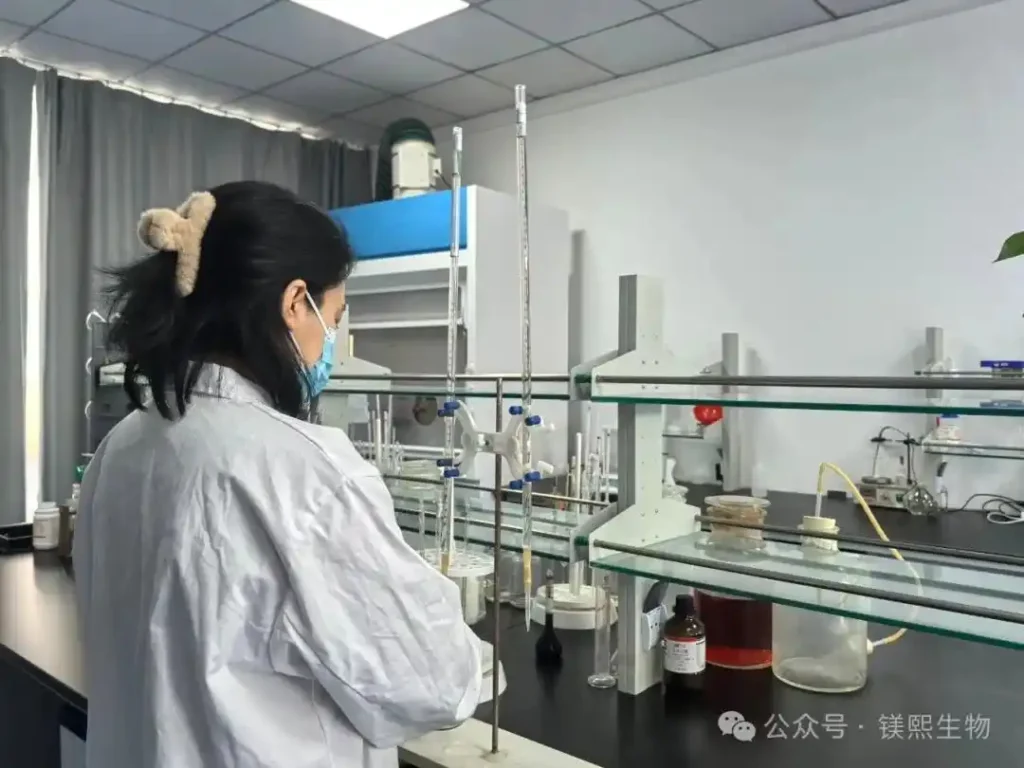
So, what role does magnesium oxide play in this process? To accurately determine the content of MOAH and MOSH, they must first be isolated from complex matrices (such as food, packaging materials, or biological samples). Magnesium oxide (MgO) has become the “golden key” in this process due to its unique polar adsorption properties. In laboratory testing, scientists utilize solid-phase extraction (SPE) technology, passing the sample extract through a chromatography column packed with magnesium oxide. Here, magnesium oxide acts like a discerning security inspector: it strongly adsorbs the more polar MOAH, allowing the less polar MOSH to pass through first. Subsequently, by changing the elution solvent, the MOAH is recovered. This separation method is a classic pretreatment procedure recommended by European and international standards (such as EN 16995), ensuring the accuracy of subsequent instrumental analysis.
Next is the “standard value” issue, which is of great concern to the public. These standard values serve as both the yardstick for laboratory quality control and the “red line” for food safety. Internationally, the European Food Safety Authority (EFSA) has set strict recommended limits for these two types of substances. For instance, regarding MOSH, EFSA has set a temporary tolerable daily intake (TDI) of 0.01 mg/kg body weight. Regarding MOAH, due to its potential carcinogenic risk, the current regulatory stance follows the “As Low As Reasonably Achievable” (ALARA) principle, with some food categories even requiring it to be non-detectable.
These standard values are more than just legal figures; they are shields protecting consumer health. With advances in detection technology—combining magnesium oxide separation with gas chromatography-mass spectrometry (GC-MS)—detection sensitivity has reached the milligram/kilogram or even microgram/kilogram level. This means that even trace amounts of mineral oil contamination can be precisely captured.
The standard values for MOAH and MOSH in mineral oil embody the wisdom of modern analytical chemistry and the rigor of food safety. Understanding this information not only helps us view chemical substances in our daily lives more rationally, but also highlights how scientific detection technology silently guards our dining tables. In the future, as standards continue to improve and detection technologies evolve, we will be better equipped to mitigate the health risks posed by these “invisible guests.”