
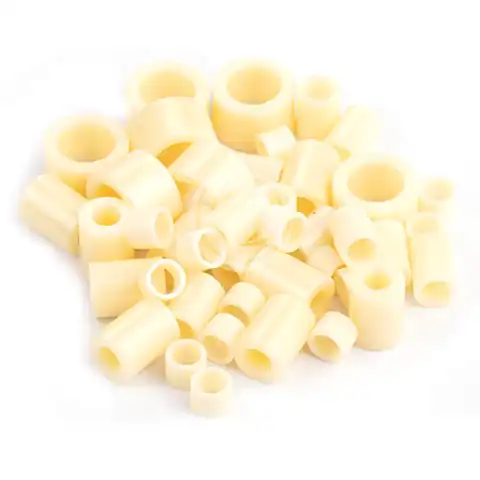
Glass Sealing for High-Temperature Electric Heating Tubes
This product is specifically designed for sealing high-temperature electric heating tubes. It features a high coefficient of thermal expansion, low softening temperature, high insulation properties, and is completely lead-free. With extensive expertise in specialty sealing glass materials, we provide customized glass sealing materials and components based on different substrates, environments, and application scenarios.
Our solutions achieve hermetic sealing, gap welding, flat bonding, and electrical insulation between glass, ceramics, and metals. These processes prevent thermal damage to materials and achieve matched or compressive stress sealing. Our products are widely used in high-temperature heating tubes, semiconductor components, optical communications, electric light sources, sensors, integrated circuits, household appliances, and construction.
Mechanical Principles
The compressive strength of glass materials is significantly higher than their tensile strength. Therefore, in a glass-sealed structure, as the heating tube cools, the unsealed metal at the tube end can shrink freely. This generates a bending moment at the glass-metal interface. Due to the bilateral symmetry, these moments cancel each other out, ensuring a reliable and robust seal.
Product Forms
Commonly available in powder or bead (ring) forms. Glass beads/rings are pressed from proprietary glass powders and are available in various shapes and sizes. Once sintered, they possess sufficient strength for easy assembly and operation. All products provided by our company are lead-free and RoHS compliant.
SO Series: Solder Glass
Designed to achieve hermetic insulation between the metal core and the outer metal sheath of the heating tube.
- Applications: Household appliances (water heaters, ovens), industrial equipment (hot blast stoves, chemical equipment), and fluid heating systems (oil heaters, boilers).
- Key Traits: High insulation, high reliability.
Performance Data:
| Grade | Expansion Coeff. (10−7K−1) | Softening Point (°C) | Sealing Temp (°C) | Glass System |
| SO-826 | 89 | 440 | 650–700 | Bi2O3−B2O3−SiO2Bi2O3−B2O3−SiO2 |
| SO-916 | 93 | 405 | 600–650 | PbO−B2O3−SiO2PbO−B2O3−SiO2 |
| SO-927 | 94 | 428 | 600–700 | Bi2O3−B2O3−ZnOBi2O3−B2O3−ZnO |
| SO-908 | 96 | 530 | 780–870 | SiO2−Al2O3−B2O3SiO2−Al2O3−B2O3 |
SD Series: Kovar-Matching Glass-Ceramic
Glass-ceramic sealing material is a crystalline structure material, differing from traditional amorphous glass. The fine crystals provide high strength and temperature resistance, while the residual glass phase ensures excellent wetting with metal for a perfect seal. It is primarily used for devices in high-temperature, high-pressure, or highly corrosive environments.
- Key Traits: Broad/adjustable expansion coefficient, high strength, excellent chemical stability, high hermeticity, and high-temperature resistance.
Performance Data:
| Grade | Expansion Coeff. (10−7K−1) | Softening Point (°C) | Sealing Temp (°C) | Glass System |
| SD-407 | 41 | 558 | 700–750 | SiO2−B2O3−ZnOSiO2−B2O3−ZnO |
How to Perform Sealing with Glass Products
- Place a glass preform of the appropriate size into the end of the heating tube.
- Heat using a flame torch, high-frequency heater, or box furnace to the sealing temperature.
- As the glass softens and flows, it fills all gaps.
- Allow the assembly to cool to room temperature; the glass solidifies to complete the seal.
Pre-Sealing Precautions:
- Calibration: If using a box furnace or oven, ensure the temperature zones are calibrated. Discrepancies between displayed and actual temperatures can lead to failure to melt or overheating.
- Preparation: Ensure the heating tube is thoroughly dried and the internal Magnesium Oxide (MgO) filler is tightly packed.
Important Notes:
- Exclude all moisture before sealing.
- Do not use silicone or silicone oil prior to glass sealing.
- Excessive sealing temperatures may cause metal particles to enter the glass, compromising insulation.
- For high-frequency or flame heating, ensure slow cooling to avoid thermal shock.
Comparison of Heating Equipment
| Equipment | Pros | Cons |
| High-Frequency Heating (Recommended) | Localized heating protects the rest of the tube; convenient and portable; programmable curves available. | Can only heat one tube at a time. |
| Box Furnace | Batch processing; adjustable temperature curves prevent cracking from rapid cooling. | Heats the entire tube (energy-intensive); slow; may damage tube material/MgO; irregular tubes may not fit. |
| Flame Torch | Low cost; easy to use. | Unsafe (open flame); difficult temperature control; risk of gas reacting with glass. Direct heating of glass is prohibited. |
Troubleshooting and Success Criteria
- Successful Seal: Under a microscope, the seal should show a uniform distribution of glass-lustre material around the tube mouth, high surface gloss, and no visible cracks.
- Common Errors: Failure to remove moisture; using silicone; uncalibrated ovens; lead-out rods made of incompatible materials (e.g., certain nickel platings); or a long delay between drying and sealing (allowing MgO to re-absorb moisture).
- Causes of Cracking: Inadequate moisture removal (trapped gas/vapor); mismatched Coefficients of Thermal Expansion (CTE) between glass and tube; or rapid cooling (quenching) after sealing.
Solving Tube Bursting Issues:
- Material Quality: Use high-quality metal tubing capable of withstanding internal pressure.
- Thermal Management: Seal the tube while it is still around 120°C after drying to minimize internal water vapor and air.
- MgO Optimization: Use high-quality Magnesium Oxide powder and ensure it is filled to maximum density (optimized particle size distribution). This minimizes air gaps within the filler, preventing pressure buildup during high-temperature sealing.