
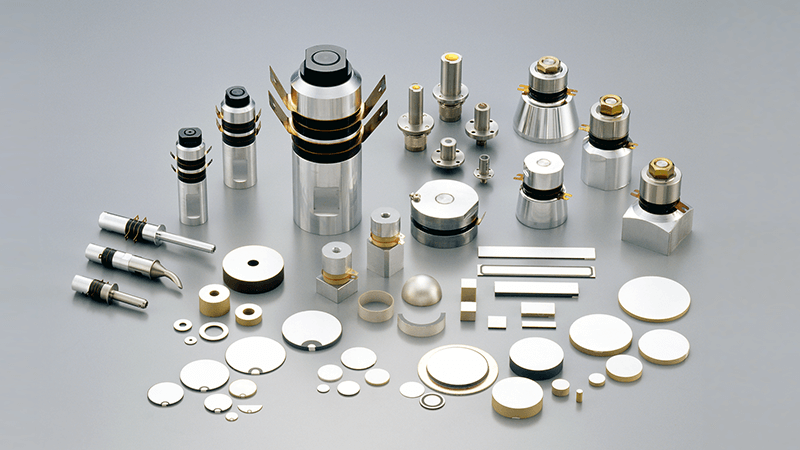
Messi Biology stated that soft-touch mobile phone unlocking, hospital ultrasound probes capturing internal body images, and sonar penetrating thousands of meters of seawater—all of these rely on the “energy translation” capabilities of piezoelectric ceramics. Hidden within the ingredient list of this functional ceramic is an inconspicuous yet pivotal supporting role: magnesium carbonate (MgCO₃). While it does not possess piezoelectricity itself, it undergoes a magnificent transformation the moment it is sintered at high temperatures, quietly determining whether the “physique” and “nerves” of the piezoelectric ceramic are sensitive.
The core capability of magnesium carbonate stems from its “decomposition temperament.” When the green body is fed into a kiln and heated to several hundred degrees Celsius, magnesium carbonate gradually decomposes to release carbon dioxide while generating highly active magnesium oxide (MgO) in situ. This reaction appears simple, but it achieves two goals at once: the released gas forms temporary channels within the green body, helping to expel adsorbed substances, and the newly generated MgO exhibits extremely high reactivity, quickly diffusing into the main crystal phase lattice of the ceramic or settling at the grain boundaries, paving the way for subsequent densification. Compared with the direct addition of magnesium oxide, the “decomposition first, activation later” pathway of magnesium carbonate allows magnesium ions to be distributed more uniformly, preventing localized agglomeration.
The performance of piezoelectric ceramics heavily relies on a uniform and fine-grained crystal structure. Once the grains grow abnormally, domain wall motion is hindered, and the piezoelectric constant immediately plunges. The ionic radius of Mg²⁺(Mg²⁺) is relatively small. During sintering, it tends to segregate at the grain boundaries of the main crystal phase, acting like nails to firmly “lock” the grain boundaries and inhibit their rapid migration during the middle and late stages of sintering. This “grain boundary pinning effect” tightly controls the grains at the micrometer level, avoiding the vicious competition where large grains swallow small ones. Patent and literature data show that PZT ceramics doped with an appropriate amount of MgO can have their grain size refined to about 2μm, with significantly improved densification and effectively suppressed micro-pores.
As a sintering aid, the MgO decomposed from magnesium carbonate can also form a small amount of liquid phase with other oxides in the formula, wetting the grains and accelerating mass transfer. This pulls down the sintering temperature by approximately 50–200 °C, which not only saves energy but also shortens the volatilization window of PbO in lead-based systems, reducing the formation of lead vacancies and micro-pores. On the electrical level, Mg²⁺ belongs to “hard” doping: it induces oxygen vacancies in the lattice, causing the unit cell to shrink slightly and making domain switching more “reserved”—manifesting as a noticeably decreased dielectric loss and a drastically enhanced mechanical quality factor (Qm), while the piezoelectric constant (d33) remains virtually uncompromised. Doping power-type PZT with about 0.2 mol% of MgO can push Qm above 800 and suppress tanδ to around 0.3%, making it a key enabler for ultrasonic transducers and piezoelectric transformers to function. In general electronic ceramics, the addition amount of magnesium carbonate often falls within the range of 0.5–3 wt%; excessive amounts would precipitate a secondary phase and instead impair piezoelectric activity.
Piezoelectric ceramics have almost strict demands regarding impurities: iron ions create color centers, and sodium/potassium ions migrate under electric fields, leading to current leakage. Therefore, electronic-grade magnesium carbonate requires a purity of ≥99%, and high-end products even need to reach over 99.9%, suppressing metal impurities such as iron and sodium down to the ppm level. This “cleanliness” is the true ticket for it to enter precision transducer formulations.
From a single buzzer sound to an ultrasound imaging session, magnesium carbonate quietly changes its outfit inside the high-temperature furnace, transforming from a mild carbonate into active MgO, trimming the crystal grains neatly, pinning down the grain boundaries securely, and suppressing losses. This quiet, magnesium-based supporting actor is precisely the behind-the-scenes hero that enables the stable mass production of modern piezoelectric materials.