
In the field of optical materials, there is a magical material known as “transparent armor”—spinel transparent ceramics. Second only to diamond in hardness, it transmits light just like glass. It can withstand the shockwaves of a missile explosion while allowing infrared guidance signals to pass through unimpeded. Manufacturing this high-performance material is inseparable from a crucial “master formulator”—magnesium oxide. The chemical name of spinel is magnesium aluminum oxide, with the theoretical chemical formula MgAl₂O₄. As evident from the formula, magnesium is an indispensable “half” of the spinel crystal lattice. As a source of magnesium, magnesium oxide directly determines whether the material can transform from a pile of white powder into crystal-clear ceramics.
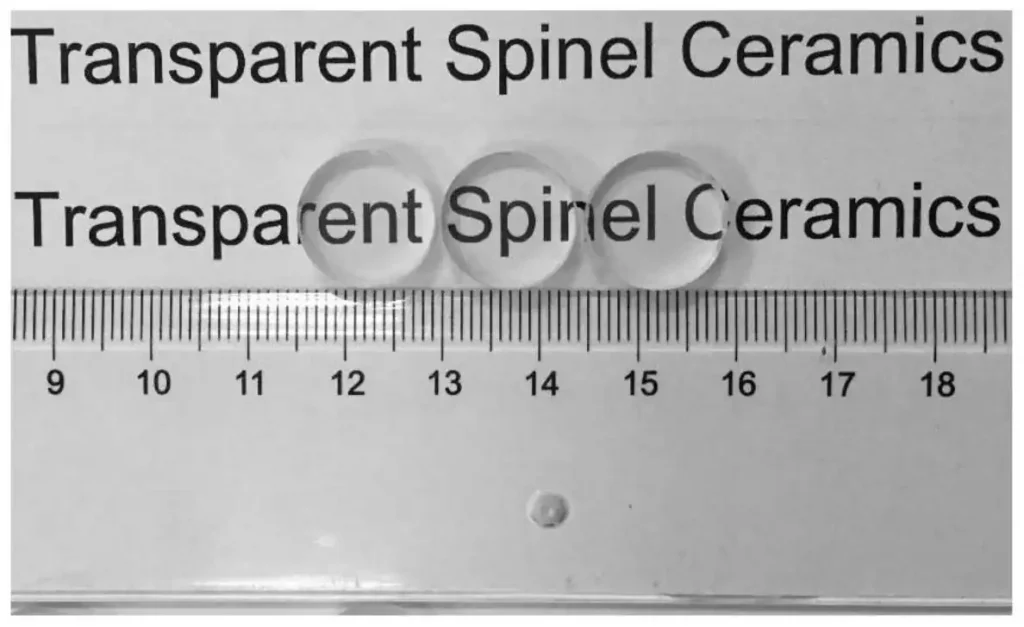
First, magnesium oxide serves as the cornerstone for building a perfect crystal structure. During the high-temperature sintering process, magnesium oxide and aluminum oxide undergo a solid-state reaction, causing atoms to rearrange and combine. Only when the molar ratio of magnesium oxide and aluminum oxide is precisely matched at 1:1 can a spinel phase of extremely high purity be formed. This ratio resembles a precise dance; if magnesium oxide is in excess or deficient, it will lead to lattice distortion and generate impurity phases. These impurities act like grains of sand mixed into clear water, severely scattering light and destroying the transparency of the ceramic.
Second, magnesium oxide plays a unique role in eliminating optical scattering centers. In the later stages of sintering, tiny pores typically remain inside the ceramic, and these pores are the greatest enemy to light transmission. The addition of magnesium oxide can effectively suppress abnormal grain growth and promote the densification process. It helps the material expel pores through a “diffusion mechanism” at high temperatures, allowing the ceramic body to achieve a relative density of over 99.9%. Only when the internal structure is dense and pore-free can light pass through unhindered, achieving a qualitative leap from “translucent” to “fully transparent.”
In addition, high-purity magnesium oxide imparts exceptional chemical and physical stability to spinel transparent ceramics. As a raw material, it helps the ceramic maintain structural stability and consistent light transmission performance even in extreme environments characterized by high temperatures, high humidity, or strong acids and alkalis. This is crucial for cutting-edge applications such as military reconnaissance windows and high-energy laser windows.
In the preparation of spinel transparent ceramics, magnesium oxide is not only a core raw material but also a performance regulator. In the form of fine powder, it builds an indestructible crystalline defense line, while polishing the window of transparency through exquisite chemical reactions. Thanks to the outstanding contribution of magnesium oxide, spinel transparent ceramics can serve as the “transparent eye” guarding advanced equipment, allowing us to glimpse a clearer and broader world.