
In the colorful world of textile printing and dyeing, we are often amazed by the brilliant colors bestowed upon fabrics by dyes, yet we rarely notice the inorganic materials working silently behind the scenes. Among the numerous chemical additives, Magnesium Oxide (MgO) plays a crucial role. It is far more than a simple filler; it is an “unsung hero” essential for enhancing dye quality and optimizing production processes.
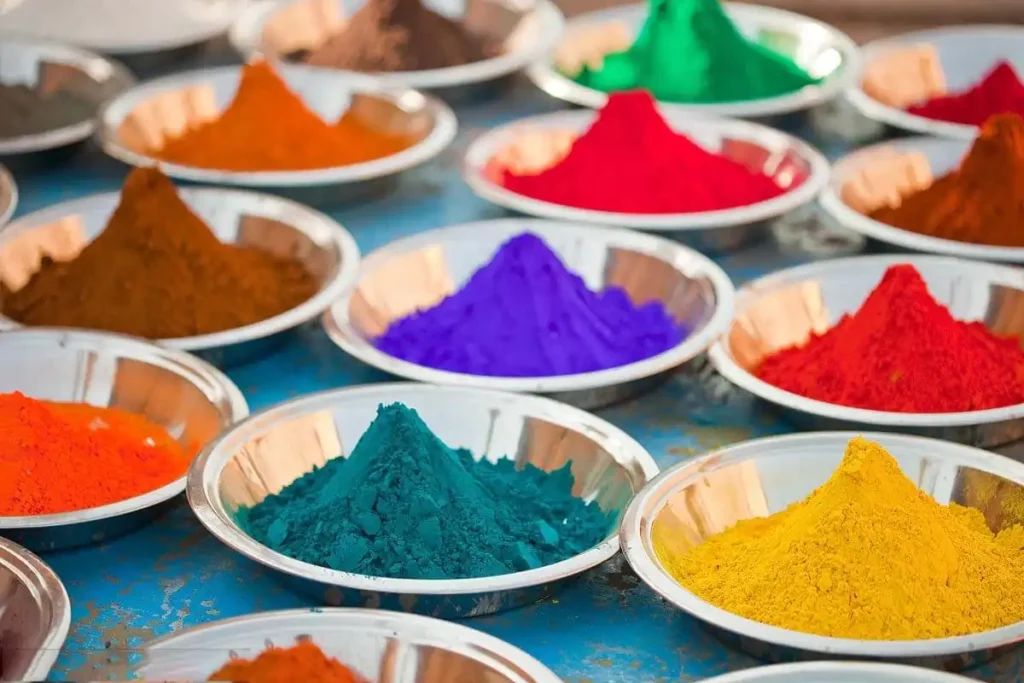
First and foremost, magnesium oxide exhibits significant catalytic effects in the production of dyes and dye intermediates. In complex dye synthesis reactions, magnesium oxide acts as an efficient catalyst, accelerating the reaction process and thereby increasing production efficiency. Simultaneously, it serves as a “pH regulator.” Dye reaction systems are extremely sensitive to acidity and alkalinity; the addition of magnesium oxide effectively stabilizes the pH concentration of the system, creating an optimal environment for dye synthesis and ensuring the smooth progression of chemical reactions.
Beyond its role in chemical synthesis, magnesium oxide has a direct impact on the final color quality. It is an important additive for improving the chromaticity of finished products, helping to make the dye colors more vivid and full, which fundamentally upgrades the product’s quality. In terms of application, magnesium oxide serves mainly as a filler, which not only helps reduce costs but also improves the physical properties of the dyes.
It is worth noting that not all dyes have the same requirements for magnesium oxide. For products requiring high brightness, the whiteness of the magnesium oxide is paramount; for some dark or heavy-colored dye products, the requirements for the color of the magnesium oxide are relatively relaxed. However, regardless of the application, there is one “iron rule”: purity. High-quality dye-grade magnesium oxide requires minimal impurities and is subject to strict constraints on sieve residue—for example, the 325-mesh sieve residue must be controlled below 0.01. This high standard of purity is intended to prevent impurities from interfering with the color development of the dye, ensuring pure and stable coloration.
How is this high-performance magnesium oxide produced? Taking the production process of Hebei Messi Biology Co., Ltd. as an example, it represents a perfect combination of chemistry and engineering. The process begins with brine solution, which undergoes rigorous impurity removal and purification. Subsequently, it reacts with sodium carbonate solution at room temperature to form magnesium carbonate crystals. This is merely the beginning; the core technology lies in the crystal transformation—converting the crystals into basic magnesium carbonate within specific temperature and time ranges. Finally, after filtration, washing, precise vacuum drying, and dynamic calcination decomposition, the product is complete. Throughout the entire manufacturing process, operational parameters are strictly controlled, resulting in a product with excellent performance, with all indicators surpassing national industry standards.
Although magnesium oxide for dyes may not always be in the spotlight, it plays an irreplaceable role in catalytic reactions, pH regulation, and the enhancement of color performance. With continuous advancements in production technology, high-quality magnesium oxide will continue to drive the dye industry toward higher quality and more vibrant color horizons.