
Report Hall
Gastric ulcer, a common digestive tract disease, severely affects patients’ quality of life and may even threaten life and health if not treated in a timely manner. Pharmacotherapy is the main clinical treatment, among which proton pump inhibitors and gastric mucosal protective agents are widely used. In recent years, research on hydrotalcite (magnesium aluminum carbonate) in the treatment of gastric ulcer has gradually increased, and its efficacy in combination with other drugs has attracted extensive attention, which also provides a new direction for the development of the magnesium carbonate industry in the medical field.
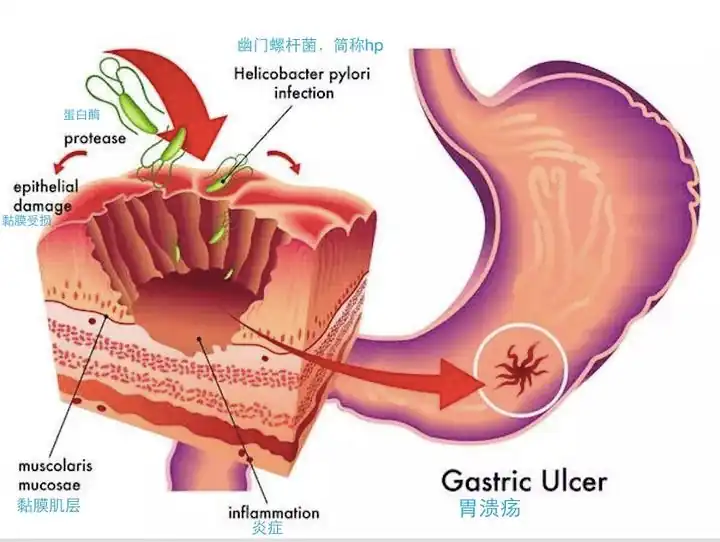
I. Study Subjects and Grouping: Eligible Gastric Ulcer Patients and Scientific Grouping
A total of 80 patients with gastric ulcer admitted to a hospital from January 2021 to December 2022 were selected as study subjects. They were divided into two groups using a random number table method:
- Control group (40 cases): 20 males and 20 females, aged 39–69 years with a mean age of (54.13±7.40) years, disease course 1–4 months with a mean of (2.29±0.84) months, ulcer diameter 1–2 cm with a mean of (1.53±0.21) cm.
- Observation group (40 cases): 18 males and 22 females, aged 40–68 years with a mean age of (54.36±6.80) years, disease course 1–4 months with a mean of (2.35±0.81) months, ulcer diameter 1–2 cm with a mean of (1.55±0.19) cm.
There were no statistically significant differences in gender, age, disease course, ulcer diameter and other general data between the two groups, indicating comparability. Inclusion and exclusion criteria were clearly defined to ensure consistency and reliability of the study subjects.
- Inclusion criteria: met clinical diagnostic criteria for gastric ulcer; endoscopic examination confirmed active gastric ulcer; informed consent signed by patients or their families.
- Exclusion criteria: complicated with severe conditions such as gastrointestinal perforation or obstruction; other malignant tumors or infectious diseases; history of gastric surgery; dysfunction of vital organs including heart, liver and kidney; allergy to study drugs.
II. Treatment Methods: Comparison of Hydrotalcite Combination Therapy vs. Monotherapy
According to Global and China Magnesium Carbonate Industry Market Status Research and Development Prospect Analysis Report 2025–2030:
- Control group: received oral esomeprazole magnesium enteric-coated capsules, 1 tablet (20 mg) twice daily for 1 month.
- Observation group: received hydrotalcite chewable tablets combined with esomeprazole. The dosage of esomeprazole was identical to the control group; hydrotalcite was administered orally, 2 tablets (0.5 g) once daily for 1 month.
This different treatment regimen laid the foundation for subsequent comparison of therapeutic effects.
III. Observation Indicators and Methods: Multi‑Dimensional Indicators for Comprehensive Therapeutic Evaluation
- Clinical efficacy evaluationAfter 1 month of treatment, clinical efficacy was assessed based on gastroscopy results:
- Cured: ulcer healed into scar stage or without visible trace;
- Markedly effective: ulcer reached H2 stage with inflammatory reaction;
- Effective: ulcer reached H1 stage;
- Ineffective: ulcer unchanged with severe inflammation.
Total effective rate = (cured + markedly effective + effective cases) / total cases × 100%.
- Symptom improvement timeThe time to improvement of epigastric pain, abdominal distension, acid reflux and belching was recorded in detail to compare the speed of symptom relief.
- Gastrointestinal hormone detectionBefore treatment and 1 month after treatment, 3 mL fasting venous blood was collected from each patient, centrifuged at 3000 r/min with a radius of 8 cm for 10 min, and the supernatant was obtained. Serum levels of gastrin, motilin and somatostatin were measured by radioimmunoassay to evaluate regulatory effects on gastrointestinal hormones.
- Inflammatory factor detectionUsing the same supernatant samples, serum levels of high-sensitivity C-reactive protein (hs-CRP), interleukin-8 (IL-8) and tumor necrosis factor-α (TNF-α) were measured by radioimmunoassay with an automatic biochemical analyzer to analyze anti-inflammatory effects.
- Adverse reactionsNausea and vomiting, anorexia, diarrhea, dizziness and other adverse reactions during treatment were recorded for safety assessment.
IV. Study Results: Significant Advantages of Hydrotalcite Combination Therapy
- Clinical efficacyThe total effective rate was 92.50% (37/40) in the observation group, significantly higher than 75.00% (30/40) in the control group (P < 0.05), indicating superior ulcer healing.
- Symptom improvement timeThe observation group showed significantly shorter time to relief:
- Epigastric pain: (4.17±1.13) d
- Abdominal distension: (3.05±0.93) d
- Acid reflux: (5.37±1.56) d
- Belching: (2.85±0.73) d
All were significantly shorter than those in the control group (P < 0.05).
- Gastrointestinal hormone levelsAfter treatment:
- Motilin: (162.48±22.51) ng/L vs. (176.63±23.31) ng/L
- Gastrin: (131.03±15.78) ng/L vs. (138.61±14.82) ng/L
- Somatostatin: (48.57±5.25) ng/L vs. (42.13±6.84) ng/L
Differences were statistically significant (P < 0.05).
- Inflammatory factors After treatment:
- hs-CRP: (3.46±1.11) mg/L vs. (4.94±1.25) mg/L
- IL-8: (14.42±1.42) ng/L vs. (23.48±1.38) ng/L
- TNF-α: (24.76±1.27) ng/L vs. (27.48±1.33) ng/L
All were significantly lower in the observation group (P < 0.05).
- Adverse reactionsThe incidence was 12.50% (5/40) in the observation group and 5.00% (2/40) in the control group, with no statistically significant difference (P > 0.05). Combination therapy did not significantly increase adverse events.
V. Discussion: Mechanisms and Advantages of Hydrotalcite Combination Therapy
Esomeprazole, a proton pump inhibitor, inhibits H⁺-K⁺-ATPase in gastric parietal cells, reduces acid secretion and protects gastric mucosa. However, long-term monotherapy may lead to drug resistance and adverse reactions.
Hydrotalcite, a gastric mucosal protective agent, acts through multiple mechanisms:
- Promotes epidermal growth factor production and increases phospholipid content, preventing H⁺ infiltration and enhancing mucosal defense;
- Neutralizes excess gastric acid, maintains appropriate intragastric pH, relieves symptoms and promotes repair;
- Adsorbs and inactivates pepsin, reducing mucosal damage and forming a protective barrier.
Therefore, the combination of hydrotalcite and esomeprazole produces synergistic effects, effectively promoting ulcer healing, regulating gastrointestinal hormones and inflammatory factors, with good safety and high patient tolerance.
Conclusion
In 2025 applied research of magnesium carbonate in medicine, hydrotalcite combined with esomeprazole shows significant advantages in gastric ulcer treatment. The regimen shortens symptom relief time, regulates gastrointestinal hormones, reduces inflammation, and does not increase adverse reactions.

This finding provides a more effective clinical strategy for gastric ulcer and strongly supports the medical application of magnesium carbonate, expected to further promote its utilization in gastric ulcer treatment and related fields, as well as the optimization of magnesium carbonate industrial layout.