
Messi Biology Co., Ltd. states that when night falls, automotive headlights are the “eyes” that illuminate the road ahead, and their clarity directly impacts driving safety. However, many car owners have encountered this problem: after rain or during winter use, a layer of fog appears inside the headlights, sometimes even condensing into water droplets, which not only affects the brightness of the lights but also can corrode the internal circuits and reflective coatings. The “culprit” behind this is moisture in the air, and the key to solving this problem lies in the desiccant hidden inside the headlights, with magnesium oxide becoming one of the core materials due to its unique advantages.
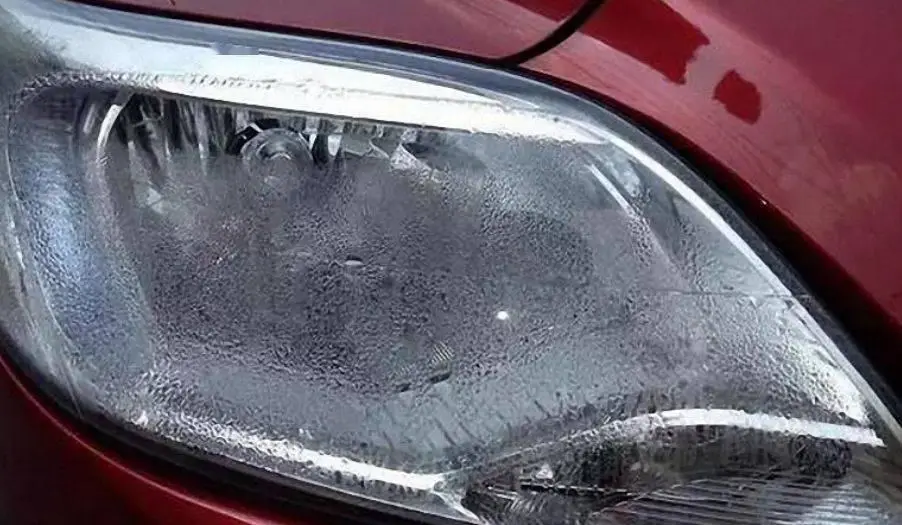
To understand the role of magnesium oxide, one must first understand why automotive headlights are prone to moisture ingress. Automotive headlights are not completely sealed structures; to balance the air pressure changes caused by temperature fluctuations inside the lamp, headlights are designed with special ventilation holes. When the external temperature drops sharply and humidity increases, cold and hot air converge inside the lamp, and water vapor in the air condenses into liquid water. The core mission of the desiccant is to adsorb this excess moisture and maintain a dry environment inside the lamp. Magnesium oxide’s excellent physical and chemical properties make it an ideal material for automotive headlight desiccants. Structurally, magnesium oxide is a porous inorganic compound with tiny pores throughout its interior. These pores form a vast specific surface area—one gram of magnesium oxide can have a surface area of hundreds of square meters, equivalent to the size of a basketball court. This special structure gives magnesium oxide extremely strong adsorption capabilities, allowing it to quickly capture water molecules from the air like a sponge, and its adsorption capacity far exceeds that of ordinary desiccants.
More importantly, the adsorption process of magnesium oxide is both “stable” and “long-lasting.” Unlike some organic desiccants, magnesium oxide is an inorganic oxide with stable chemical properties. It does not decompose or release harmful substances in the high-temperature environment (typically 80-120°C) when automotive headlights are working, nor does it lose its adsorption performance due to temperature changes. At the same time, its adsorption of moisture is a physical adsorption process, with no chemical reaction occurring. When the temperature inside the lamp rises, the adsorbed water slowly desorbs and is expelled through the ventilation holes, achieving a “adsorption-desorption” cycle and a service life that can match the entire lifespan of the automotive headlight. In practical applications, the form of magnesium oxide desiccant has also been carefully designed. To prevent powdered magnesium oxide from scattering onto the optical components inside the lamp and affecting lighting effects, manufacturers usually process it into granular or tablet form, encapsulated in breathable non-woven bags, and then fixed in a corner of the headlight housing. These desiccants can not only adsorb residual moisture from the assembly process but also continuously capture moisture entering through the ventilation holes, preventing the formation of fog and water droplets from the source.
Compared to other desiccants like silica gel and calcium chloride, magnesium oxide has another outstanding advantage: it is non-corrosive. Although calcium chloride has strong adsorption capacity, it forms a corrosive calcium chloride solution after adsorbing water. If the encapsulation bag breaks, it may corrode the metal brackets and circuits of the headlight. Silica gel desiccant, on the other hand, has a much lower adsorption capacity than magnesium oxide. Magnesium oxide, after adsorbing water, only forms a stable and non-corrosive hydrate. Even if the encapsulation bag accidentally breaks, it will not cause damage to the internal components of the headlight, making it safer.