
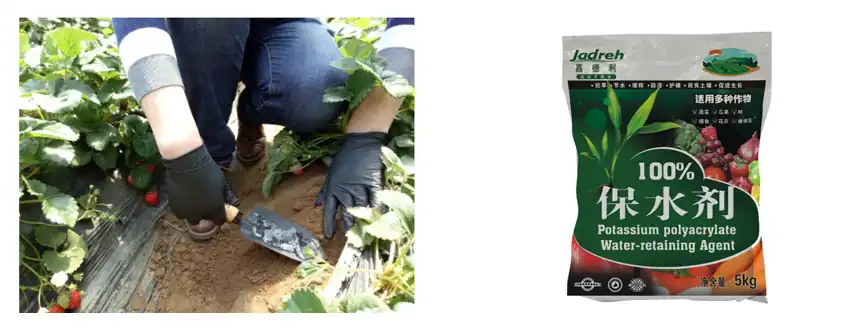
Messi Biology states that the application of Magnesium Oxide (MgO) in water-retaining agents is primarily as a functional additive, particularly when compounded with superabsorbent polymers (SAPs, such as polyacrylates) to improve specific properties. It is not used as the primary water-absorbing material on its own but rather plays a supportive and enhancing role. The most core and valuable applications of MgO in water-retaining agents (mainly SAPs) are as a pH regulator and stability enhancer. It effectively resolves the performance degradation issues of polyacrylate-based water-retaining agents in acidic environments, significantly expanding their range of application. Secondary functions include providing slow-release magnesium nutrition, potentially improving gel strength, and offering auxiliary hygroscopicity. It typically serves as a key functional component within a composite water-retaining system rather than the primary absorbent matrix.
1. pH Regulator and Stability Enhancer
- The Problem: The water absorption capacity of many high-performance water-retaining agents, such as sodium polyacrylate, decreases significantly under acidic conditions. Soil environments, fertilizers, or irrigation water are often acidic.
- The Role: Magnesium oxide is an alkaline oxide(MgO+H₂O→Mg(OH)₂). When added to a water-retaining agent (usually during synthesis or as a post-added filler/coating), it slowly releases hydroxide ions (
OH⁻) in aqueous environments, raising the local micro-environmental pH and maintaining it within a neutral or weakly alkaline range. - The Effect: This helps maintain the high water-absorption ratio and stability of polyacrylate-based agents across a wider pH range (especially in acidic conditions), preventing water loss or degradation due to acidification. This is crucial for practical applications in acidic soils.
2. Ionic Strength Regulator
- The Problem: The absorption capacity of superabsorbent polymers is highly sensitive to the ionic strength of the solution. The presence of salts (such as Na⁺,K⁺,Ca²⁺,Mg²⁺ ) can severely reduce the water absorption ratio (the “salt-sensitivity effect”).
- The Role: While MgO itself introduces
Mg²⁺ions, its primary role is indirect via pH regulation. More importantly, during the synthesis or modification process, the presence of MgO can help optimize the charge distribution or cross-linking density of the resin network, thereby improving the agent’s tolerance to salt to some extent (though this effect is usually less pronounced than specialized anti-salt modification methods). Its slow-release alkaline environment also helps stabilize the carboxylate ions of the resin.
3. Slow-Release Magnesium Source
- The Role: Under the action of water and weak acids (such as carbonic acid in soil or plant root exudates), magnesium oxide dissolves slowly, releasing Mg²⁺, an essential nutrient for plants.
- The Effect: This allows MgO-containing composite water-retaining agents to serve as a slow-release magnesium fertilizer while providing hydration. This supplements magnesium for plants, promotes chlorophyll synthesis, and boosts growth, achieving a dual function of “water retention” and “nutrition.”
4. Improving Gel Strength and Structure
- The Role: When MgO particles are added during the synthesis or compounding of water-retaining agents, these particles can act as physical cross-linking points or fillers within the polymer network.
- The Effect: This can enhance the mechanical strength of the hydrogel after water absorption, making it less prone to breaking or collapsing, especially under pressure (such as soil overburden). This helps maintain the water-retention space, though this effect requires the optimization of dosage and dispersion.
5. Auxiliary Hygroscopicity
- The Role: Magnesium oxide itself possesses a certain degree of hygroscopicity (moisture-absorbing ability).
- The Effect: In low-humidity environments or as a secondary component in composite materials, MgO can contribute to moisture absorption. However, in composite agents dominated by SAPs, this contribution is relatively small.
Application Forms:

- In-situ Synthesis Addition: Adding MgO powder into the reaction system during the synthesis of polyacrylate water-retaining agents.
- Surface Modification/Coating: Loading MgO powder onto the surface of pre-synthesized water-retaining granules via physical mixing, spraying, or chemical reaction.
- Composite Fillers: Using MgO alongside clay minerals (such as bentonite or kaolin) or other functional fillers as part of a composite water-retaining system.
Messi Biology notes that research and application of MgO for improving water-retaining agents (especially acid resistance) have been documented in literature and patents, particularly in the field of agricultural water-retaining agents. Some commercial or experimental products may have already adopted this technology or similar principles (using other alkaline oxides or hydroxides). It is an effective modification strategy aimed at enhancing the environmental adaptability and functionality of water-retaining agents.