
Magnesium oxide (MgO) is a well-known inorganic material. It is a common alkaline oxide and the primary raw material for producing magnesium hydroxide and magnesium metal. However, with industrial upgrading and the growing demand for high-tech functional materials, fine magnesium oxide products—especially nano-magnesium oxide—have begun to receive significant attention across various industries.
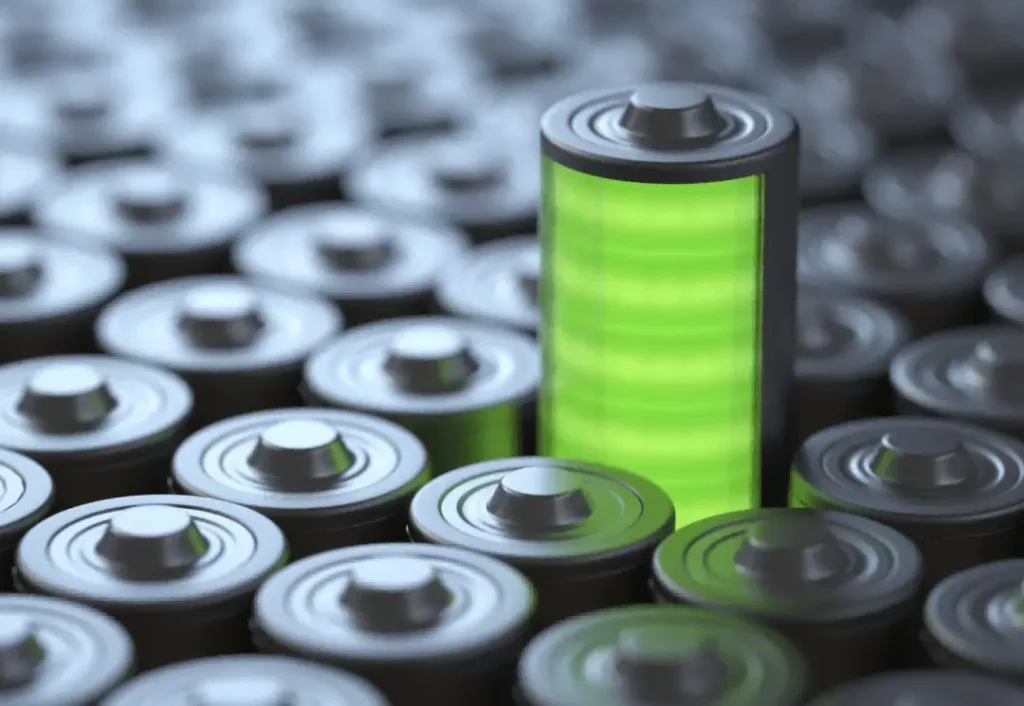
Application of Magnesium Oxide in the Battery Industry
Does magnesium oxide have applications in the battery industry? The answer is a definitive yes, and its role is quite significant. As a new type of nanomaterial, nano-magnesium oxide possesses distinct small-size effects, large surface area effects, quantum size effects, and macroscopic tunneling effects. After surface modification, it exhibits no agglomeration and offers superior dispersibility and nano-activity within chemical systems.
By leveraging the optical, electrical, magnetic, thermal, and quantum effects of nano-MgO particles, the performance of products containing them can be greatly enhanced. Consequently, nano-magnesium oxide is frequently used in battery materials to improve cycling stability, increase the number of charge-discharge cycles, and extend battery service life. Let’s look at the specific applications below:
1. Applications in Lithium-Ion Batteries
- Anode Material Additive:
In high-capacity tin composite anode materials for lithium-ion batteries, insoluble solid particles such asSiO2SiO_2SiO2,TiO2TiO_2TiO2,ZrO2ZrO_2ZrO2,Cr2O3Cr_2O_3Cr2O3,Fe2O3Fe_2O_3Fe2O3,CeO2CeO_2CeO2, MgO,SiCSiCSiC, andBaSO4BaSO_4BaSO4(with diameters between 0.05 and 10 microns) are added at a concentration of 10–100g/L. The resulting nickel-solid particle-tin composite anode material exhibits high specific capacity, high initial charge-discharge efficiency, and stable cycling performance.
Additionally, adding an appropriate amount of nano-MgO to cathode materials can result in a reversible discharge capacity exceeding 140 mAh/g with excellent cycling performance. It can also improve conductivity; the recommended addition amount is 0.3%–0.5%. - Cathode Material Dopant:
Using nano-magnesium oxide as a conductive dopant, magnesium-doped lithium iron manganese phosphate is produced via solid-state reaction. This further creates nano-structured cathode materials with conductivity reaching10−210^{-2}10−2S/cm and an actual discharge capacity of 240 mAh/g. This new cathode material is low-cost, high-energy, and safe, making it suitable for small-to-medium polymer, colloidal, and liquid lithium-ion batteries, and especially for high-power traction batteries. - Electrolyte Deacidifier:
Magnesium oxide can optimize the capacity and cycling performance of spinel lithium manganese oxide (LiMn2O4LiMn_2O_4LiMn2O4) batteries. Nano-MgO is added to the electrolyte as a deacidifier (scavenger), with an addition amount of 0.5%–20% of the electrolyte weight. By removing acid from the electrolyte, the free hydrofluoric acid (HF) content is reduced to below 20 ppm. This mitigates the dissolution ofLiMn2O4LiMn_2O_4LiMn2O4by HF and improves both the capacity and cycling stability of the battery. - pH Regulator for Electrode Preparation:
Nano-magnesium oxide can be used as a pH regulator. An alkaline solution containing nano-MgO and an ammonia solution (acting as a complexing agent) are added to an aqueous solution containing cobalt and nickel salts to co-precipitate Ni-Co composite hydroxides. Lithium hydroxide is then added to this composite, followed by heat treatment at 280–420°C and 650–750°C. When this lithium composite oxide is used as an anode active material, it results in a lithium-ion secondary battery with high electrical capacity. The recommended nano-MgO addition is approximately 5%.
2. Applications in Zinc-Nickel Batteries
By physically mixing magnesium oxide into the zinc anode active material, one can reduce charge-discharge polarization, decrease internal resistance in the later stages of cycling, improve the utilization rate of the negative plate active material, and extend battery cycle life. The optimal addition amount is 1.0% wt, and it is recommended not to exceed 2.0%.
3. Applications in High Zinc Chloride Batteries
Adding a small amount of magnesium oxide to the cathode active material can regulate electrolyte acidity, slow down self-discharge, inhibit battery swelling (gas expansion), and improve storage performance. It also has a unique effect on increasing discharge capacity and promoting the gelation of the paste layer. The recommended addition amount is 0.5%–1% with appropriate pH adjustment.
4. Applications in Nickel-Cadmium (Ni-Cd) Batteries
Adding appropriate amounts of magnesium oxide, zinc oxide, and iron oxide to the cadmium electrode can improve the utilization of active materials. Furthermore, adding magnesium oxide along with indium trioxide and zinc oxide can significantly improve the charge retention capability of sealed nickel-cadmium batteries.