
Messi Biology states that in the logistics lines of mines, ports, and factories, conveyor belts act as industrial “arteries,” carrying hundreds of thousands of tons of material day after day. However, long-term friction, heavy-load impacts, and environmental erosion can easily lead to tearing, wear, and even breakage. In these scenarios, a seemingly ordinary inorganic material—Magnesium Carbonate—is safeguarding the stable operation of this critical equipment in its role as a reinforcing agent.
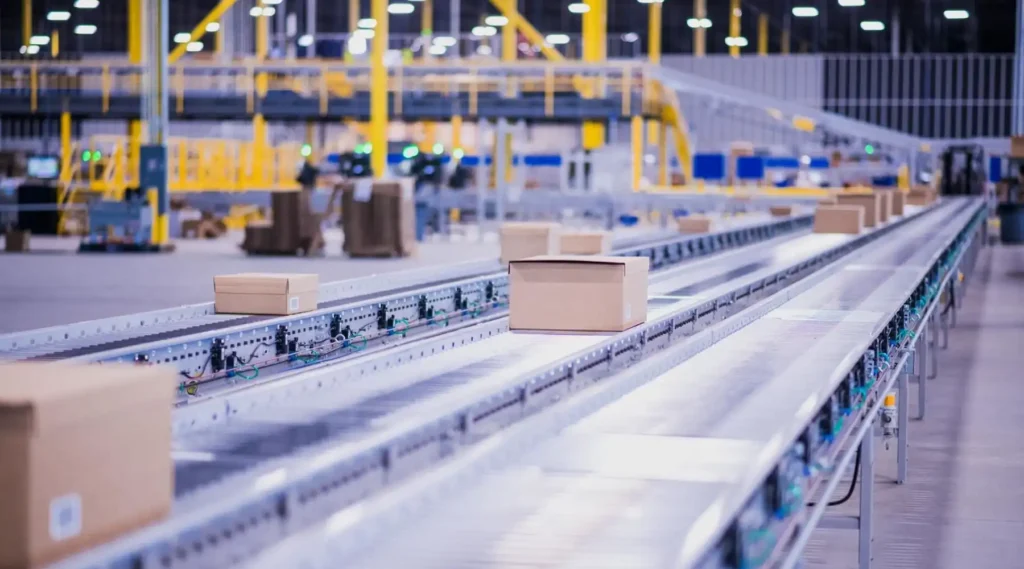
As a core additive for rubber conveyor belts, the reinforcing effect of magnesium carbonate stems from its unique physicochemical properties. Its ultra-fine particle size (1–5μm) and high specific surface area (50–200m²/g) allow it to disperse uniformly within the rubber matrix, forming countless “rigid support points.” When the conveyor belt is under stress, these particles act like a micro-skeleton embedded in the rubber, dispersing external forces to surrounding molecular chains and preventing localized stress concentration, thereby delaying the initiation and propagation of cracks. This “physical anchor” effect can increase tensile strength by 15%–20%, tear strength by 10%–25%, and wear resistance by more than 20%.
Compared to traditional reinforcing agents, magnesium carbonate offers distinct advantages. While carbon black provides significant reinforcement, it turns the belts black and may contain heavy metals, making it unsuitable for light-colored or eco-friendly applications. On the other hand, silica (white carbon black) often suffers from poor dispersibility and higher costs. Magnesium carbonate is not only white and odorless but also complies with FDA and REACH environmental standards. It can replace 20%–40% of carbon black or silica, reducing production costs without compromising performance. Particularly in neoprene (CR) conveyor belts, it also functions as a flame retardant and smoke suppressant, raising the oxygen index to over 30% and reducing smoke density by 50%, thereby improving fire safety ratings.
The reinforcing performance of magnesium carbonate is also inseparable from its optimization of the rubber vulcanization process. At vulcanization temperatures of 140–180°C, it releases Mg²⁺ ions, which work synergistically with accelerators to shorten vulcanization time by 20%–30%. This promotes more uniform cross-linking of rubber molecules, preventing localized over-curing or under-curing. This “vulcanization-reinforcement” synergy ensures that the conveyor belt not only possesses higher strength but also resists extreme temperatures (-40°C to 120°C) and acid/alkali corrosion, extending its service life by 6–12 months.
In industrial applications, the dosage of magnesium carbonate must be precisely controlled between 8–15 phr (parts per hundred rubber). Additionally, surface modification using silane coupling agents is employed to enhance dispersion and prevent agglomeration, which could otherwise compromise performance. In mining conveyor belts, it resists punctures from sharp ores; in port logistics lines, it withstands corrosion from sea breezes; and in high-temperature workshops, it maintains rubber elasticity without degradation. These characteristics make magnesium carbonate an indispensable “invisible guardian” in the conveyor belt industry.
As environmental policies tighten and industrial requirements for equipment safety rise, the reinforcing value of magnesium carbonate becomes increasingly prominent. It leaves no heavy metal residues and releases no toxic gases during combustion, meeting the demands of green production. Furthermore, by upgrading performance, it reduces the frequency of belt replacements and minimizes industrial downtime losses. This seemingly common inorganic material is safeguarding the smooth operation of industrial logistics with its multi-functional capabilities, becoming the preferred solution in the field of conveyor belt reinforcement.