
Messi Biology notes that when people think of ceramics, they often envision daily necessities like tableware or vases. However, in high-end fields such as aerospace and electronic technology, a high-performance material called “Magnesium-Yttrium (Mg-Y) ceramic” is playing an irreplaceable role. The core component of this cutting-edge ceramic is Magnesium Oxide (MgO), a substance we are well-acquainted with. How does this seemingly ordinary oxide become the “soul” of high-end ceramics?
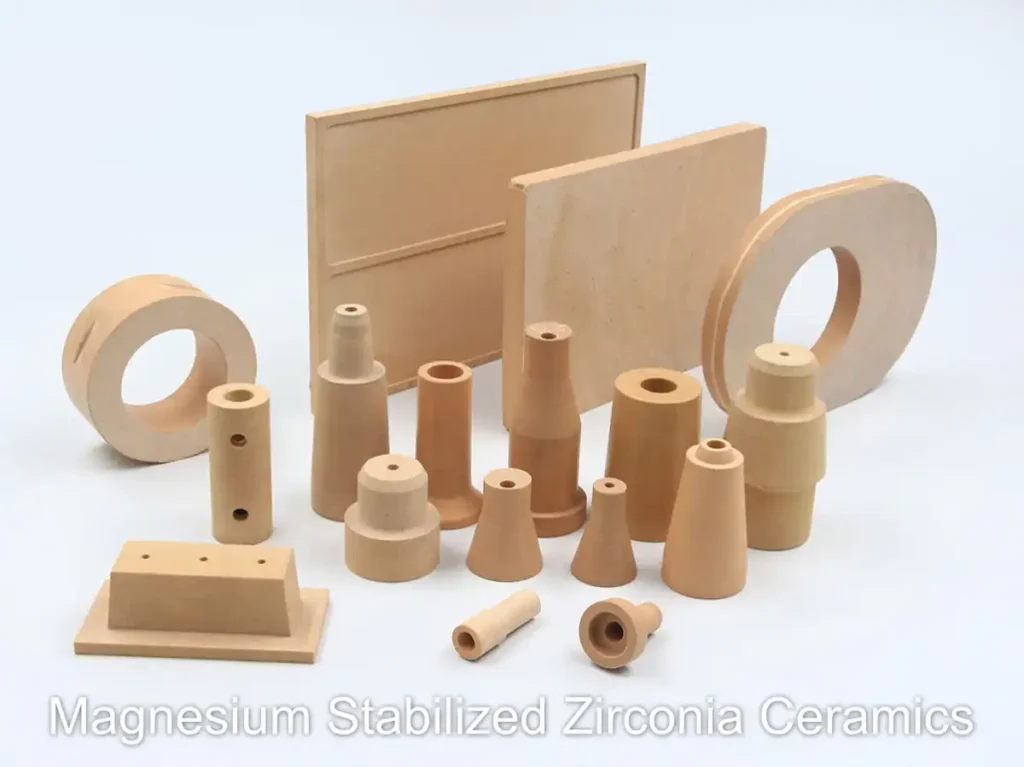
The reason Magnesium Oxide serves as the core raw material for Mg-Y ceramics lies in its unique physicochemical properties. First, it possesses an extremely high melting point (approximately 2,852°C), far exceeding that of ordinary ceramic materials. This provides Mg-Y ceramics with exceptional high-temperature resistance, allowing them to operate stably in extreme environments exceeding 1,800°C. Second, Magnesium Oxide exhibits excellent chemical inertness; it does not easily react with acids or bases and resists oxidative corrosion at high temperatures, ensuring reliable chemical stability for the ceramic. Furthermore, Magnesium Oxide offers superior ionic conductivity and insulation properties, which are critical for ceramic materials used in the electronics sector.
In the preparation of Mg-Y ceramics, Magnesium Oxide does not act alone but functions within a synergistic system alongside Yttrium Oxide (Y2O3). Pure Magnesium Oxide ceramics suffer from high brittleness and a tendency to crack at high temperatures. The addition of Yttrium Oxide effectively inhibits the excessive growth of Magnesium Oxide grains and refines the ceramic’s microstructure. More importantly, Yttrium Oxide can form a solid solution with Magnesium Oxide, stabilizing its cubic crystal phase. This prevents volume changes caused by phase transitions during the cooling process, thereby significantly enhancing the toughness and mechanical strength of the ceramic. This combination of a “Magnesium Oxide matrix + Yttrium Oxide modification” achieves a performance breakthrough where the result is greater than the sum of its parts.
The core advantages bestowed by Magnesium Oxide allow Mg-Y ceramics to excel in multiple high-end industries. In the aerospace field, it is used to manufacture combustion chamber liners for rocket engines and thermal insulation coatings for spacecraft, as it can withstand the high-temperature gas erosion during engine ignition. In the electronics industry, its outstanding insulation and thermal conductivity make it an ideal packaging material for high-power semiconductor devices, effectively solving heat dissipation challenges for electronic components. In the medical field, due to the excellent biocompatibility of Magnesium Oxide, Mg-Y ceramics can be used to produce biomedical materials such as artificial bones and dental implants, coexisting harmoniously with human tissue.
With the advancement of technology, performance requirements for Mg-Y ceramics continue to rise, driving continuous progress in Magnesium Oxide purification techniques. Today, high-purity (above 99.99%) and ultrafine-grained Magnesium Oxide powder have become the keys to preparing high-end Mg-Y ceramics. In the future, with further breakthroughs in Magnesium Oxide modification technology, Mg-Y ceramics are expected to find applications in even more challenging fields, such as nuclear fusion devices and deep space exploration. As a core foundation, Magnesium Oxide will continue to play a vital role in the wave of material science and technology. From a common oxide to a core material for high-end ceramics, the application of Magnesium Oxide bridges the gap between basic chemicals and cutting-edge technology. Its characteristics perfectly align with the performance needs of Mg-Y ceramics, demonstrating the wisdom of “tailoring materials to their use” and witnessing the extraordinary value of ordinary matter when empowered by technology.