
Messi Biology states that in silicon steel manufacturing—particularly during the annealing process of grain-oriented silicon steel—magnesium oxide (MgO) is typically applied to the steel strip surface as a slurry. It then undergoes high-temperature annealing to form a glassy coating (forsterite layer). The so-called “coating performance” refers to the ability of magnesium oxide to be successfully applied, form a film, react, and ultimately create a dense, uniform, and stable glass film. Essentially, it reflects the physical and chemical compatibility of the magnesium oxide.
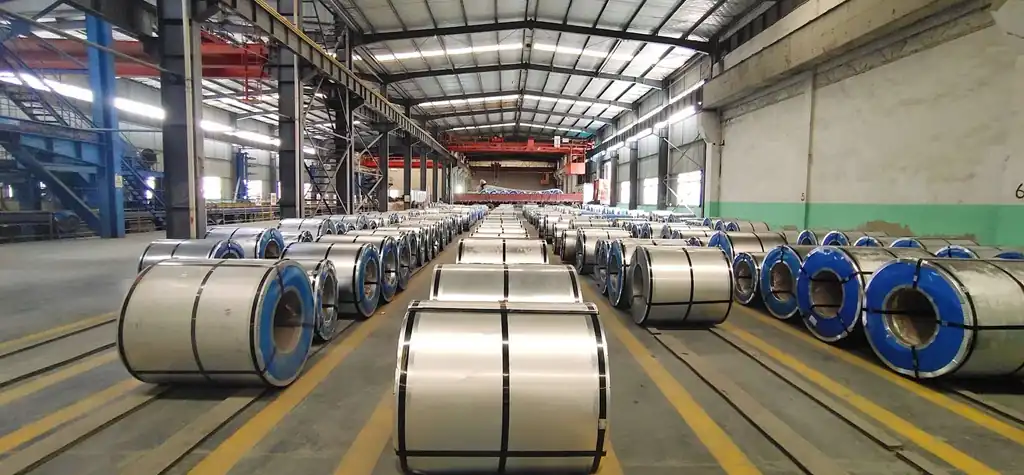
Good coating performance should meet the following criteria:
- Uniform distribution during spraying without agglomeration.
- Excellent bonding with the steel surface to form a continuous coating after annealing.
- Proper reaction at high temperatures to generate a glassy protective film.
- Resistance to cracking and peeling, characterized by high adhesion and electrical insulation.
I. The Importance of Coating Performance
- Protective Function: One of the primary tasks of MgO during annealing is to prevent “sticking” between steel laminations. It acts as a separator, ensuring that the steel sheets do not weld together under high-temperature conditions.
- Formation of the Glassy Coating: MgO reacts with silicon oxide (
SiO2SiO_2SiO2) and iron oxide (FeOFeOFeO) on the steel surface to form a glassy substance (such as magnesium silicate/forsterite), creating a dense coating. This glass layer blocks the diffusion of impurities and protects the grain structure. - Promotion of Grain Orientation: The structure and uniformity of the coating influence the growth environment of the grains. A stable, thin, and uniform glass coating facilitates the preferential growth of Goss-oriented grains, thereby increasing the magnetic induction and reducing the core loss of the silicon steel.
- Compatibility with Downstream Processes: The adhesion and surface structure of the coating affect the application of subsequent tension coatings. If the magnesium oxide coating is not secure, the tension layer may peel off, ultimately affecting the anti-warping properties and insulation of the silicon steel sheets.
II. Key Factors Affecting Coating Performance
- Particle Size and Distribution: These are the primary factors affecting coating uniformity. If particles are too coarse, they settle easily and lead to uneven coating; if they are too fine, they easily absorb moisture and clump, making application difficult. Ideally, MgO should have a moderate particle size with excellent dispersibility and suspension properties.
- Chemical Activity: This determines the degree of reaction between the MgO and the steel surface. If the activity is too low, the vitrification (glass-forming) reaction will be insufficient; if it is too high, the reaction may be excessive, resulting in a coating prone to cracking. The MgO activity must be matched to the specific annealing temperature, time, and steel grade.
- Hygroscopicity (Moisture Absorption): MgO is naturally prone to absorbing water to form magnesium hydroxide (
Mg(OH)2Mg(OH)_2Mg(OH)2), which causes slurry instability and agglomeration, thereby reducing coating uniformity. Consequently, surface modification technologies are required to lower hygroscopicity and improve storage and application stability. - Impurity Content: High levels of impurities such as iron (Fe), calcium (Ca), and silicon (Si) can interfere with the high-temperature reaction process. This leads to incomplete glass coating formation or phenomena like cracking and peeling, which degrades coating performance.
III. Common Measures to Enhance Coating Performance
- Optimize Particle Size Control: Ensure the distribution is concentrated within a suitable range, eliminating coarse particles and excessive “dust” tails.
- Add Specialized Dispersants or Modifiers: Improve the water dispersibility of the MgO to prevent agglomeration within the slurry.
- Adopt Surface Coating Technology: Use silanes or organic materials to treat the MgO, reducing its hygroscopicity.
- Select High-Purity Raw Materials: Reduce harmful impurities like Fe, Ca, and Si to a minimum.
- Strictly Control Slurry Preparation: Monitor the pH value and viscosity during the slurry mixing process to maintain excellent flowability for spraying.
In summary, choosing a high-quality supplier like Messi Biology—who can provide silicon steel grade magnesium oxide with precise activity control, optimized particle size, and high purity—is essential for ensuring superior coating performance and the overall magnetic quality of silicon steel.