
The chemical composition of ceramic materials primarily consists of silicon oxide (silica), aluminum oxide (alumina), potassium oxide, sodium oxide, calcium oxide, magnesium oxide, iron oxide, and titanium oxide.
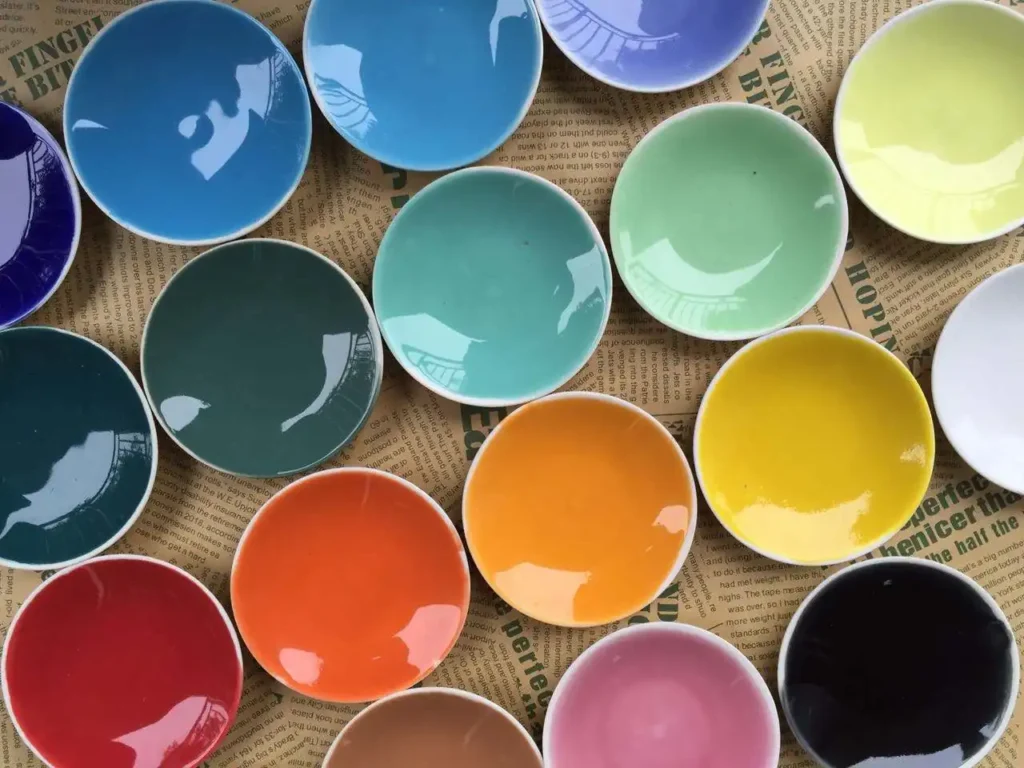
Common ceramic raw materials include clay, quartz, and feldspar (potassium and sodium). Generally, ceramic raw materials possess high hardness but low plasticity. Beyond their use in tableware and decoration, they play a vital role in the development of science and technology. Ceramic raw materials are processed from abundant natural earth resources such as clay, quartz, and feldspar.
The following is a detailed introduction to various ceramic raw materials:
1. Ceramic Clay
As a plastic raw material, clay is used in formulas for ceramic bodies, glazes, and pigments. Beyond ceramic production, kaolin (a type of clay) is widely used as a filler in the paper industry and in coatings for construction materials.
2. Quartz
Quartz is abundant on Earth. In the ceramic industry, it is a non-plastic raw material used in body and glaze formulas.
- In the Body: Quartz reduces the plasticity of the clay, decreases drying shrinkage, shortens drying time, and prevents deformation. During firing, the thermal expansion of quartz partially offsets the shrinkage of the body. At high temperatures, quartz acts as the “skeleton” of the body, reacting with alumina to form mullite, which prevents the body from softening or deforming. It also improves the whiteness and translucency of the porcelain.
- In the Glaze: Quartz raises the melting temperature and viscosity of the glaze, reduces the thermal expansion coefficient, and enhances the mechanical strength, hardness, wear resistance, and chemical corrosion resistance of the glaze.
3. Fluxing Materials
These materials lower the firing temperature of the ceramic body and glaze, promoting sintering. Common fluxes include feldspar (potash and soda), calcite, dolomite, talc, fluorite, and lithium-bearing minerals.
- Feldspar: Before firing, it is non-plastic, helping to reduce shrinkage and improve dry strength. It typically accounts for 25% of the body and 50% of the glaze. Feldspar’s primary role is to lower the firing temperature. During firing, the melted feldspar glass fills the gaps between particles and promotes the melting of other minerals. It densifies the body and improves mechanical strength, electrical properties, and translucency.
4. Carbonate Fluxes
As major fluxing agents, these include calcium carbonate, calcite, marble, dolomite, magnesite (magnesium carbonate), and limestone.
- Calcium Carbonate: This is the primary component used as a flux in bodies and glazes. In ceramic wall tiles, the usage of limestone, calcite, or marble ranges from 5% to 15%.
- In Glazes: It increases hardness, wear resistance, and corrosion resistance while lowering high-temperature viscosity and increasing gloss. These materials are heavily used in architectural and sanitary ceramics.
5. Magnesium Silicate Materials
This category includes talc, serpentine, and forsterite.
- Talc: Widely used to produce high-end daily-use ceramics with high whiteness and transparency, as well as electrical and special ceramics. In architectural and sanitary ceramics, adding talc lowers the firing temperature, broadens the firing range, and improves translucency and thermal stability.
- In Glazes: Talc prevents glaze crazing (cracking), increases opacity, and improves the yield rate by broadening the firing range.
Historical and Specialized Ceramic Materials
- Kaolin (高岭土): One of the primary raw materials for making porcelain. It is white with slight grey or yellow tints. It was named after “Gaoling Village” in Jingdezhen, where it was first discovered. The term “Kaolin” has since become an international specialized term.
- Ma-cang Clay (麻仓土): A type of kaolin produced at Ma-cang Mountain near Jingdezhen, used specifically during the Yuan and Ming dynasties.
- China Stone (瓷石): A primary porcelain material consisting mainly of quartz and sericite. It is white with tints of yellow, green, grey, or light red and has been used in China since ancient times.
- Petuntse / Dunzi (不子/白不): This refers to ceramic raw materials processed into brick-like slabs. The term is widely used in both Chinese and international ceramic literature.
- Glaze Slip (釉浆): The glaze applied to the surface of the porcelain. Historically, in Jingdezhen, it was made from “glaze fruit” and “glaze ash” (burnt limestone and fern).
- Cobalt Ore (钴土矿): The coloring agent for blue and white (Qinghua) porcelain. In ancient times, there were two types: local Chinese ore (high manganese, low iron) and imported ore from Western Asia (low manganese, high iron).
- Sumali Blue (苏泥麻青): Also known as “Smalt” or “Su-ma-离-qing,” this was an imported cobalt pigment from Persia used in the late Yuan and early Ming dynasties. It is characterized by a deep, lush blue with black “iron-rust” spots.
- Pingdeng Blue (平等青): The primary pigment used from the Chenghua to mid-Jiajing periods of the Ming Dynasty. Produced in Leping, Jiangxi, it features an elegant, muted blue tone.
- Mohammedan Blue / Huiqing (回青): An imported cobalt pigment used during the Zhengde, Jiajing, and Wanli periods of the Ming Dynasty. It is characterized by a blue hue that leans toward violet.
- Stone Blue / Shiziqing (石子青): A local pigment from Shanggao, Jiangxi, used by folk kilns in the mid-Ming Dynasty. It produces a greyish-blue color.
- Zhuming Pigment (珠明料): Produced in Yunnan from calcined cobalt ore. It was the primary pigment for Qinghua porcelain in the Qing Dynasty, known for its bright, emerald-blue color.