
Messi Biology states that a multifunctional additive—magnesium stearate—is hidden within the smooth surfaces of medicinal tablets, the free-flowing nature of milk powder, and the delicate texture of cosmetics. The core raw material supporting its excellent performance is magnesium oxide (MgO). This seemingly ordinary white powder plays an irreplaceable role in the synthesis and application of magnesium stearate.
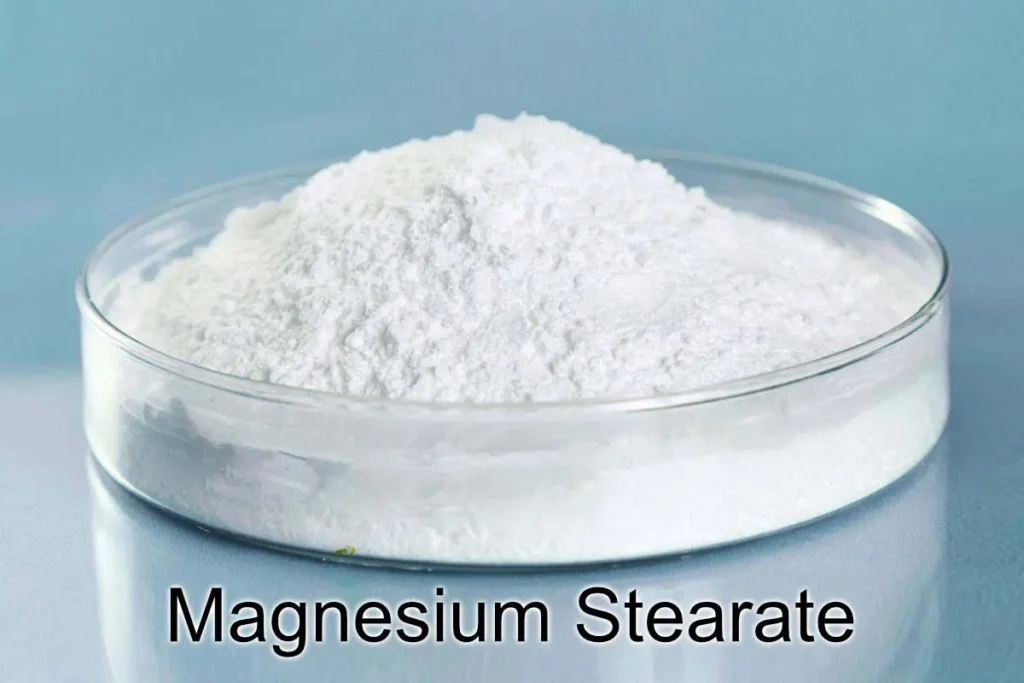
Magnesium oxide is the “foundation material” for the synthesis of magnesium stearate, which is produced through a neutralization reaction between stearic acid and magnesium oxide. In industrial production, the purity of magnesium oxide directly determines product quality: food-grade magnesium oxide must reach a purity of over 99%, while pharmaceutical-grade requires over 99.5%, with heavy metal content strictly controlled at the ppm level. During the reaction process, magnesium oxide not only provides magnesium ions to bond with stearate radicals but also weakens ester bond energy through adsorption. This increases the raw material hydrolysis rate to over 96%, significantly improving product purity. According to industry standards, the magnesium oxide content in qualified magnesium stearate must be precisely controlled between 6.7% and 7.5%, a ratio that directly affects the product’s stability.
As a “performance optimizer,” magnesium oxide grants magnesium stearate three core advantages. First, it enhances lubrication and anti-sticking properties: magnesium oxide can regulate the crystal structure of magnesium stearate, lowering the friction coefficient. During pharmaceutical tableting, this reduces material adhesion to the molds, ensuring smooth tablet surfaces while extending the lifespan of the equipment. Second, it enhances stability: the alkaline nature of magnesium oxide helps regulate the pH of the reaction system, preventing acidic substances from damaging the structure of the magnesium stearate and ensuring it does not easily decompose even at high temperatures above 200°C. Third, it improves dispersibility: magnesium oxide can form a uniform coating on the surface of magnesium stearate powder, preventing particle agglomeration and ensuring uniform distribution in food and cosmetics.
In multi-field applications, the specification suitability of magnesium oxide is of vital importance. In the food industry, magnesium stearate prepared from food-grade magnesium oxide is added to milk powder and cocoa powder (at a dosage of 0.1%-2%) as an anti-caking agent to effectively prevent moisture absorption and clumping; it is also used as a release agent in chocolate production to allow the product to detach from molds easily. In the pharmaceutical field, magnesium stearate produced from pharmaceutical-grade magnesium oxide is a key excipient. It is particularly suitable for the granulation of oils and extracts, improving granule fluidity and compressibility, and serving as a glidant in direct compression. In industrial scenarios, magnesium oxide-modified magnesium stearate can serve as a lubricant for plastics, a matting agent for coatings, and even an anti-static finishing agent for textile fibers.
From laboratory reactions to industrial production, magnesium oxide, with its unique chemical properties, has become the “stabilizing anchor” for the performance of magnesium stearate. The application of this “unsung hero” not only reflects the mastery of precise chemical ratios but also demonstrates the profound impact of new material technology on daily life.