
Messi Biology states that ammonium nitrate is a vital nitrogen-containing compound in both agricultural and industrial fields. While traditional preparation focuses on the neutralization of ammonia and nitric acid, the industry has long been constrained by challenges such as product caking, unstable crystal forms, and insufficient thermal safety. As a highly efficient inorganic additive, magnesium oxide (MgO) has become a key material for improving the quality of ammonium nitrate production through three core functions: crystal form regulation, anti-caking modification, and safety enhancement, making this basic chemical more stable, easier to use, and safer.
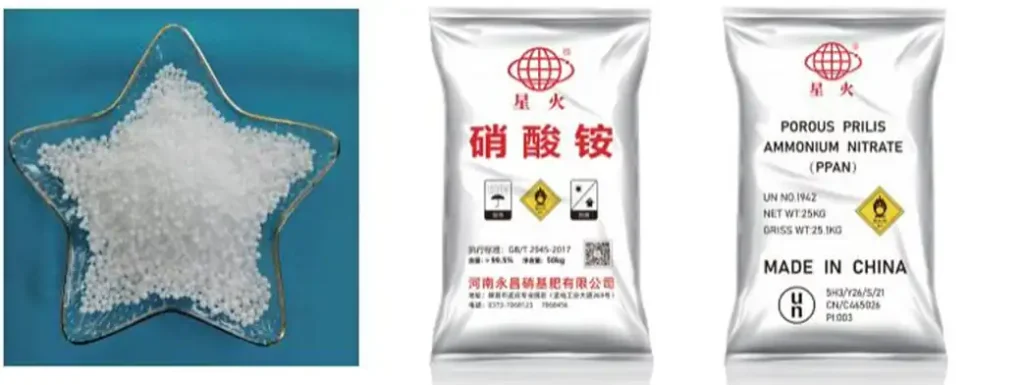
The classic production process of ammonium nitrate involves neutralizing ammonia with nitric acid to generate a solution, which is then evaporated and concentrated into a high-temperature melt before being granulated. Pure ammonium nitrate crystals are prone to phase transitions near room temperature, accompanied by volume expansion and contraction. This leads to particle fragmentation, moisture absorption, and caking, making long-term storage and transportation difficult. Magnesium oxide first reacts with dilute nitric acid to form a magnesium nitrate solution, which is then injected into the ammonium nitrate melt in precise proportions. Magnesium ions embed themselves into the crystal lattice, raising the critical phase transition temperature from 32°C to 55°C. By shifting this point outside the range of daily storage and transport temperatures, it fundamentally inhibits caking and pulverization.
The process value of magnesium oxide is reflected in multiple synergistic stages. During the neutralization stage, it can fine-tune the system’s pH, reducing the precipitation of impurities like iron and aluminum, thereby improving the whiteness and purity of the final product. During the concentration and granulation stage, magnesium nitrate acts as a desiccant to lower the freezing point of the melt, allowing for smoother low-temperature solidification. Simultaneously, it optimizes particle morphology, increases strength, and reduces porosity, which minimizes dust and material loss. Regarding equipment operation, high-purity magnesium oxide has a low sulfate content, which helps mitigate scaling in evaporators and granulation towers, extending continuous production cycles and reducing maintenance costs.
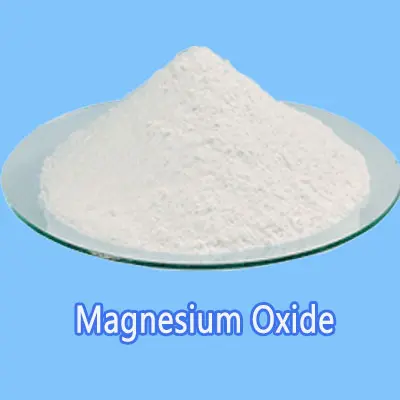
Safety performance enhancement is a standout contribution of magnesium oxide. Ammonium nitrate has poor thermal stability; however, magnesium ions can inhibit its thermal decomposition, raising the decomposition temperature and reducing the risk of self-reaction and explosion. This meets the stringent safety standards for agricultural and industrial explosive-grade raw materials. Compared to organic anti-caking agents, magnesium oxide is inorganic and non-toxic with low residue. When the finished product is applied to farmland, the magnesium element serves as a secondary nutrient, promoting chlorophyll synthesis and enzyme activation in crops. This achieves a “Nitrogen-Magnesium Synergy,” enhancing both fertilizer efficiency and crop quality.
In industrial applications, the dosage of magnesium oxide is typically controlled between 0.3% and 0.5%. High-purity magnesium oxide is preferred due to its high reactivity and low impurity levels; it dissolves fully at 85–95°C without releasing carbon dioxide, thereby reducing nitric acid loss. Once added, no additional coating treatment is required, simplifying the workflow and lowering costs. It is compatible with mainstream processes such as high-tower granulation and rotary drum granulation, meeting the needs of large-scale production.
From process optimization to quality upgrades, magnesium oxide addresses the pain points of ammonium nitrate production and application with its mild and efficient properties. It does not alter the core reaction path but improves macro performance through micro-lattice regulation. As green chemistry and high-efficiency agriculture continue to evolve, the application of magnesium oxide in ammonium nitrate preparation will become more precise and widespread, driving basic fertilizers and chemical raw materials toward high performance, low risk, and high added value.