
Nowadays, modern technology demands increasingly diverse and specialized materials. In today’s era of ubiquitous information, the consumption of thermally conductive insulating plastics is growing rapidly. Common additives used for thermal conductivity generally include alumina and magnesium oxide. For a long time, the supply of magnesium oxide was monopolized by foreign manufacturers; for instance, Japan’s Ube Industries once dominated the domestic thermally conductive plastics market for an extended period with high prices. Today, we will explore the relationship between thermally conductive plastics and magnesium hydroxide.
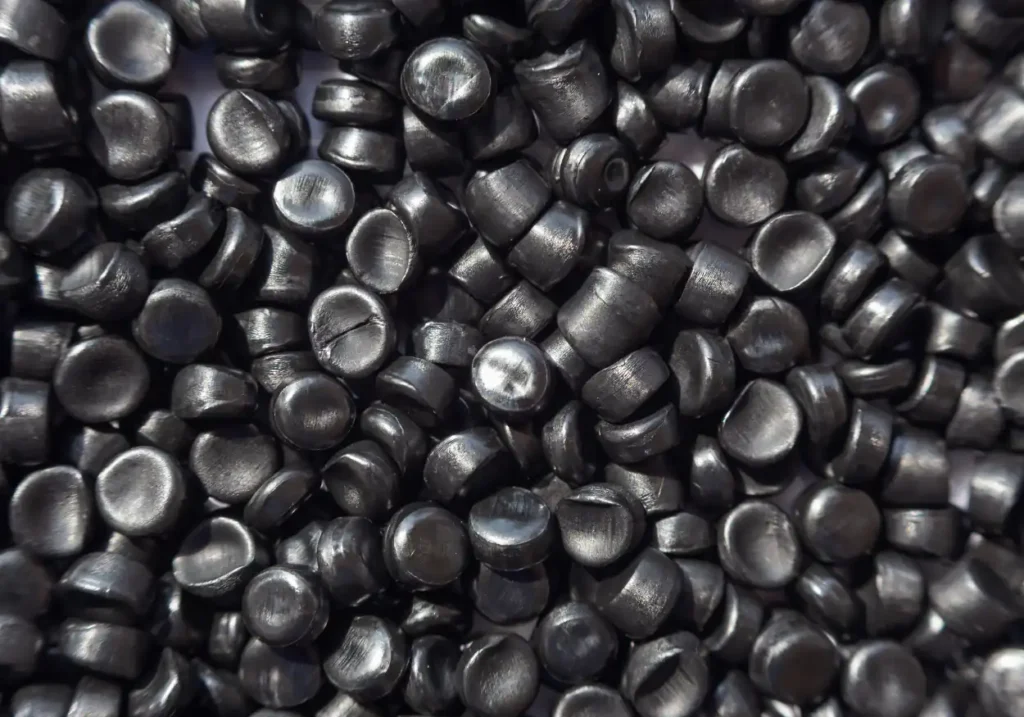
Messi Biology has recently developed a specialized magnesium hydroxide flame retardant specifically for thermally conductive materials such as Polyamide (PA). This specialized magnesium hydroxide features a perfect microscopic crystalline structure, prevents bridging during feeding, and is easy to mix with plastic resins. It demonstrates excellent compatibility within thermally conductive plastics, completely solving the traditional drawbacks of magnesium hydroxide, such as feeding difficulties and poor dispersion. This specialized grade has a low specific gravity, high whiteness, and undergoes thorough surface modification, providing superior flame retardancy and thermal conductivity. Even with a small addition to PA materials, it can achieve a V0 rating. Furthermore, the finished products exhibit low smoke, no odor, and anti-dripping properties when ignited, making it an excellent, eco-friendly, and cost-effective alternative to bromine-based flame retardants.
Currently, the thermally conductive modified plastics industry utilizes additives such as zinc oxide, alumina, magnesium oxide, and boron nitride. However, because spherical alumina, boron nitride, and magnesium oxide have high hardness, products are prone to discoloration during processing, which negatively affects the whiteness of the final product. Messi Biology utilizes melamine resin to coat these additives, effectively solving the “graying” issue caused by processing. Simultaneously, they have scientifically compounded thermal agents (magnesium oxide, zinc oxide, alumina, and boron nitride) with halogen-free flame retardants (zinc borate, MCA, and magnesium hydroxide). After extensive testing and screening, they successfully developed the DR Series of composite flame-retardant and thermally conductive additives. This composite agent requires no additional additives; it can be mixed directly with nylon for extrusion, ensuring smooth feeding without bridging and providing high melt flow and excellent fluidity. The resulting products offer good toughness, high whiteness, high thermal conductivity, and balanced density, successfully integrating flame retardancy with thermal performance at a low production cost.
Messi Biology is dedicated to the research, development, and application of various magnesium oxide products. Through tireless effort, they have successfully developed magnesium oxide specifically for thermally conductive plastics. This product is available in several specifications (coarse and fine), and its application performance fully matches the quality of Japan’s Ube magnesium oxide. It has been widely adopted in the market, significantly reducing the application cost of magnesium oxide in this field. This magnesium oxide features high purity, uniform particle size, and excellent dispersion. It can be used as a filler in thermal silicone sheets and resins such as PA6, PP, PPS, and ABS. With necessary surface modification, the loading capacity can reach 70–80 parts, achieving a thermal conductivity of up to 5W/m.K.
Messi Biology has now developed both magnesium oxide and magnesium hydroxide products suitable for thermally conductive plastics. These products offer excellent compatibility with plastic resins, solving the problem of brittleness that often occurs when adding fillers. They effectively enhance the K-value (thermal conductivity), tensile strength, flexural strength, impact strength, hardness, and density of the plastics, while ensuring the fire resistance rating reaches V0.