
Tags: Pharmaceutical Excipients, API (Active Pharmaceutical Ingredient), Solid Dispersion, Particle Size
[Introduction] Excipients are generally regarded as inert substances. However, when added to a formulation, certain excipients may significantly impact the final pharmacological effect of the drug. Interactions between drugs and excipients can be physicochemical or physiological, affecting the stability, safety, and efficacy of the preparation to varying degrees.
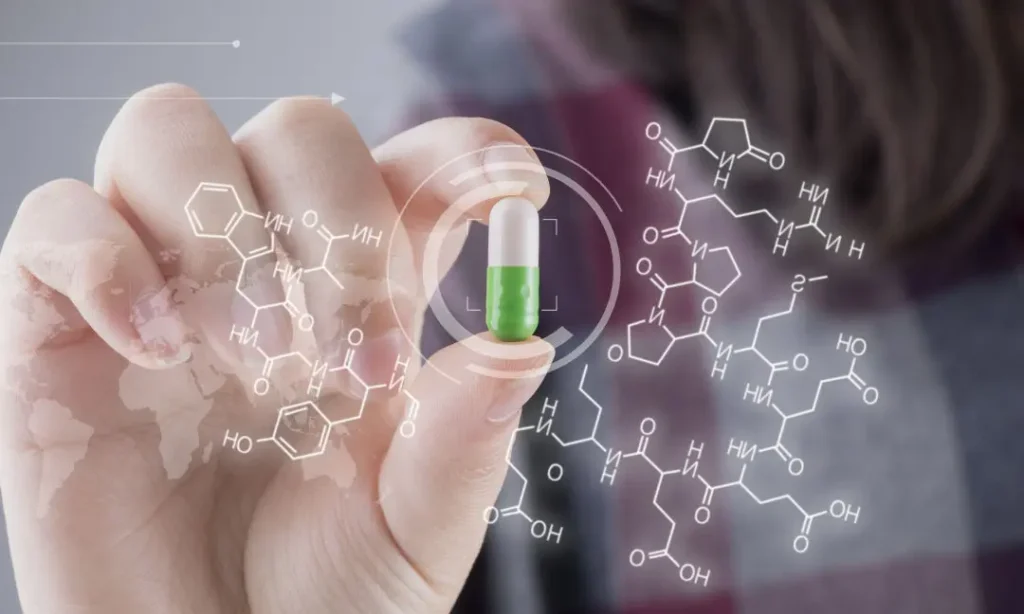
China Powder Network News: While excipients are often viewed as inert, they can have a profound impact on a drug’s performance. These interactions depend heavily on the nature of the drug, the properties of the excipients, and the quantity added. Such interactions are a critical factor that cannot be ignored during the drug research and development process. Based on existing industry experience, this article summarizes the interaction mechanisms between drugs and excipients to provide a reference for the field.
II. Mechanisms of Drug-Excipient Interactions
1. Complexation
Complexing agents interact with drugs to form complexes. Once a complex is formed, the drug must first dissociate from it to exert its pharmacological effect. Generally, drug complexes separate upon contact with gastrointestinal fluids, releasing the drug for absorption through the gastrointestinal membrane.
Complexing agents like cyclodextrins are frequently used to improve the bioavailability of hydrophobic or unstable drugs. They enhance absorption by increasing the rate and extent of drug dissolution, improving mucosal permeability, or enhancing drug stability. Research shows that drugs such as Griseofulvin and Ursodeoxycholic acid, when combined with various cyclodextrins, show improved dissolution and subsequent bioavailability.
However, complexation can sometimes decrease bioavailability. For example, the antibacterial drug Tetracycline forms a hydrophobic inclusion complex with Calcium Carbonate, leading to lower dissolution and poor absorption.
2. Adsorption
The adsorption of drug molecules onto the surface of excipients can effectively reduce the drug’s particle size and increase the surface area in contact with the release medium. This may improve dissolution and bioavailability. A study on the weakly acidic drug Dicoumarol found that the addition of Magnesium Hydroxide and Magnesium Oxide improved its dissolution and absorption in dogs. This was attributed to the formation of a more easily absorbed magnesium-ion chelate or an increase in the microenvironmental pH.
Conversely, adsorption can also hinder dissolution and diffusion, reducing bioavailability. For instance, when the lubricant Magnesium Stearate is added to tablets containing Cetylpyridinium Chloride, the antibacterial activity of the drug decreases. This occurs because the Cetylpyridinium cations are adsorbed by the stearate anions on the surface of the Magnesium Stearate particles.
3. Solid Dispersions
Solid dispersion technology is a vital research area for hydrophobic drug formulations, aimed at improving dissolution and bioavailability. In a solid state, a two-component solid dispersion consists of a water-soluble carrier and a hydrophobic drug dispersed within it. The preparation method of the solid dispersion can also influence the drug’s in vivo performance.
Studies using PEG (polyethylene glycol) of various molecular weights to prepare solid dispersions of Norfloxacin, Griseofulvin, and Ibuprofen have shown significantly improved dissolution. The interaction between the drug and PEG helps explain this increase. In vivo evaluations of these dispersions have confirmed a corresponding increase in bioavailability.
There are also three-phase solid dispersion systems that introduce a secondary excipient, such as a surfactant. Surfactants increase the dissolution rate of hydrophobic drugs by facilitating contact with the dissolution medium and reducing interfacial tension, which promotes wetting.
4. Chemical Interactions
- Maillard Reaction: This is the reaction between reducing sugars and amine groups (primary or secondary). It is the most typical chemical interaction between drugs and excipients. The rate is influenced by the type of reducing sugar, the amine structure, and environmental acidity. Reported cases include proteins, peptides, and Acyclovir. Common reducing sugars include lactose, glucose, and maltose. Recent studies found that amine-containing drugs can also react with starch and cellulose. Therefore, when selecting excipients for drugs containing primary or secondary amines, reducing sugars and excipients that may decompose into reducing sugars should be avoided.
- Catalytic Degradation: Some drugs contain active groups that undergo catalytic degradation in the presence of trace metals. For example, when silica gel is added to Vitamin C preparations, the degradation of Vitamin C increases. This is likely due to trace metals (like iron or copper) in the silica gel catalyzing the decomposition of Vitamin C in solution.
- Precipitation Reaction: Excipients can react with active molecules—particularly organic compounds containing metals or in ionic states—to form precipitates. The antiepileptic drug Phenobarbital reacts with PEG 4000 to form a water-insoluble complex precipitate, reducing the drug’s dissolution rate to one-third of its original value.
- Hydrolysis: Moisture content in excipients is a major factor in drug stability. Excipients like Povidone (PVP) and Magnesium Stearate have high water content. If moisture is not controlled during processing, it can lead to drug degradation, such as the hydrolysis of Aspirin.
- Others: Other specific interactions include the sulfonation reaction between Epinephrine or Isoproterenol Hydrochloride and sulfite antioxidants; Michael addition-like reactions between primary amine drugs and excipients with double bonds (e.g., Fluvoxamine Maleate); and esterification reactions between carboxylic acid-containing drugs and polyols (e.g., Cetirizine oral solution reacting with Sorbitol or Glycerol to form monoesters).
III. Summary
Drug-excipient interactions can be effectively utilized to improve bioavailability, such as through cyclodextrin complexation or solid dispersion technology. However, in many cases, undesirable interactions occur that may reduce bioavailability, such as surface adsorption or prolonged gastrointestinal transit time.
These interactions affect the stability, safety, and efficacy of a formulation. The degree of impact depends on the properties of the drug, the quality and nature of the excipients, and their proportions in the formulation. Therefore, these factors must be given full consideration during the drug development process.