
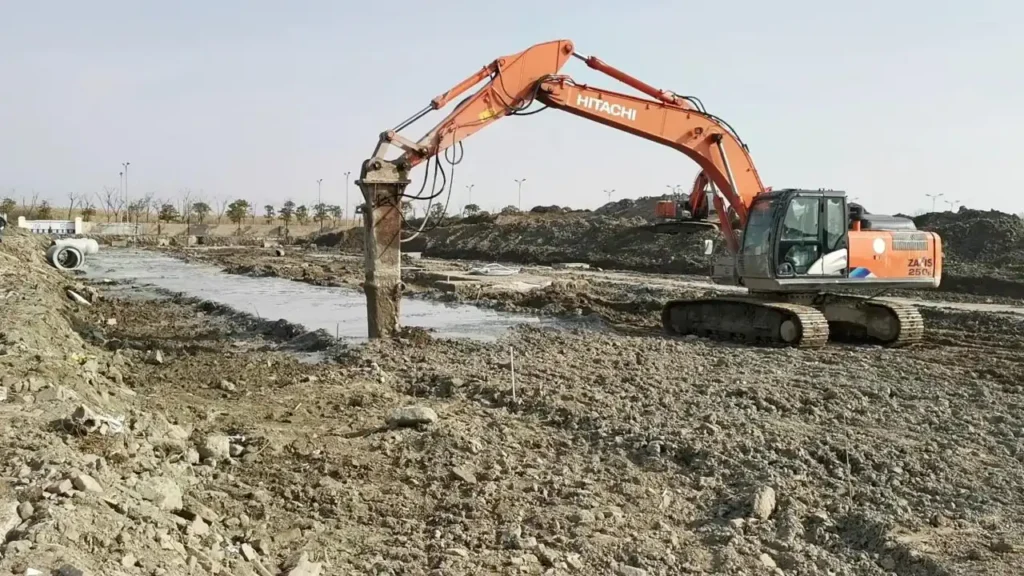
Messi Biology notes that during engineering construction, river dredging, or coastal land reclamation, we often face a significant challenge: massive amounts of sludge. This sludge, characterized by high water content and extremely low strength, is often as unstable as mud and unable to bear loads. Not only does it occupy large amounts of land, but it also poses risks of environmental pollution. How can we turn this waste into a resource? Beyond traditional “cement” solidifying agents, a material called “magnesium oxide” is gradually becoming a new favorite in the field of environmental engineering. Today, let’s discuss how magnesium oxide works its magic to transform sludge into a valuable asset.
First, we need to understand what magnesium oxide is. Commonly known as magnesia, it is a white powder typically produced by calcining minerals such as magnesite. In the past, magnesium oxide was primarily used in refractory materials or the pharmaceutical industry; however, in geotechnical engineering, it possesses unique “superpowers.” Compared to commonly used cement-based binders, the mechanism of sludge solidification by magnesium oxide is different and the results are even more remarkable. The core of magnesium oxide sludge solidification lies in its excellent “hydration reaction” and “gelation effect.” When magnesium oxide is added to sludge with high water content, it rapidly reacts with water to form magnesium hydroxide. This process not only consumes large amounts of free water in the sludge and reduces the moisture content but also causes volumetric expansion. This micro-expansion property is highly valuable, as it offsets the shrinkage that occurs during the solidification process, preventing cracks and significantly increasing the density of the soil.
More importantly, magnesium oxide undergoes complex physical and chemical reactions with the soil particles in the sludge. The resulting gelatinous substances act like a powerful “glue,” binding the dispersed, fine soil particles tightly together to form a robust skeletal structure. Over time, the strength of this structure gradually increases, and the once soft and flowing sludge eventually becomes as hard as rock, possessing excellent load-bearing capacity and water stability. In addition to its technical performance advantages, magnesium oxide is also an eco-friendly material. Compared to cement production, which emits large amounts of carbon dioxide, the production process of magnesium oxide is lower in energy consumption and more carbon-neutral. Furthermore, the pH of sludge solidified by magnesium oxide is relatively milder than that of cement-solidified sludge, which is more conducive to subsequent soil improvement and vegetation planting, thereby facilitating a virtuous cycle of ecological restoration.
With its high strength, micro-expansion, and low-carbon, eco-friendly characteristics, magnesium oxide provides an efficient and economical solution for sludge treatment. It not only addresses the pain points of engineering construction but also aligns with current sustainable development goals. In the future, with continuous technological advancements, magnesium oxide is set to play an increasingly important role in the resource utilization of sludge and ecological management, turning what was once considered a burden into a solid foundation for urban construction.