
Messi Biology stated that with the rapid development of the automotive industry, consumers’ expectations for the driving and riding experience are increasing daily. Beyond power and aesthetics, interior quietness and comfort have become key metrics for measuring vehicle quality. To achieve “library-grade” quietness and “greenhouse-grade” thermal insulation, automotive soundproofing and thermal insulation sheets came into being. Behind these high-performance materials, magnesium hydroxide plays an indispensable role as an “invisible guardian.”
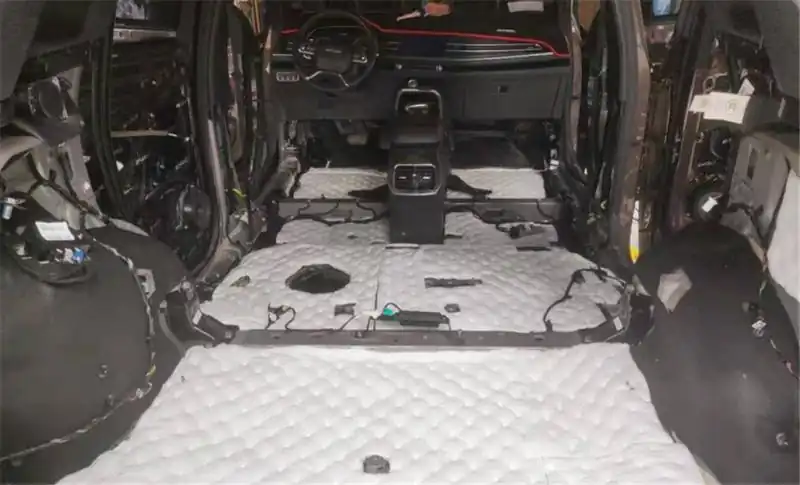
Magnesium hydroxide (chemical formula: Mg(OH)₂) is a common inorganic compound, typically appearing as a white amorphous powder or colorless hexagonal prismatic crystals. It is widely found in nature as the mineral brucite. As an important inorganic flame retardant and filler, magnesium hydroxide shines in numerous industrial sectors thanks to its unique physical and chemical properties—especially in automotive manufacturing, where environmental and safety requirements are extremely high. Automotive soundproofing and thermal insulation sheets are not simple sponges or rubbers; rather, they are composite materials made from base polymers (such as EVA, EPDM, etc.) and functional additives through complex processes. The addition of magnesium hydroxide primarily endows these sheets with three core advantages:
1. Excellent Flame Retardancy and Smoke Suppression
This is the most core value of magnesium hydroxide. The automotive interior is a relatively enclosed space with dense occupancy, making fire safety standards for interior materials extremely strict. Traditional acoustic materials tend to burn easily and release large amounts of toxic smoke when exposed to fire. When heated (at around 340°C), magnesium hydroxide undergoes a decomposition reaction, releasing bound water. This process absorbs a significant amount of heat, thereby reducing the surface temperature of the material and diluting oxygen concentration, while simultaneously forming a dense protective layer of magnesium oxide on the material’s surface to isolate oxygen and flammable gases. This highly efficient flame-retardant and smoke-suppressing capability buys precious escape time for passengers.
2. Superior Thermal Insulation and Stability
Magnesium hydroxide has a relatively low thermal conductivity. When filled into sheets, it effectively blocks heat transfer and plays a complementary thermal insulation role. Furthermore, it significantly enhances the thermal stability of the material, preventing the insulation sheets from aging, deforming, or decomposing under high summer temperatures or long-term engine baking, thereby ensuring long-lasting acoustic performance.
3. Eco-Friendly, Non-Toxic, and Harmless
Unlike certain halogen-containing flame retardants, magnesium hydroxide is a halogen-free, non-toxic, and non-corrosive inorganic mineral material. Throughout its full lifecycle—from production and use to waste recycling—it does not generate carcinogenic substances such as dioxins, fully aligning with the “green, low-carbon, and eco-friendly” development trends of modern automobiles.
In the early days of automotive acoustic materials, focus was often placed solely on the sound-absorption effect while overlooking potential side effects of the materials. Today, with the maturation of magnesium hydroxide application technology, automotive soundproofing and thermal insulation sheets have achieved a leap from single-function to multi-functional integration. They not only block engine roar, tire noise, and wind noise, but also build a solid firewall. Although magnesium hydroxide is merely an additive in automotive soundproofing and thermal insulation sheets, its unique flame-retardant, thermal-insulating, and eco-friendly properties greatly enhance the safety factor of vehicle interiors. In the future trend of automotive lightweighting and high-performance development, this white “invisible guardian” is bound to play an even more vital role.