
When we take a sip of hydrotalcite oral liquid and experience its therapeutic effects of neutralizing stomach acid and protecting the gastric mucosa, we rarely think about the fact that hidden within this milky-white suspension, alongside the primary medicinal ingredient hydrotalcite, is a crucial “excipient”—magnesium sulfate. In the production workshop of hydrotalcite oral liquid, magnesium sulfate is not used to treat constipation; rather, it serves as an excellent suspending agent and stabilizer to ensure that every bottle of medicine remains uniform in efficacy and stable in quality throughout its shelf life. Its application is a wonderful interpretation of physical chemistry principles in the pharmaceutical industry. In the formulation of hydrotalcite oral liquid, the application of magnesium sulfate is primarily based on two core principles:
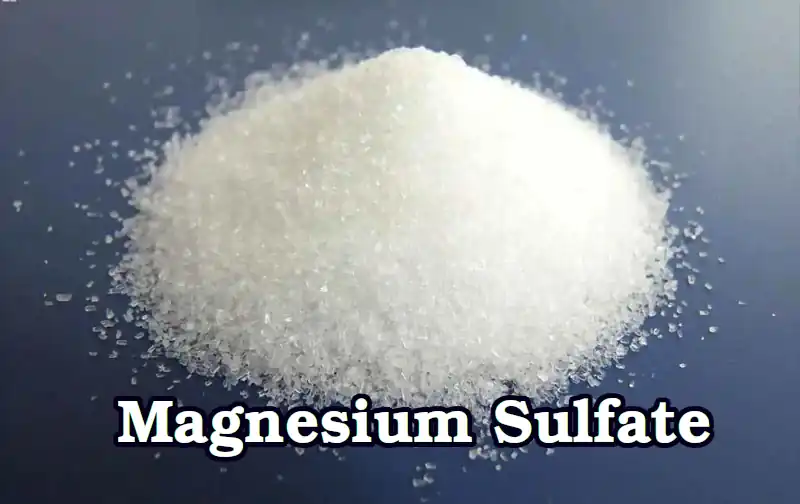
Charge Regulation and Flocculation (Zeta Potential Control): Hydrotalcite particles carry charges on their surfaces. If the repulsive force between particles is too excessive, they will settle independently like loose sand, eventually forming a compact, hard cake that is difficult to resuspend. Magnesium sulfate is a strong electrolyte that dissociates into magnesium ions (
Mg2+Mg2+
) and sulfate ions (
SO42−SO42−
) upon dissolution. These ions enter the “electrical double layer” surrounding the particles, compressing the charge repulsion on their surfaces. This is akin to making particles that were originally “repelling” each other willing to “shake hands,” forming loose, cotton-like aggregates (i.e., “floccules”). Such flocs have a large volume, a loose structure, and a slow settling rate, and the sediment is extremely loose, allowing it to be easily redispersed into a uniform liquid with a gentle shake, significantly enhancing the “redispersibility” of the medicinal liquid.
Increasing Medium Density: This is a clever physical technique. The sedimentation rate of an object in a liquid depends on the density difference between the particles and the liquid. The density of a magnesium sulfate solution is significantly higher than that of water. Adding magnesium sulfate during production increases the density of the liquid medium (the dispersion phase), thereby narrowing the density difference between it and the hydrotalcite particles. According to physical principles, the smaller the density difference, the greater the sedimentation resistance, which further delays the settling speed of the drug particles.
Good Compatibility: Hydrotalcite is weakly alkaline, while an aqueous solution of magnesium sulfate is weakly acidic. By mixing the two under precise calculation, the pH value of the liquid medicine can be adjusted so that it not only falls within the stability range of hydrotalcite but also reduces irritation to the stomach.
Improving Taste: Although high concentrations of magnesium sulfate taste bitter (which is the source of its laxative effect), in oral liquid formulations, the dosage of magnesium sulfate is controlled within the low range required for suspension. Combined with flavoring agents (such as sucrose, sodium cyclamate, menthol, etc.), it does not produce a noticeable bitter taste; instead, due to its salt characteristics, it can mask the astringency that hydrotalcite itself might possess to a certain extent.
In the production of hydrotalcite oral liquid, magnesium sulfate is no longer a clinical laxative, but rather an exquisite “rheological modifier.” By regulating charges and increasing density, it makes the drug particles obediently “suspend” in the liquid, ensuring that at every moment—from the production line to the hospital pharmacy and finally into the hands of the patient—the liquid medicine maintains a uniform, stable, and effective state. This is the “invisible” yet indispensable technological wisdom in pharmaceutical manufacturing.